
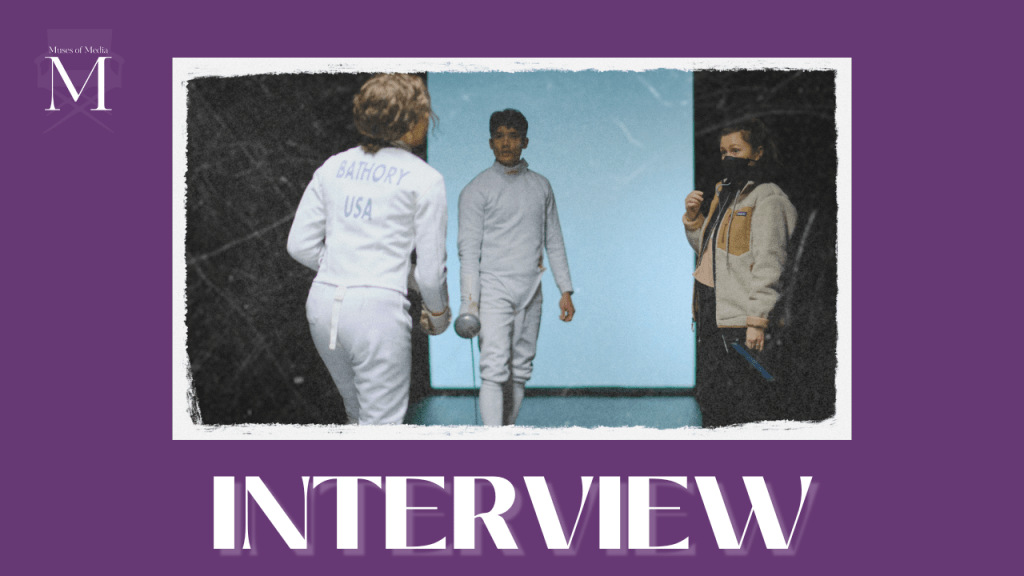
In Balestra, Joanna Bathory (Cush Jumbo) agrees to test experimental technology, which allows her to train in her dreams. With her sights set on Olympic gold, Joanna will stop at nothing to advance her competitive fencing career. Directed by Nicole Dorsey, the film is timely and timeless, delving into the dance behind the sport and how one’s perceived greatness is attached to one’s value as a human being.
I had the fantastic opportunity to interview Dorsey about directing Balestra. Dorsey shared her enlightening exploration of the film and its characters, her perspective on the film’s mechanics, the drama and dance of fencing, and how Joanna’s journey is universally relatable.
Firstly, I really enjoyed the film when I watched it a few days ago, and I was specifically wondering about having a character who is so obsessed with greatness. What was it in terms of the script that you connected with, whether it was with the Joanna or maybe even some of the struggles that she faces within the movie?
Nicole Dorsey: Well, I definitely connected to her journey, for sure. I think as a creative there’s this perceived idea of greatness and that my value as a human being is attached to what greatness level I reach, and it’s taken me a long time and a lot of therapy to realize some sort of separate things. So, I definitely think that it’s a universal story.
Of course, it’s set in the hyper-specific world of fencing, but whether you’re an athlete of a different sport, a creative, or a business person, it doesn’t really matter. I think in Westernized slash Americanized culture, we kind of all fall victim to this game. So that drew me in. And then fencing is a super fascinating world. It’s so theatrical and cinematic. And so I just became obsessed with the idea of shooting the project.
I really loved how the movie, to me, was very timely. Obviously, the Olympics are currently happening in terms of fencing, but also with the technology. How was it for you directing a film about a sport that many are actively watching right now because of the Olympics, but also adding that technological/sci-fi element?
Dorsey: I knew that the technology would, you know, rapidly be approaching what’s depicted in the story because lucid dreaming devices already existed, and I knew they were just continuing to develop even further. Obviously, we added a bit more of a sci-fi element with the implant that’s put in. But outside of that, it’s not too far off. And with the Olympics itself, obviously, it was scripted for 2024 Paris. We had initially thought this would come out a few years before the Paris Olympics. But I will say it must be serendipitous that it’s all come together at the same time.
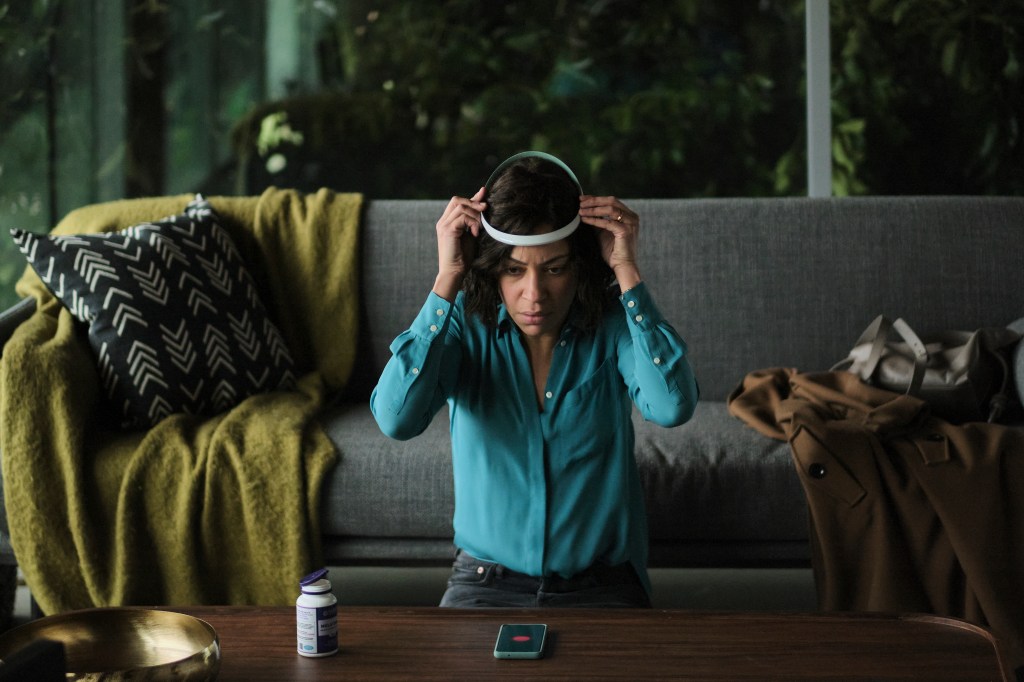
In terms of working with the cast, what was it like filming the different scenes, specifically having the characters show off more of their morally grey sides as the film progresses?
Dorsey: Yeah, I think it’s maybe something I like to do as I’m looking at my past work as well. I never like to live in sort of a black-and-white world with my characters. I think it’s very nuanced, the morality, especially with Joanna, the lead character. You know, is she the hero or is she the villain? And that’s something that we talked about: the complexity of human behaviour and choices.
And Cush was definitely game to go along for that ride with me, and the same with James Badge Dale and Manny Jacinto. So it was great. It was a fun – it was a fun line to walk as we were shooting, and we just really tried to keep it grounded to real life in the sense of how people sort of stumble through their actions.
One of the things about the film that I loved best were the interesting shots and moments that occur as the characters are fencing or training. So, what was it like for you filming and directing these various fencing fight sequences?
Dorsey: It was a lot of fun! You know, I got to work with a coach from the Canadian Fencing Federation, another big coach from Dynamo Fencing out in Vancouver, and just working with real fencers to sort of figure out the ballet, really, and do both, ensuring that it was grounded in the actual sport, and we didn’t take it to sort of this fantastical, unbelievable level for especially for our fellow fencers who are inevitably going to watch the film. But also remaining cinematic and working with my DP Marie to figure out the devices that we need to capture the material. But very much the audio and visual are very are the aesthetic and the entire piece is very informed by the sport itself.

In terms of creating the visual language to develop the dream world versus reality, what were some of the steps you took, if any, to separate them? Because when the two mesh together, and there are times where you don’t know what’s real, what’s the dream, there are kind of, you know, things that kind of slightly set them apart?
Dorsey: Yeah, loving the aesthetic of fencing itself, we let that inform both worlds. There’s this sort of breathiness, this ethereal feeling with fencing. There’s this smooth dreaminess in fencing, sort of like a ballet. So, we let all of that inform how we approached the dream world. And then this sort of precision—this clean, sharp precision element, we let that inform her waking life. That was with how we move the camera, the lensing choices for either. You know, my whole hope is that as an audience, it doesn’t hit you on the head how different it is, but you seamlessly, kind of move from one into the other. But you definitely feel those differences.
Balestra is the follow-up to your feature debut. How did your process differ from your first project, where you were also the writer, to this one?
Dorsey: Yeah, it was definitely different. But for me, it’s just all about story. What is the story that connects to me and makes me feel like I have to tell it? And I don’t always feel like I have something I want to write that I have to tell. And in this case, Balestra came to me pretty shortly after Black Conflux premiered. So I was just obsessed with it off the top, and it felt like a me story, and Imran [Zaidi] and I got along really well, and he’s such an incredible writer, and I think we complement each other.
He has a very technical mind, in a way that I would say I don’t, because I’m very much character-driven, which he is, too, but we just come from slightly different approaches. So I think it made a really beautiful collaborative process!



Leave a Reply