
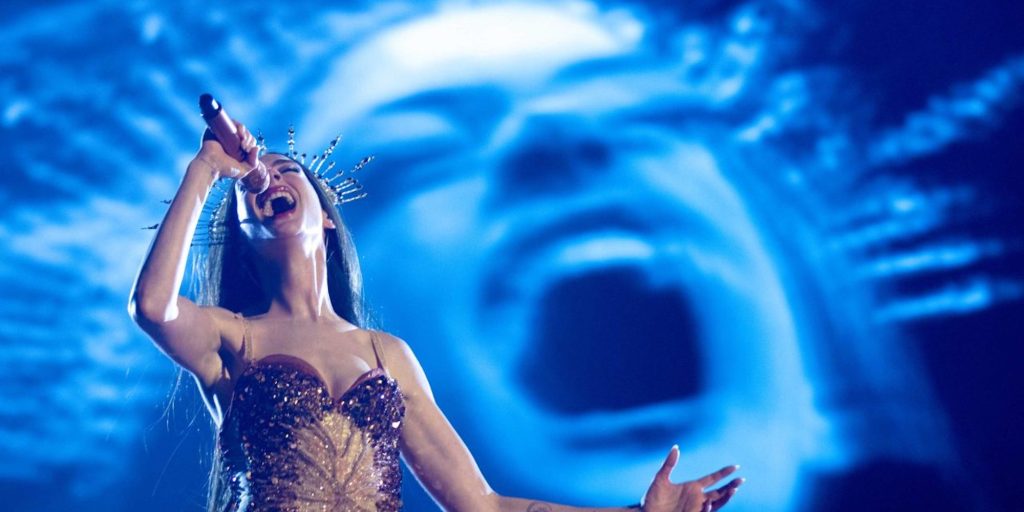
David Lowery’s Mother Mary was one of the most anticipated movies of the year, and to see it crash and burn in such spectacular fashion highlights two things: men probably shouldn’t be trusted to create narratives about divas and two, maybe A24 needs to have a bit more oversight over their filmmakers’ projects. Sometimes an aspiring auteur’s work is simply lacking and needs correcting. Mother Mary is a prime example of being a film with a great concept but terrible execution.
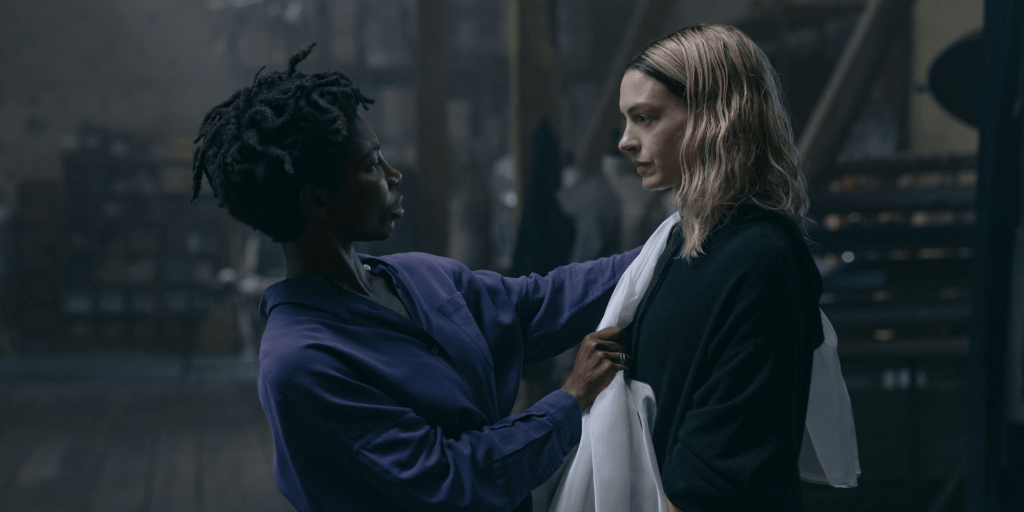
Anne Hathaway plays a pop icon in the vein of Lady Gaga and Beyoncé, who goes by Mother Mary. Her music is lyrically dark and ominous yet catchy and danceable. Her imagery is clearly drawn from Beyoncé, with various forms of the halo crown, which has become a Beyoncé staple, being a fixture in Mother Mary’s image. Mother Mary is gearing up for a comeback with a new song that she dubs “the greatest song ever”; however, she hits a creative snafu when she feels the dress for her opening night misrepresents her. She seeks help from the famous fashion designer Sam Anselm, played by Michaela Coel, to make her a dress. Little does she know that this encounter will ignite old emotions and expose Sam’s thinly veiled resentment towards Mary, which in turn reveals Mary’s fragile mental and emotional state.
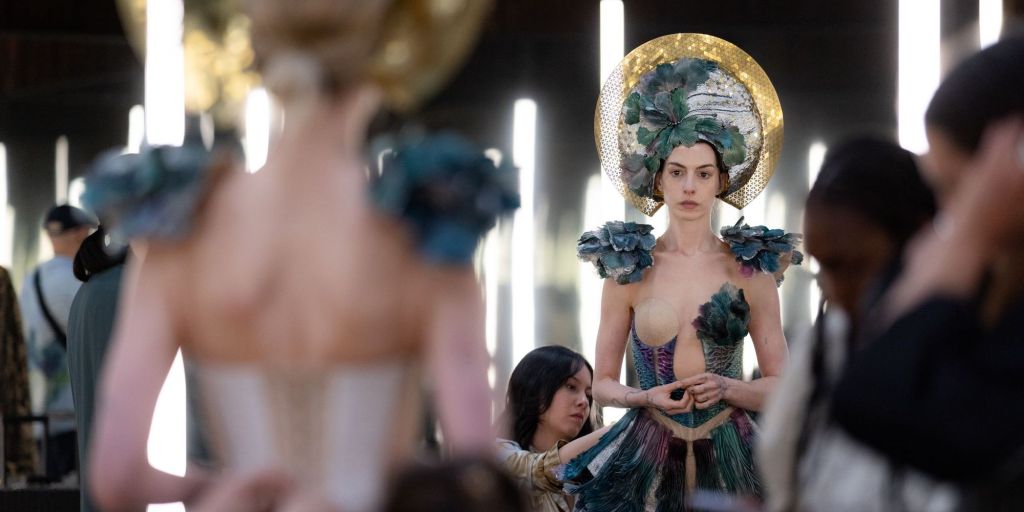
Despite claiming that this story was inspired by Swift and her Reputation Stadium Tour, Hathaway wrestled that idea away and immersed herself in a character strongly inspired by Beyoncé, in both discipline and image. Personality-wise, the character is a hollow shell of a damaged pop diva, mentally and emotionally weakened by circumstances. Namely, Mother Mary seems to have lost herself to her persona, and the lines between the human being who likes to sing and the icon the world worships have blurred to such an extreme that her old friend finds pleasure in kicking her while she is down. Ultimately, the film doesn’t seem to know who Mother Mary is as a person, and it’s only invested in the amalgamation of artists who inspired her creation.
The narrative as a whole is lost in the imagery and the music, which is indeed a highlight, as Hathaway is a terrific singer. Hathaway’s performance is superb, but she isn’t playing a person; she is playing an idea. Informed by years of experience as a celebrity herself, her love for Beyonce and music, all of which are good things to embody while immersing yourself in a narrative about the dangers of stardom and losing one’s identity. However, Lowery proves to be inadequate as the main driver of this story, as it seems Hathaway’s ideas of who Mother Mary is became stronger than whatever story he wanted to tell. Thus, Mother Mary feels like two entirely different films mashed together, with Hathaway’s version the more compelling.
Stuck in between is Michaela Coel, who is given some loaded lines that reveal both a genius and a creative mind clouded by the awe of the artist who has sought her out. There is a deeper relationship between them that goes beyond the fashion artist-and-muse dynamic typical of such mega-stars, think Zendaya and Law Roach. However, the film’s vagueness doesn’t allow her character to exist peacefully. She seems to stand at odds with both clashing visions, thereby making her character seem unnecessary. She is reduced to a sounding board for Mary and a means of exploring the singer’s internal turmoil. Like Mary, Sam doesn’t feel like a real person.
Mother Mary had the potential to be a great psychological thriller about the stakes of stardom, obsession, idol worship, and artistry, but all that is stunted and never nurtured beyond its conceptualization. Despite the terrific music, astounding visuals, and very engaging musical sequences, the film fails to solidify its characters. Without grounded characters we understand, how can we be invested in their psychological unravelling?
Mother Mary embodies the well-known meme from the iconic diva Aretha Franklin: “great gowns, beautiful gowns.” Except that the film is humourless and lacks the wit that made Aretha’s off-the-cuff comment a long-lasting cultural moment. Sitting through this film, my mind wandered to another musical drama starring a complex diva: Vox Lux. Conceptually, the two films are not similar, but both centre on pop divas gearing up for a comeback tour. Mother Mary excels in the visuals department, but what this comparison highlights is the lack of structure that Mother Mary desperately needs. The visuals are engaging, the acting is superb, the story… well, it wasn’t fully cooked before its release in theatres. Unlike Vox Lux, there is no semblance of forward momentum or a character arc. Oh well, at least we got a good album out of this.





 Muses of Media
Leave a comment