
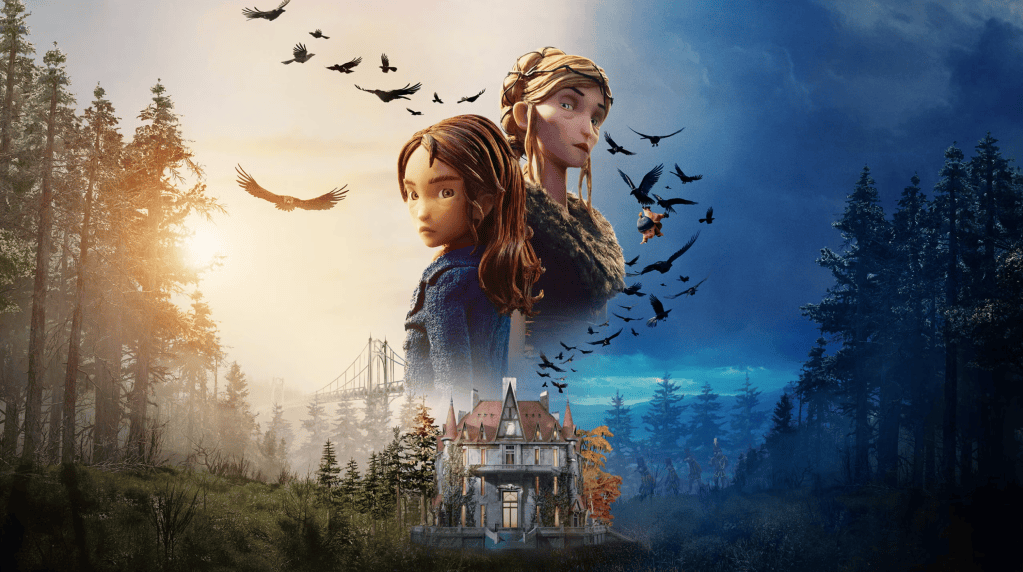
I remember when I first saw Laika Studios’ debut film, Coraline. Sure, I thought it looked cool, but I wasn’t sure I’d see it in theatres because my parents brainwashed me into believing, at the time, that animation was just for kids. It wasn’t until one of my close friends (also named Matt) said he “really underestimated how creepy” the film was that I finally dragged myself to a theatre.
And, of course, my friend was right. It’s an incredibly creepy film in the best of ways, hauntingly memorable and memorably haunting. And, of course, my parents and I were wrong. That film, and animation in general, is not just for kids.
Fast forward 17 years, and Laika has finally completed their sixth animated feature, Wildwood. According to director Travis Knight (Masters of the Universe), the film took 16 of those years and hundreds of puppets to make. For the artisanship and novelty of stop-motion animation alone, a technique which has been largely abandoned by most other animators except Aardman, any movie by Laika is worthy of seeing in a theatre.
So, yeah, Wildwood is a 5-star movie. 10/10. No notes.
Why are you still reading this instead of going to the theatre?
Go on, get!
Still here?
Okay, fine. I’ll tell you my thoughts. But you have to promise you’ll see the movie when you’re done reading this. Pinky swear. Scout’s honour. Cross your heart.
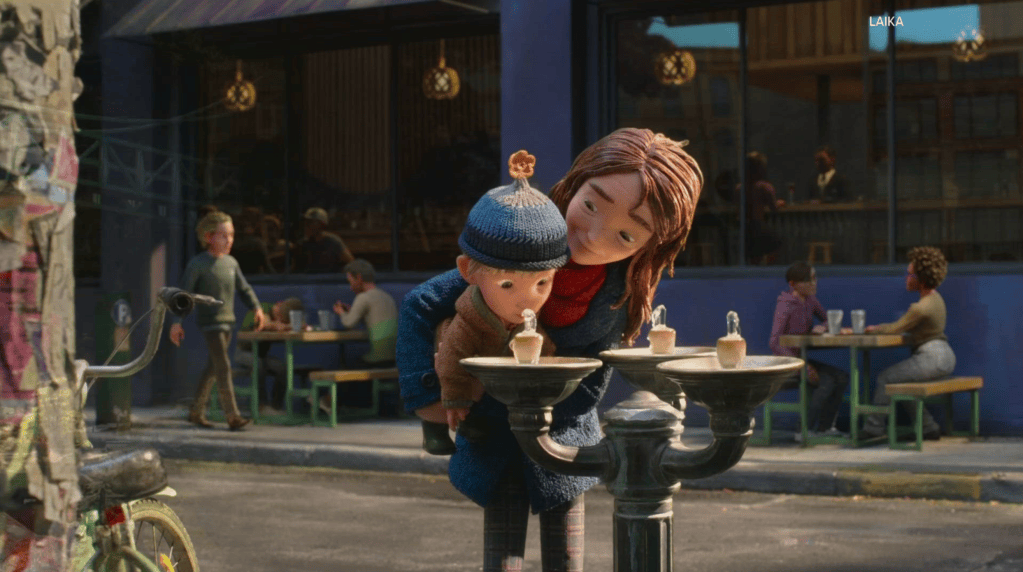
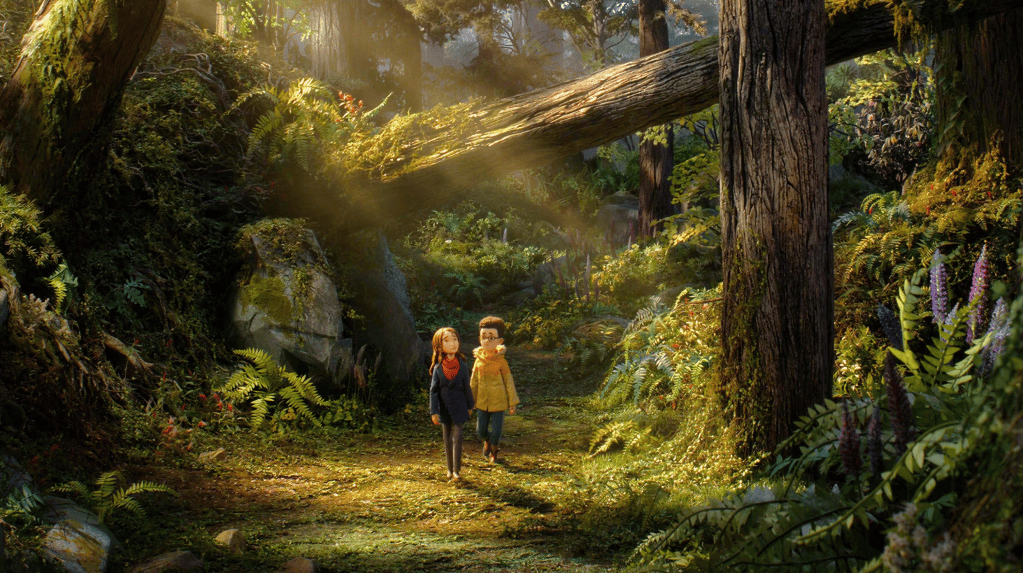
Prue (Peyton Elizabeth Lee) lives in Portland, Oregon, with her parents (Maya Erskine and Jake Johnson) and brother Mac (voiced by Travis Knight’s then-one-year-old son Arthur, whom the director chased around with his iPhone to record). While playing at a park one day, Mac is kidnapped by a murder of crows, forcing Prue and a local boy, Curtis (Jacob Tremblay), to enter the Impassible Woods to get him back. Prue and Curtis discover a hidden world of warring factions, talking animals and dangerous magic.
I reiterate, Wildwood is not a kids’ movie. It’s a movie that happens to be animated. It has elements of stories traditionally aimed at children, such as “Rumpelstiltskin” and The Lion, The Witch, and the Wardrobe. However, it delivers its own even darker twist to those stories. Whether kids might like to tag along with the adults in their lives when buying movie tickets, and whether they might also definitely enjoy the film, is a separate matter entirely.
Knight wastes no time in establishing Wildwood’s tone. It is dark. It is scary. It is brutal. It is painful. It is haunting. It pulls no punches and forces you to confront its mature concepts and complex emotions. It is a world and story built on war and death and suicide and grief. It’s so easy to be lulled into complacency by the gorgeous sets and puppets and the compelling story that the message, meaning and emotion of it all gets lost. But Knight refuses to commit one of animation’s cardinal sins: talking down to his audience. You can feel the respect Knight holds for the story, his artisans and his audience. Death and violence are front and center, neither glorious nor exaggerated, but also not diminished. Everyone loses a little bit of themselves in the quest for what they want, be it peace or the return of a loved one.
Perhaps the one bit of respite is the breakneck pace at which the story progresses. There is so much ground to cover and not a lot of time to do it, so the film pushes as fast as it can to introduce its lore and myriad of characters without diluting itself. As a result, Knight allows just enough time for the audience to be exposed to the heavier topics and contemplate them without lingering in dread and despair.
It’s not all doom and gloom, though it’s not exactly sunshine and rainbows either. There is still plenty of joy, wonder and whimsy in the world of Wildwood. So much beauty exists in a world full of horror. I felt a rush of excitement seeing the vast, pristine forests and rustic settlements, laughed whenever characters made jokes or the talking animals did something silly, and was thrilled by the chase scenes. Amid all the heaviness, the film takes time to remind us that there is always a reason to hope and always a better tomorrow on the horizon. It’s also just plain fun to escape into a quaint world where magic spells and talking animals exist alongside cars and automatons.
The writing and acting of the film’s three main characters is exceptionally powerful.
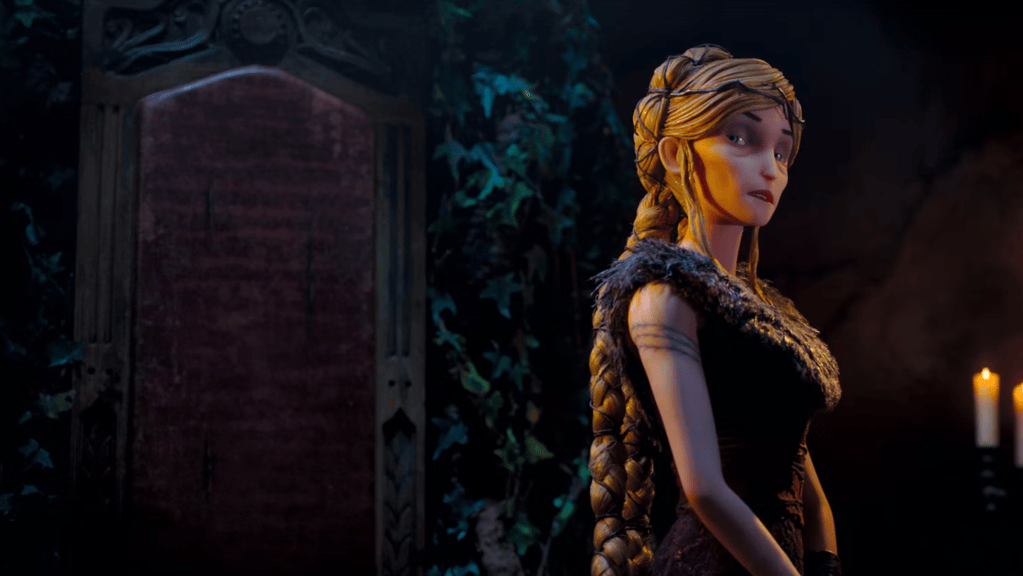
Carey Mulligan plays the film’s primary villain, the Dowager Governess Alexandra. She’s a tragic and complex character, driven to madness and desperation by grief at the death of her child. We can recognize that her loss is unimaginable and her pain understandable, though her response is inexcusable. Alexandra’s broken mental health is tactfully explored on screen, unambiguously showing that she is not in her right mind but never demonizing her for it. Mulligan’s voice acting displays an incredible range and nuance. She’s tender when she’s trying to persuade Prue or Curtis, soothing Mac or hallucinating a conversation with her son. She’s bitter, hard and bloodthirsty when she’s leading her army of coyotes. Alexandra is a powerful character and Mulligan aces it.
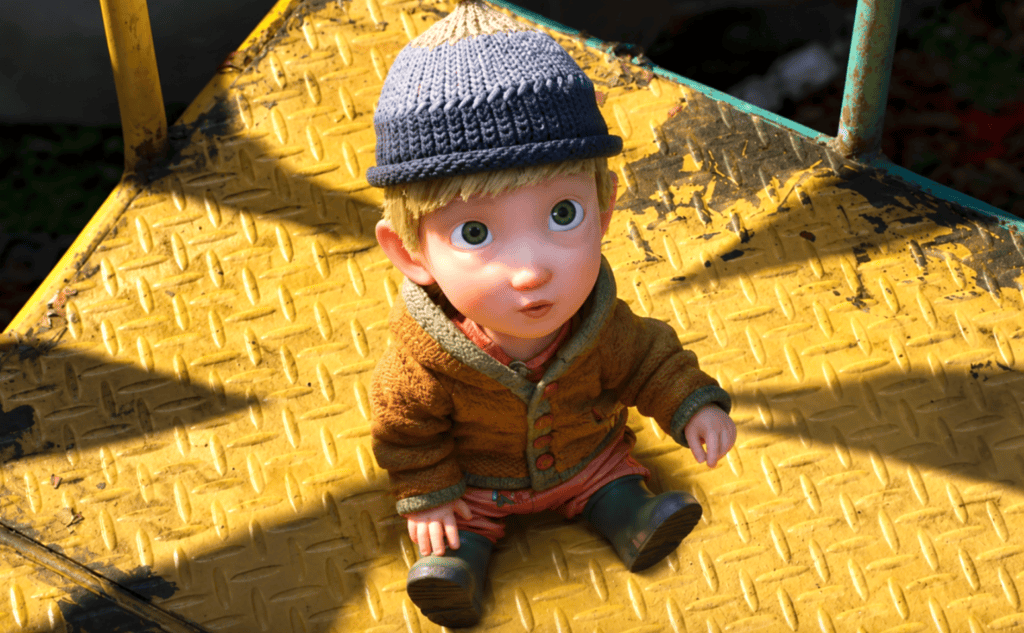
Though I was prepared to be annoyed by the character, Curtis quickly became my favourite. This timid, nebbish and nerdy young boy undergoes the most impactful, satisfying and tragic character arc I’ve seen in a long time. Curtis clearly wants to be liked and respected, especially by Prue. He’s a boy who’s grown up playing hero in games and in his head, and when it comes time to take action, he displays courage without hesitation. In a scene that stuck with me long after the credits rolled, he also discovers the sacrifice and heartbreaking loss of innocence that comes with heroism. (In both screenings I attended, there were smatterings of misguided cheers and applause during the scene I’m referring to, despite Knight saying that this scene is meant to be horrifying rather than triumphant.) Tremblay deftly conveys Curtis’ emotional journey through his acting. Curtis starts weak and squeaky, and though he’s still squeaky throughout the film (he’s a child, after all), he develops strength and toughness by the middle of the story, and a hollowness that only deep emotional scarring, like the horrors of war, can bring by the end.
Wildwood is Prue’s story, though. Her emotional journey is the inverse of Curtis’s. While his time in the woods among soldiers and bandits toughens him up, Prue’s fight to get her brother back and encounters with magic soften her. Curtis witnesses much of the suffering and darkness that plagues the land while Prue is forced to accept its wonder and majesty. That’s not to say she doesn’t witness her fair share of death and hardship. She begins the story as an adolescent young girl trying to be tough for her brother and distancing herself from childish things like magic, only to realize that being a grownup doesn’t mean you have all the right answers. She learns it’s okay to ask for help and to show vulnerability. Alexandrea’s refusal to let go of a lost loved one may have sent her down a villainous path, but Prue’s reason for clinging to love is pure and heroic. Her adventure forced her to grow up, but not in the way she wanted. Her character arc and plot line are more direct than Curtis’, but her emotional growth is more subtle. Lee handles both sides of Prue excellently: the bratty, dismissive teen she starts as and the wiser, more mature young adult she becomes. From the desperation she feels when Mac is kidnapped to the pure gratitude she shows Curtis at the end, Lee provides a wonderful and believable performance.
Speaking of Mac, Arthur Knight’s babbles were fantastic—the most believable member of the cast.
Along for the ride were a list of A-listers like Erskine, Johnson, Mahershala Ali, Awkwafina and Charlie Day, to name a few. Ali, Tom Waits and Tantoo Cardinal were particular standouts of the supporting cast as Brendan the Bandit King, Maksim the coyote commander and Iphigenia the mystic, respectively. I enjoyed how the writing and voice acting for members of different factions clearly distinguished the cultures of each group and helped create a believable sense of authenticity. Brendan had a brusque but comforting charm. Maksim was unrepentantly bloodthirsty. Iphigenia spoke with a slow and certain wisdom. If I have one complaint, it’s that for all the talk building up the meeting with the mystics and their sacred tree, they really felt powerless and relatively pointless. Iphegenia is the only mystic with any speaking lines, and aside from a few pep talks, I didn’t feel like her character had much impact on the plot. This could be a difference between Colin Meloy’s original book and this screen adaptation, but I would have liked to see the mystics do something other than pray at a tree and convince a bunch of farmers to go off to war.
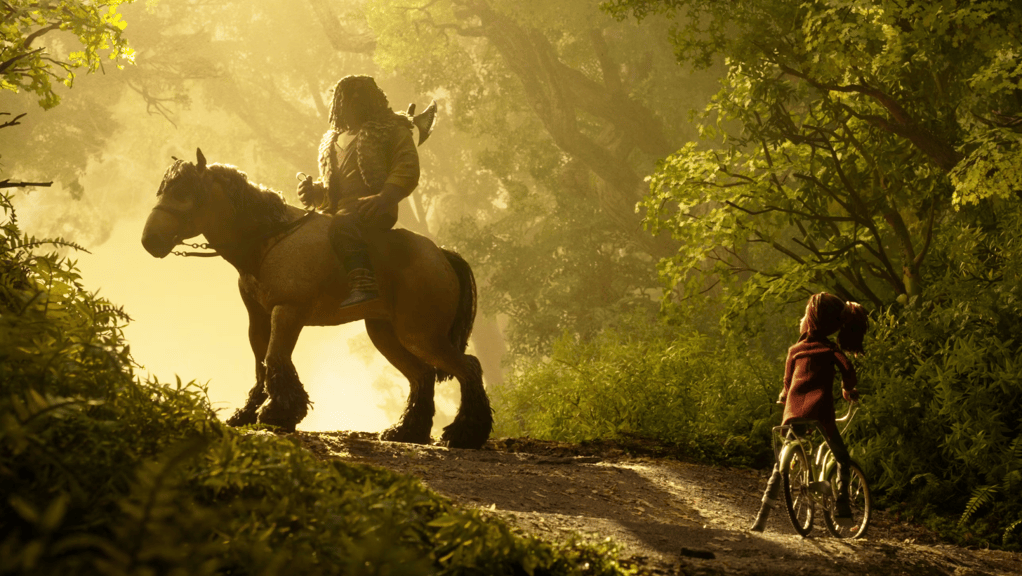
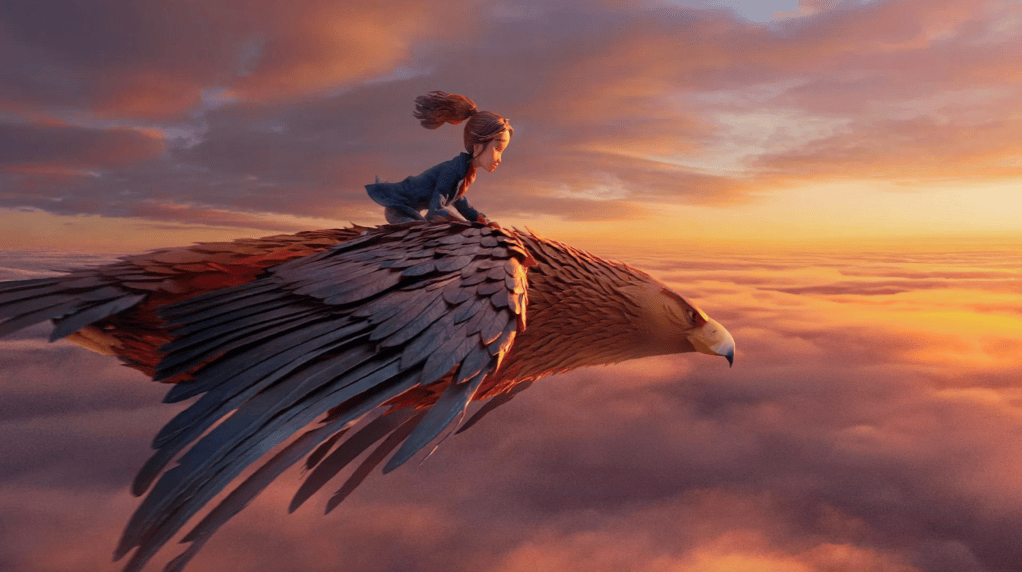
But of course the real draw and the most impressive aspect of Wildwood is its masterful stop-motion animation. Utilizing several hundred puppets combined with computer animation (but thankfully no AI), Wildwood is the most ambitious project Laika has ever undertaken. It’s clear why it took the studio over a decade and a half to create the film, and the investment is absolutely worth it. Whether it’s the exquisite amount of detail in the puppets and sets, the stunningly mobile camerawork by cinematographer Caleb Deschanel, the thrilling score by Dario Marianelli, or the impeccably intricate work by the sound design team, watching Wildwood is to see art come alive.
The puppetry in Wildwood is so seamlessly smooth, and the movements are so natural and crisp, it’s almost impossible to believe it was done painstakingly by hand, with individual pictures taken after incrementally small movements. The large sweeping shots of armies and the intense climactic battle are obviously impressive, but it’s also the smaller, more innocuous movements that help sell the world. Characters adjusting their clothing, walking up the stairs in the background of a shot, or subtly shifting their facial expressions breathe life into every second. The character design is also so whimsically wonderful. You’ve got animals in coats but no pants, coyotes with bayonetted rifles and a gang of tough-looking bandits. Everywhere you look, there is something for the eye to appreciate. Even if you don’t appreciate nuanced explorations of grief or cautionary tales of war, see this movie for the exquisite puppetry. Do it for the puppets!
Much like the magical ivy that threatens the residents of the woods, AI is creeping its way through the entertainment industry, strangling everything it touches. Wildwood is proof yet again that as visually impressive as some people might think the emerging technology is, it could never do what Laika does. Sure, some self-indulgent tech bro could vibe code his way to replicating Laika’s visual style with AI, but it could never capture the heart of what the studio is doing.
As Travis Knight recently said, “art leaves fingerprints.” AI will never leave fingerprints; it’s cold and dispassionate. The fingerprints are the point. With Wildwood, Knight and the artists at Laika have painstakingly handcrafted a deeply emotional and sophisticated tale that challenges its audience to look beyond its world-class animation and contend with deeper themes than are typically explored in an animated medium.
President John F. Kennedy once said, “We choose to go to the Moon in this decade and do the other things, not because they are easy, but because they are hard.” The Laika brand continues to stand for quality, refusing to take shortcuts. They choose to craft their films the hard way because that is what the art demands. In a world of Groks and Claudes, be a Laika.
Now, go buy a ticket to the movie, damnit!



Leave a Reply