
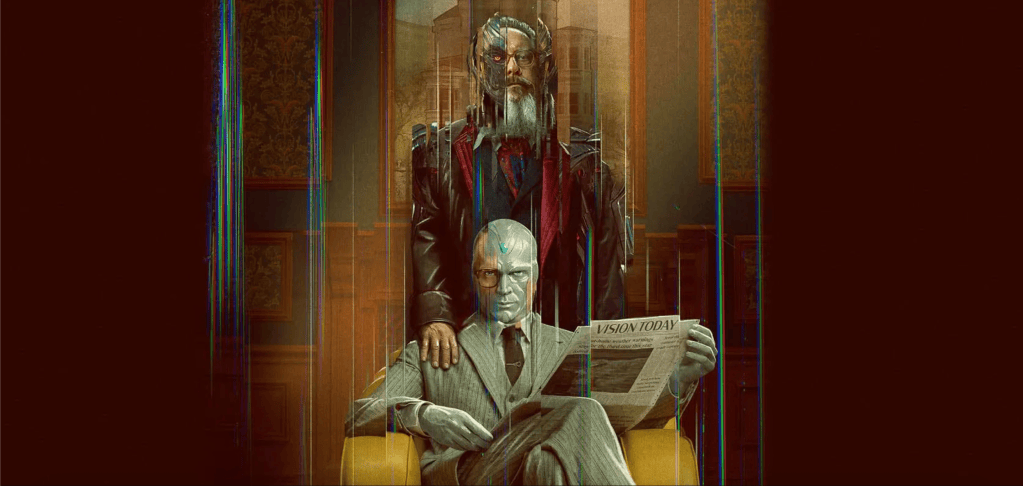
Good things don’t always come in threes, especially when it comes to superhero trilogies. Even the great pioneers of superhero franchises have embarrassingly stumbled on their third installments, from Christopher Reeve’s third Superman film to Raimi’s Spider-Man 3. Sticking the landing is a daunting task when two of your three installments are considered classics, or at least universally well-liked. However, Marvel Television managed to pull off something enigmatically triumphant with the WandaVision trilogy, which concludes with the spectacular and intriguing VisionQuest.
Under head writer Terry Matalas (Picard), VisionQuest successfully concludes the WandaVision trilogy by building upon what Jac Schaeffer established with WandaVision and the underrated Agatha All Along. Continuing the tradition of genre-mixing and surrealist presentation, Matalas explores complex philosophical concepts concerning artificial intelligence, identity, and humanity. Not only that, but he goes the extra mile, tying VisionQuest deeper into the MCU by reaching across multiple phases of Marvel Studios’ past and present to tell a story that still feels deeply personal to its central characters. As a result, characters like Vision, Ultron, Tommy, and even Wanda feel more complete and multidimensional than ever before. This is ultimately what makes VisionQuest such a strong conclusion, even when it occasionally gets weighed down by too many competing storylines and conventional storytelling choices.
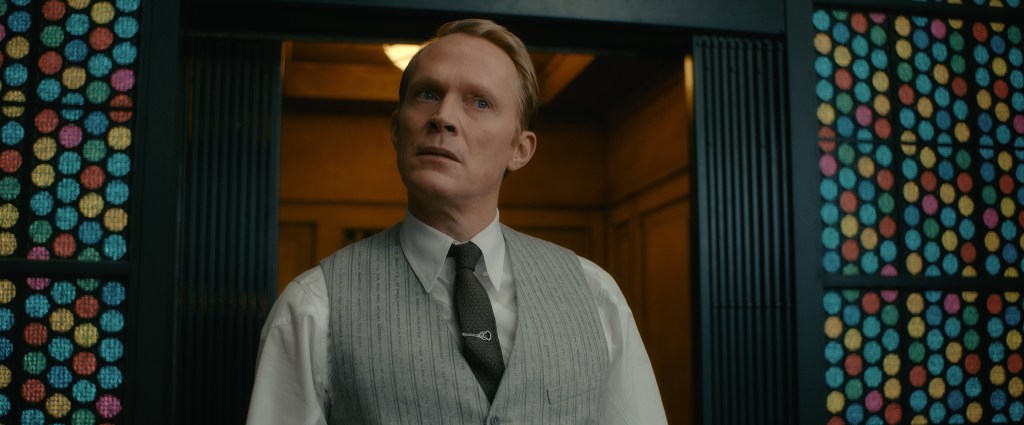
Thanks to WandaVision and Agatha, VisionQuest’s setup is fairly straightforward. The newer, tangible Vision synthetic built by S.W.O.R.D. in WandaVision is burdened with the original Vision’s (Paul Bettany) memories but without his identity. As his existential questions plague him, he finds himself in need of assistance and answers from Tony Stark’s other A.I. systems – particularly J.A.R.V.I.S. (James D’Arcy), F.R.I.D.A.Y. (Orla Brady), E.D.I.T.H. (Emily Hampshire), and an imprisoned Ultron – whom he has all assembled in a cyberspace construct of his creation (think of it as Inside Out for disembodied A.I. synths). However, when he finds himself in the crosshairs of a ruthless bounty hunter and the hunter’s mysterious benefactor, Vision’s search for identity and purpose pulls him into a deeper emotional journey that connects him to the original Vision’s past in a way he never could have predicted.
As simple as all that sounds (I say that facetiously at this point), VisionQuest really impresses in how it conveys these complex ideas. Up until this point in the MCU, Stark’s A.I.s (apart from Vision, Ultron, and the real-life Jarvis) were always pleasant computer voices. How could one possibly convey that they have relationships or interactions with one another? However, Matalas and his crew figured out an intelligent way to showcase this, presenting us with human avatars of each, living in an A.I. house that feels like a hybrid of a ’50s sitcom and an 8-bit video game (almost like The Sims). This makes sense not only given the context of Vision still having memories of Wanda’s sitcom-inspired utopia in Westview, but also because he’s an A.I., and this would likely be how an artificial intelligence would construct such a thing digitally. It allows the production crews to build this world in a really imaginative way, but also makes it easier for us to understand how conversations take place between these characters.
This is incredibly important, because Matalas also imbues each of the A.I. characters with their own individual personalities and purposes. Like any real-life A.I. the characters in VisionQuest serve different functions as products of both how Stark programmed them, and how they’ve learned and grown through Iron Man’s adventures in the MCU. Each of these functions also allows them to help Vision find his own personality and purpose, as they guide him back to the realization that – new body or not – he still is The Vision. It obviously helps with the development of Vision’s character, but more than that, it retroactively evolves each of the A.I. characters in ways that are much deeper and more emotional than they’ve been portrayed in the films. Doubling down on the Inside Out analogy, similar to Riley and her emotions, as the A.I. characters grow, so too does Vision, who learns to accept his identity and emotions increasingly with the encouragement of these characters. Paul Bettany’s performance absolutely captures the conflict and moral confusion of this version of The Vision perfectly, and the performances of James D’Arcy, Orla Brady, and Emily Hampshire bring a terrific sense of individuality and style to who and what these A.I.s are supposed to be.
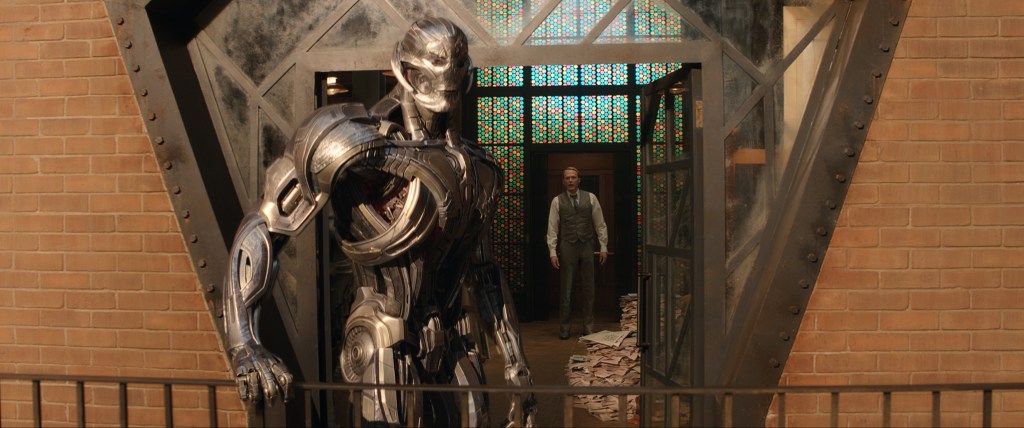
That being said, Vision is not the only central character of the series. James Spader is back as Ultron, and both the performer and character absolutely dominate VisionQuest. For as much as this story is about Vision embracing his true identity, it is as much a story of Ultron wrestling with (and very much resisting) morality, and of his past and present points of view being called into question by Vision’s existential crisis. This is, in many ways, even more engaging than Vision’s struggles, because Spader is so brilliantly incredible at conveying this conflict subtly and often hilariously. His dry, apathetic attitude in many scenes generates some of VisionQuest’s biggest laughs. Yet his understandable perspective on humanity (terrible as it may seem) and his own experiences with loss make him surprisingly sympathetic. As such, when we see him and Vision engaging in a battle of wit, wills, and morals, you’re even more engaged than you would be watching these two crossing hands. All that is thanks to Matalas and the team, along with Spader, who further develop the character.
Ironically, however, when VisionQuest takes things into the real world, they become less engaging, though still entertaining. What we end up seeing in the story becomes more conventional as the show becomes more of a cat-and-mouse murder mystery combined with a father-son drama. All of this is important in developing MCU events involving specific characters, and it has a notable and necessary impact on Vision’s character arc. The result creates depth and emotional complexity for Vision, while bringing many of the lingering questions and thematic threads from WandaVision to a satisfying conclusion. But, in all honesty, I felt this is where VisionQuest slowed down the most. This is absolutely in no way due to Ruaridh Mollica’s heartfelt, breakout performance as Thomas Shepard, and more to do with how much more refreshing and philosophical the weird surrealism of Matalas’ A.I. world feels compared to what we get in the real world.
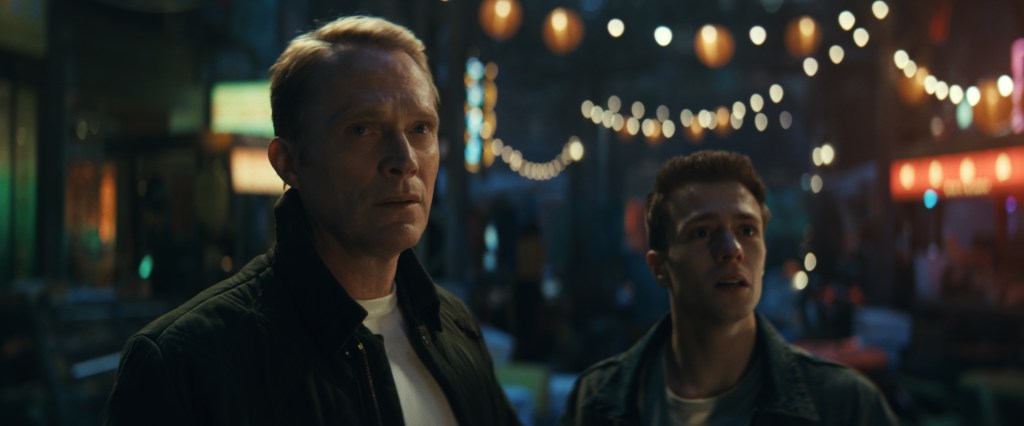
Explosions and drones shooting adamantium bullets at Vision are fun. Emotional breakthroughs and moments between Vision and real-world characters are important and touching. However, from both a written and directorial perspective, those feel so much safer and more conventional than any of the A.I. scenes, both visually and thematically. So I was less invested whenever the show cut to those moments, regardless of how important they were to the story or character development.
Yet despite being safe and conventional, the storylines introduced in the real-world portion of the narrative also bloat VisionQuest considerably. Within the first four episodes, we get Vision’s search for identity; Mollica’s character’s relationship with him; the mystery behind Mollica’s character; Paladin hunting them; the mystery behind his benefactor’s identity; a murder mystery with a mysterious “bird-obsessed” villain; Ultron’s intentions; the introduction of the new A.I.s. That is a lot to keep up with. Thankfully, Matalas and team are terrific at balancing and introducing pieces of the puzzle with every episode, so it comes together more or less coherently at the end. However, it does make VisionQuest feel a bit more overstuffed than its predecessors, though less clever in its execution of these concepts. Then again, I suppose one can’t blame the series for not being a retread of the episodic sitcom concept of its original ancestor.
The nitpicky problems with VisionQuest aside. However, it ultimately is an entertaining and engrossing ride. When it gets weird, it rises to the levels of WandaVision, offering conceptually arresting representations of characters we’ve only experienced as disembodied voices in previous MCU installments. With magnificent performances from Bettany and a scene-stealing Spader, it definitely earns its place as another strong installment in the WandaVision trilogy and the most fitting, appropriate, and ultimately satisfying conclusion we, as Marvel fans, could ever have received.



Leave a Reply