
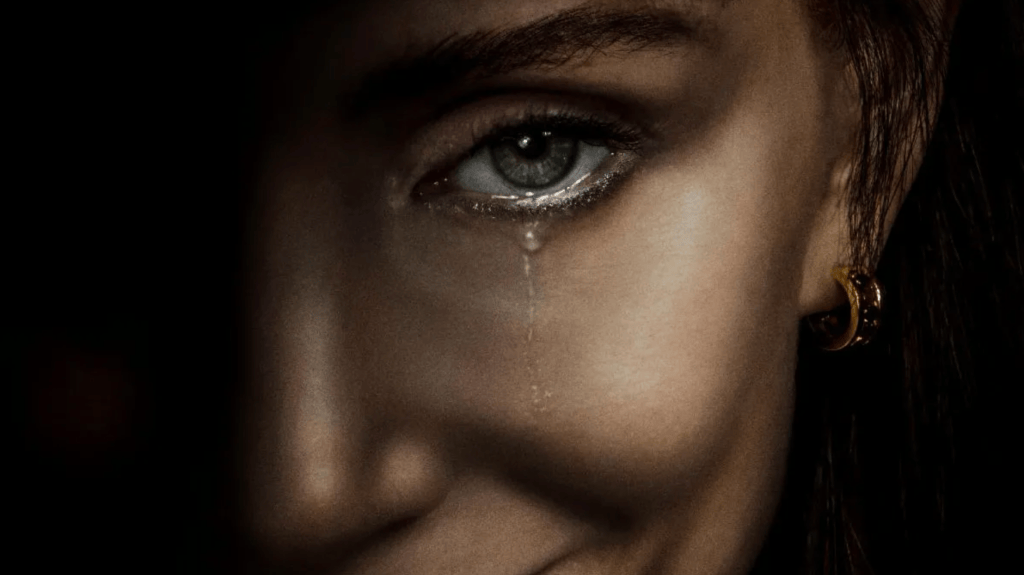
Mommy? Sorry. Mommy? Sorry. Mommy? Sorry.
Even before it was released, Jessica Chastain was creating buzz for Other Mommy by spooking unsuspecting theatregoers with the film’s trailer ahead of screenings of Christopher Nolan’s The Odyssey. I even saw a guide for “when to pee during The Odyssey” advising the horror-averse members of the audience to skedaddle to the bathroom as soon as Chastain’s face appeared on the screens.
Call that a win for earned engagement and organic marketing. The test is whether or not the film can live up to and sustain the hype, especially during spooky season.
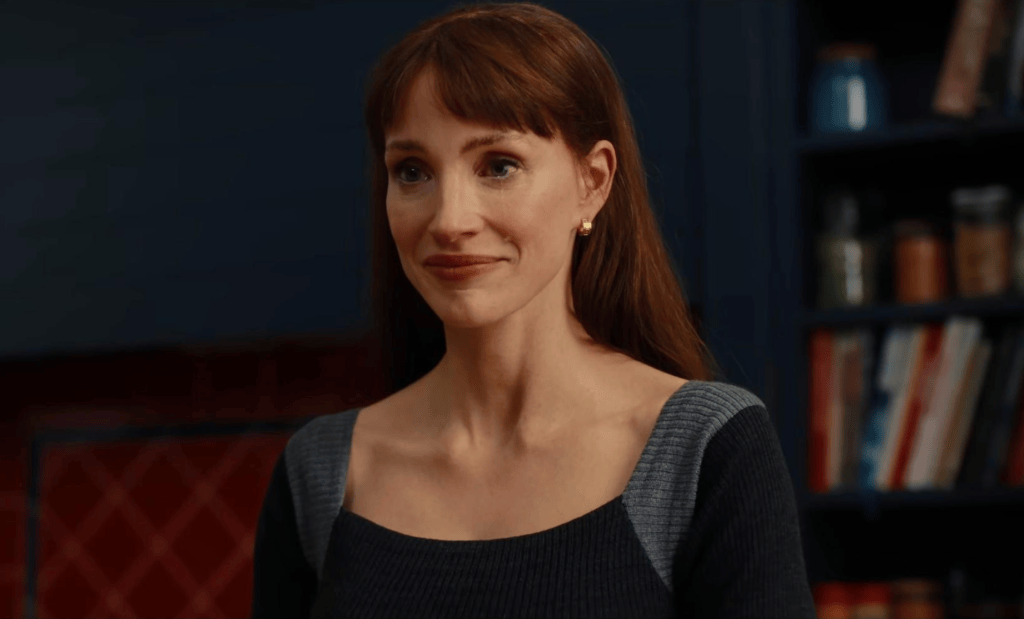
For anyone who didn’t see The Odyssey eight times like I did (for no other reason than wanting to say I devoted 24 hours to the film) or who has otherwise avoided the trailer, Other Mommy is based on the book Incidents in the Life of a Slave Girl. She is the story of eight-year-old Bela (Arabella Olivia Clark) who lives with her Mommy, Ursula (Jessica Chastain), and her Daddo, Russ (Jay Duplass). Though Ursula and Russ play pretend and try to hide the cracks in their relationship, they’re really bad at it, which causes Bela to gravitate toward Daddo while distancing herself from her Mommy.
Which brings us to the Other Mommy. Other Mommy is a reality-warping demon who can take the appearance of anyone it wants, but typically defaults to appearing as Ursula to fill the void left by her absence, and is thus mostly played by Chastain. At first, Other Mommy (who I will henceforth refer to as OM) acts as Bela’s friend and claims to want only to protect the young girl from the unspecified heartbreak her parents will inevitably inflict upon her. What OM really wants is to “go inside” Bela’s heart so she can trade places with her and live in the human world, which she can only do if her host stays “pure” and lets her in. But like a really messed up version of Pinocchio, OM’s desperation to become a “real girl” overrides any friendship or motherly inclinations the demon may have had, and she resorts to more drastic and violent methods.
Director Rob Savage has touted that the film has “like 50” jump scares, which means with a 93-minute runtime, that shakes out to one jump scare every 1.86 minutes, “depends on what you refer to as a jump scare.” That’s a lot, and in that same interview with Entertainment Weekly, Savage bemoans how jump scares “get shit on a lot.”
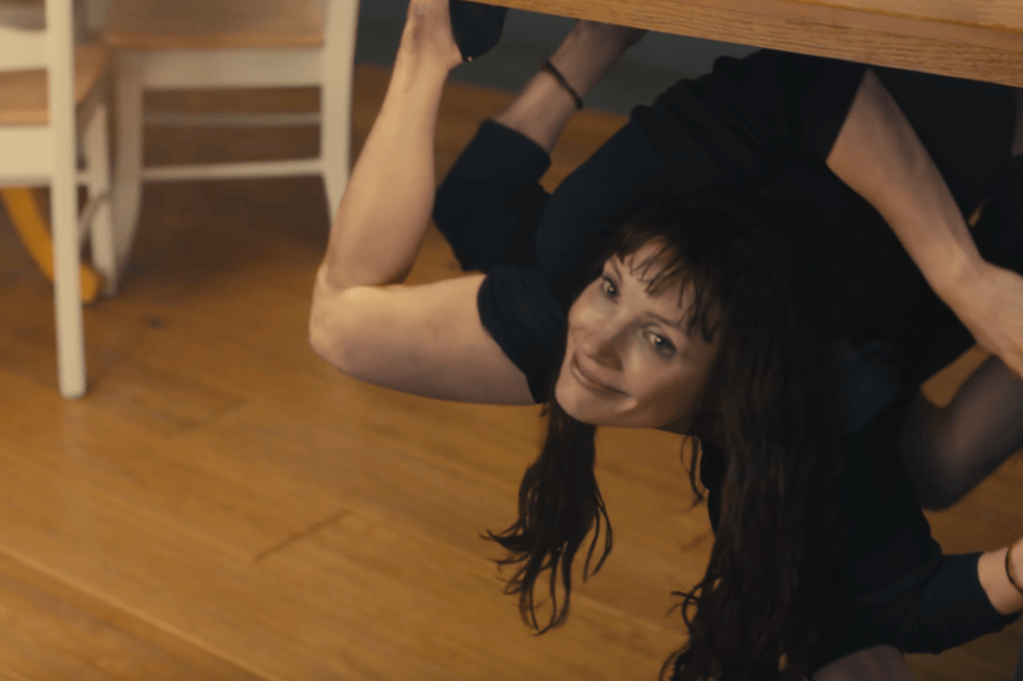
I do it all the time. In my opinion, overreliance on jump scares generally indicates a weakness or a lack of faith in the material. However, the jump scares in Other Mommy are generally effective and pretty fun. Don’t get me wrong, they start to get old and lose their efficacy pretty quickly, but even after all the times I’ve seen the “under the table””scare from the trailer that opens the film, it still creeps the hell out of me. And some of the jump scares aren’t really full jump scares either, but rather shots of OM lurking in the background. It’s very reminiscent of The Babadook, and I mean that as a compliment.
As strong as they are, Other Mommy is at its most frightening when it doesn’t rely on jump scares. Conventional horror wisdom typically dictates that you refrain from showing your monster for as long as possible, relying mainly on suspense and anticipation. Other Mommy doesn’t do that. Instead, it defiantly shows off its monster in the first five minutes (and in the trailer), which is mostly just Chastain being creepy, so it’s not like a big reveal is being spoiled. I think this decision is for the better, and while we never get a full glimpse of the demon in its true form, such an early reveal of OM forces Savage and Chastain to make her extra creepy to ensure she remains threatening throughout the rest of the runtime. Rather than the film’s quick, startling jump-scare cuts, Other Mommy is at its scariest when Savage sits with its characters and lets Chastain act. The long, lingering shots of OM refusing to blink are incredibly unsettling. Her cold, empty smile really gives the impression that she is something other than human caught in a poor imitation of friendliness. Her bodily contortions and otherworldly movements really give you the heebie jeebies. Instead of bandying about the number of jump scares he could cram in, Savage would have made a better film had he chosen to emphasize this aspect of the character instead.
As the perspective character, Arabella Olivia Clark does a competent job with Bela. She holds her own among experienced actors like Chastain and Duplass. Many times, child actors are annoying or unconvincing, or they portray their characters as too young for whatever age their character is supposed to be, which may be as much a fault of the director or casting department as it is the actor’s. Clark suffers from none of that. Her character is relatable, mature, sympathetic and justifiably terrified. Her performance is quite enjoyable.
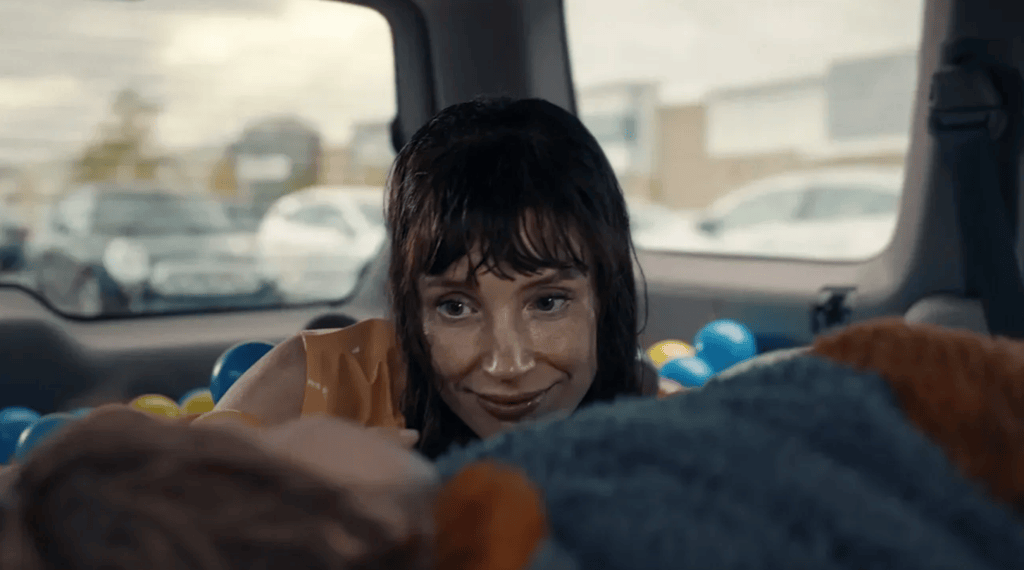
Bela may be driving the story, but it’s Chastain’s dual performance as Ursula and OM that’s the big draw. As Ursula, Chastain keeps her family at an arm’s distance. She loves them, or at least she’s supposed to pretend she does, and she balances that familial duty with the distinct impression that she would rather be anywhere else than at home. As OM, Chastain is a completely different entity. Where Ursula represents some of the more selfish and base desires of humanity, OM is a void. Her single-minded drive to become human is an insatiable hunger that compels her to go to horrifying lengths. The film is at its best when it allows Chastain the room to fully settle into OM’s skin, commit to the bit and get under our skins. Chastain’s dual performances are easily the most effective and rewarding parts of the film.
Rounding out the main trio of cast members is Jay Duplass as Russ. He’s the parent Bela gravitates towards more, and it’s easy to see why. He’s the more affectionate, more present and more sympathetic parent. Ursula treats Bela as an obligation; Russ treats her like a person. As the story unfolds and more details about their lives are revealed, you really feel sorry for the guy.
But as much as the cast tries to keep the film afloat, whether they’re able to do so under the weight of an uneven story and confused messages is up for debate. There is a story. That much can be said.
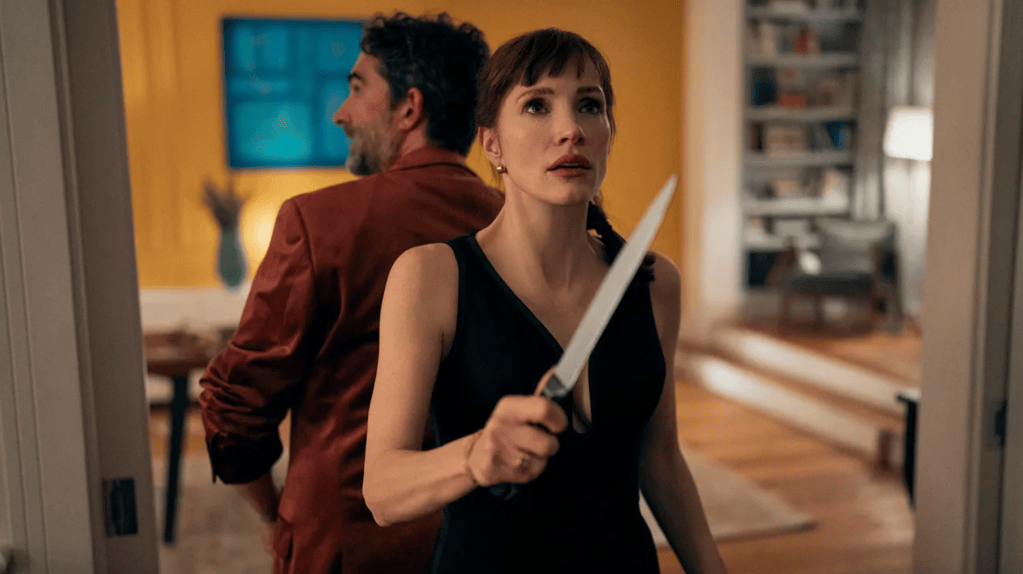
Nothing was very consistent or evenly paced. From the get-go, it’s made clear that OM is a real entity that can interact with characters rather than simply a psychological manifestation of Bela’s trauma, and I appreciate that, rather than gaslighting the young girl, her parents witness the monster and fully believe in her from the start. Many horror films happen simply because the characters are idiots and make all the worst choices, but thankfully all the characters make the most logical decisions available to them.
There’s also a fun subversion of the big finale seance trope. Those are the good parts of the story. But while it’s often a mistake for writers to over-explain their monsters, Other Mommy doesn’t explain enough. What is the range and limit of her powers? Why is she so obsessed with Bela when there are probably other more willing targets out there? How does the family explain away the series of dead bodies OM has left in their wake? Why is OM antagonizing and scaring Bela when she needs Bela to let the demon into her heart willingly? Leaving the demon at least partially undefined allows us to imagine the horrors she is capable of and keeps her scary, but allowing her powers to be undefined has the opposite effect. It’s boring and feels like writers Nathan Elston and Josh Malerman weren’t interested in the world they created.
There are themes and messages. That much can be said.
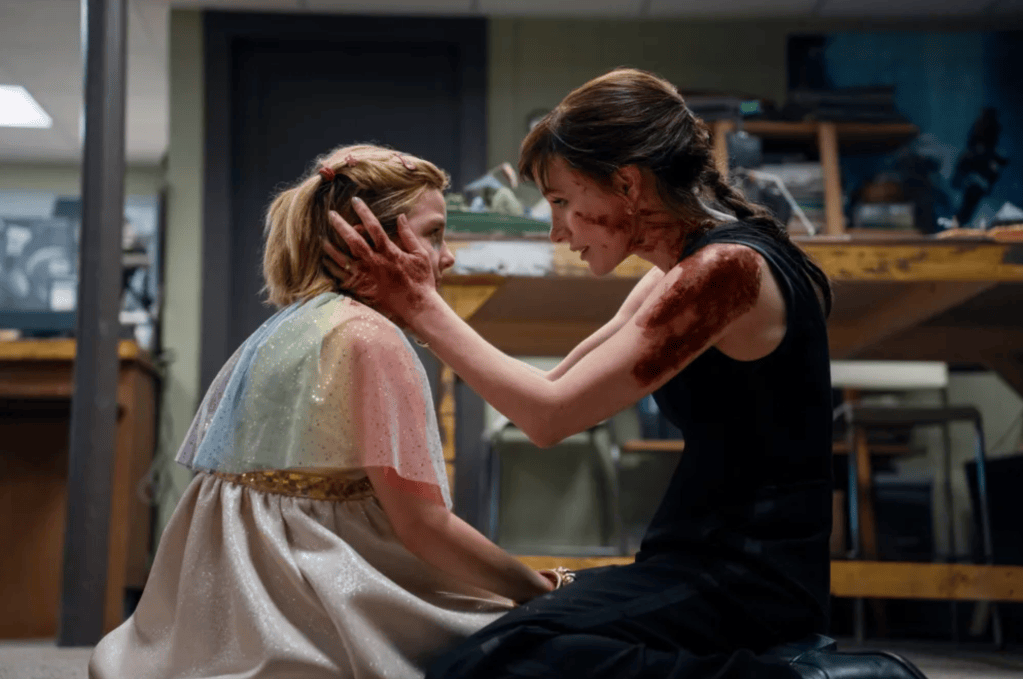
But Other Mommy doesn’t seem to know what it wants to say. Should we shield ourselves or embrace the pain? Is it better to accept the painful truth or to tell convenient lies? Is the pain of real life more important or the purity of innocence? Is this a case of Elston and Malerman getting too many studio notes? Maybe two writers were still too many cooks in the kitchen. It would be nice if the filmmakers picked a side and showed some perspective. If they can’t even be bothered to craft a coherent message and define the rules of their own monster, then why should we reward them with our tickets and attention?
Other Mommy does some good and a lot of very mediocre work. Some fun jump scares and committed performances, especially from an incredibly creepy Chastain, keep the story pushing along. Writers Nathan Elston and Josh Malerman, and director Rob Savage, include some fun subversions of overplayed horror tropes, but the rest of the writing is lacklustre and lacks cohesion. The amount and variety of jump scares keep the beginning of the film engaging, but they lose their novelty quickly.
It’s spooky season, and there’s a lot of excellent horror available in theatres and on streaming services. Other Mommy is good for a mindless fun watch (kinda), unless you have other movies on hand.




Leave a Reply