
Flashback to 2020, when I, unemployed due to the pandemic and flush with stimulus money, would sit around on my computer and buy comic books from a weekly virtual claim sale hosted by my local comic book shop (R.I.P. Brave New World Comics). One particular Wednesday, one of the guys slinging that sweet printed pulp pulled out an old book he pronounced as “Ass-Wang.” Without even seeing the book, I immediately claimed it, not because I wanted something sure to violate the Comics Code, but because just hearing the word made me know it was a comic about aswang, the Filipino catch-all word for monsters. I have never actually read the comic since it’s written in Tagalog, which I neither read nor speak, but I own it, and aren’t owning books and reading them two separate hobbies? (I actually tried to dig out my copy before writing this review, but the garage spiders have claimed my comics collection.)
In recent years, pop culture has taken a sudden shine to Filipino things. Every hip and trendy restaurant is scrambling to include ube in their menus. The world of music has Olivia Rodrigo, H.E.R. and, if you’re old, Arnel Pineda. Jo Koy and Gabriel Iglesias sold out SoFi Stadium. Film fans have reason to celebrate, as Lea Salonga was recently honoured as the first Filipina to receive a star on the Hollywood Walk of Fame, and Hailee Steinfeld voices the lead in Disney’s Hexed, which releases later this year.
In terms of movies about Filipinos, not just featuring them, there are precious few. If you’re lucky, you might have caught Yellow Rose or The Fabulous Filipino Brothers on the festival circuit. Still, the only mainstream Filipino-centric film I can recall in recent history is Easter Sunday. Until now.
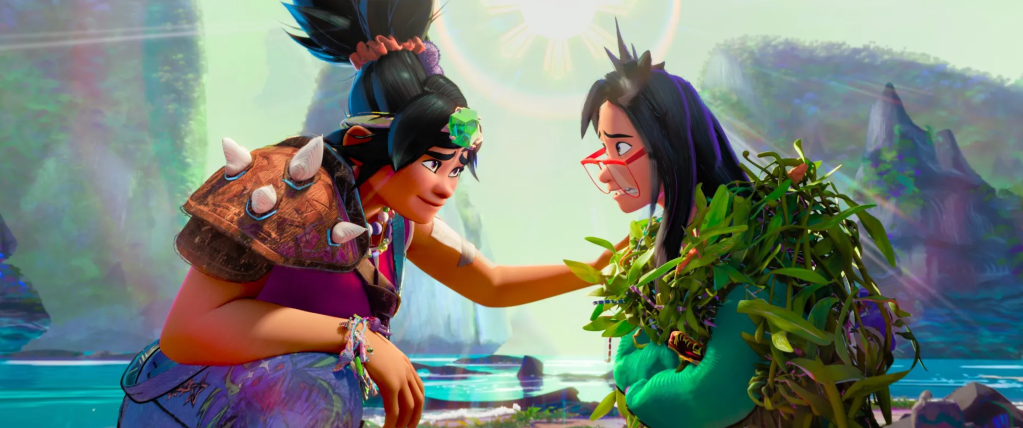
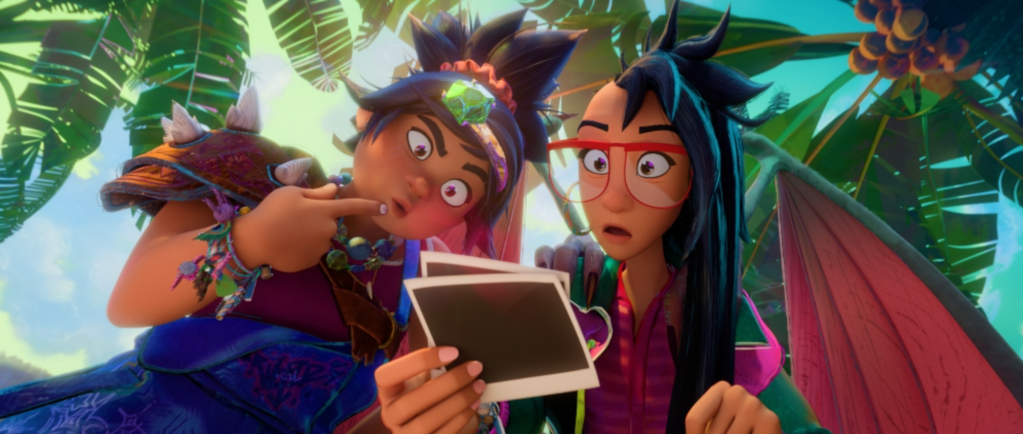
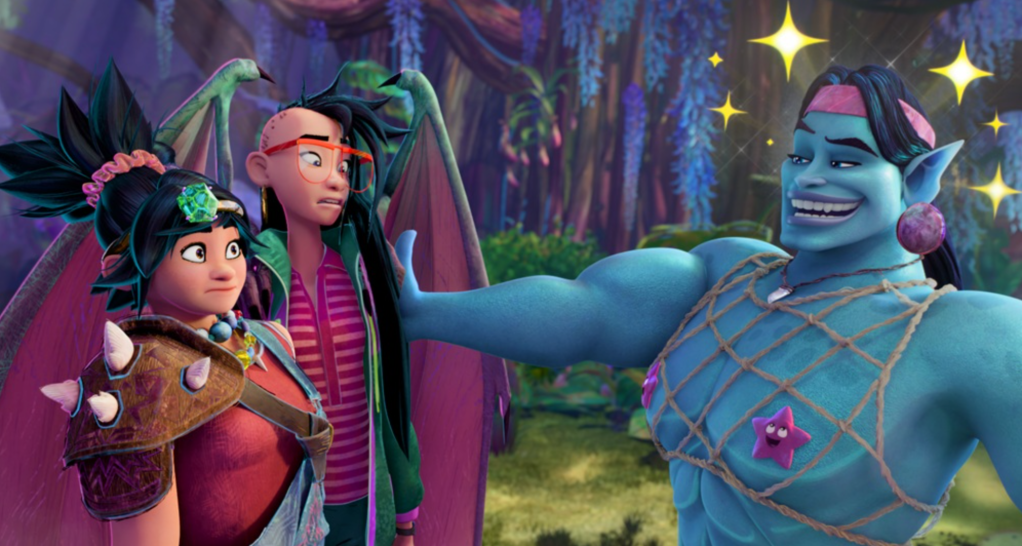
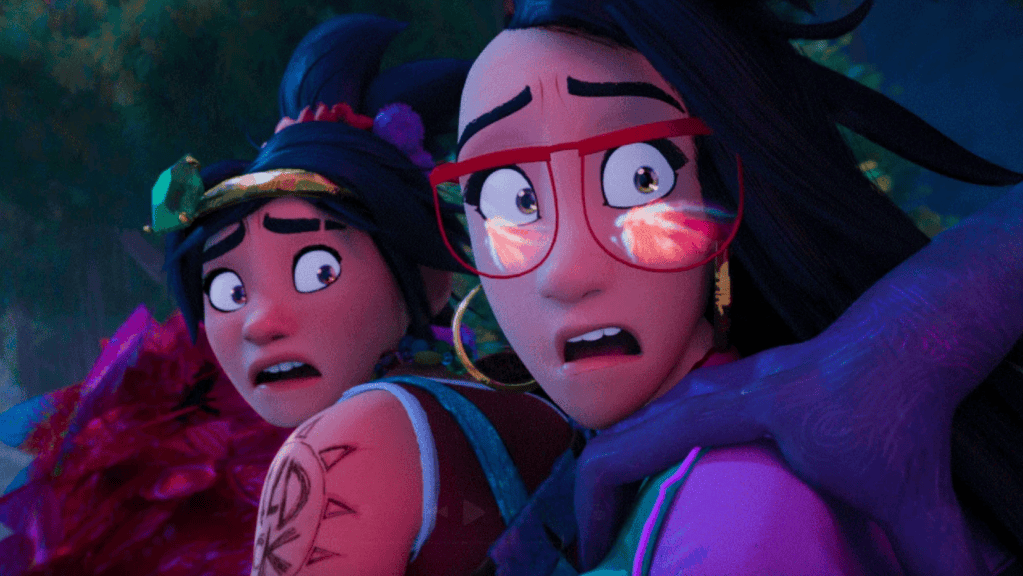
DreamWorks’s Forgotten Island is the first feature-length animated film from a major studio that portrays Filipino culture and mythology. Helmed by writer-director duo Januel Mercado and Joel Crawford, the film follows best friends Jo (H.E.R.) and Raissa (Liza Soberano), who live in the Philippines in the 1990s. The two have always believed in the mystical island of Nakali, home to aswang such as the vampiric mananaggal, tree-like kapre, and dwarves known as duwende. Following Jo and Raissa’s high school graduation, on the eve of Raissa’s departure for college in America, the girls encounter a portal to Nakali and decide to go on one last adventure together. When they wake up the next morning with no memory of the night’s events and a deadline for Raissa to catch her plane, Jo and Raissa must team up with some of the residents, like the weredog Raww (Dave Franco), tiyanak/demon baby Bungi (Manny Jacinto) and the siukoy/merman Prince Mermahn to find a way home.
Forgotten Island is an energetic burst of fun from start to finish. As soon as the opening logos roll, the film is a non-stop chaotic thrill ride that doubles down on its zaniness and comedy. Picture a family-friendly version of The Hangover but with monsters, and you’ve got Forgotten Island. It is just as exciting to explore Mercado and Crawford’s recreation of the streets of the Philippines as it is to explore the markets and forests of Nakali. The story is well-paced and organically moves forward under the time pressure of Raissa’s flight to America, and each story beat and action set piece is exciting.
The character work done in the film is also a major plus. Jo and Raissa’s contrasting but complementary personalities, the courageous slacker and the nervous brainiac, feel genuine. H.E.R. and Soberano bring warmth and depth to these roles, and both girls are engaging and lovable. Even without the monsters, I would have watched a whole movie of all the shenanigans they commemorated in their friendship bracelets.
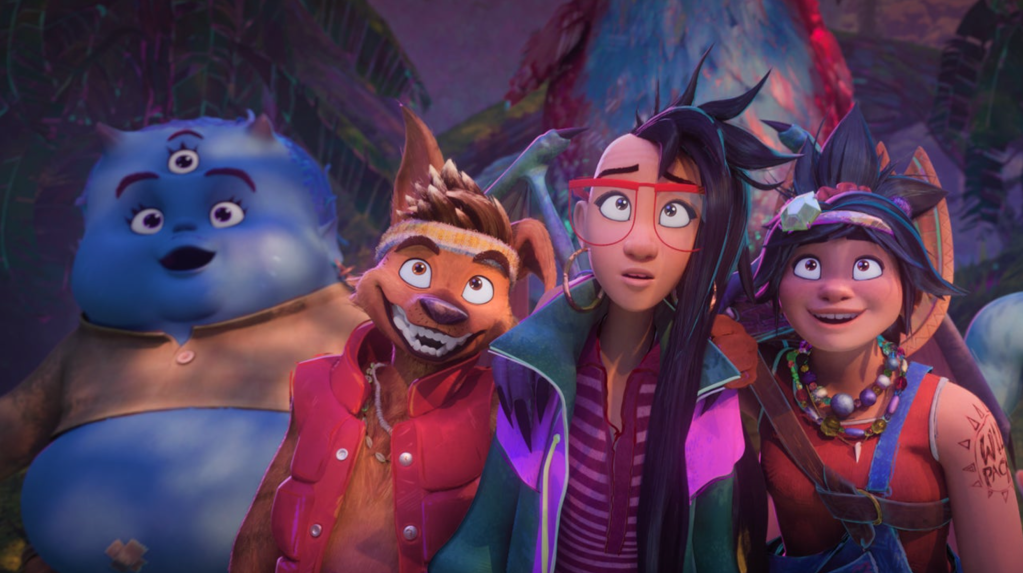
Speaking of the monsters, Dave Franco’s performance as Raww feels absolutely…raw. The character’s exuberant party animal energy pairs perfectly with Franco’s line delivery. Yes, this is exactly what a dog would sound like if it could speak. Franco not only hits the character’s highs but also his emotional lows, playing a very forceful tug-of-war with your heartstrings. I love Jo and Raissa, but Raww was the standout character for me. Dave Franco gets honorary Pinoy street cred.
The rest of the cast play their roles well without quite being exceptional, and though I appreciate their casting and have no complaints, some of the cast feel like they were included just because they’re Filipino. Jo Koy is fine as the chill, broish kapre Datu, and I didn’t recognize it was him without his signature frantic energy. I’ve only seen a few episodes of The Good Place, but from what I remember, Manny Jacinto’s performance as the demon baby Bungi carries the same naiveté that his character Jason does in the show. Jenny Slate’s Batiba, the memory demon/batibat, is effective, but so similar to one of her other performances that naming the role would give away part of the plot. Ronny Chieng’s role as the duwende king Truffle Wuffle is a delightful surprise but still doesn’t feel like acting and just Ronny Chieng being Ronny Chieng. I love how scary Lea Salonga is as The Dreaded Manananggal, but I wish she had even more screen time and even more lines. The voice acting still serves the characters well, and they’re written with distinct personalities to compensate.
While many films, games, and TV shows seem to be getting grayer, drabber, and edgier, Forgotten Island revels in its bright colours and sense of joy. There is so much visual variety, ranging from the different costumes, character designs, and location scenery to the different art styles and cutaways, often offering refreshing but short breaks from its 3D-animated style with 2D moments reminiscent of Japanese anime. Every scene drips with personality and identity. This should be no surprise, given how beautiful Mercado and Crawford’s previous film, Puss in Boots: The Last Wish, is. Pixar’s standard big-eyed cartoony style may win awards and dominate the box office. However, it’s become a bit stale, and Forgotten Island instead takes its cues from Sony’s The Mitchells vs. the Machines and its Spider-Verse films, which shook up the animation landscape. Forgotten Island feels gloriously unique, like punk rock in a world of classical orchestra.
Unfortunately, the uniqueness of its cultural exploration and artistic vision doesn’t extend to the story. If I have one gripe about the film, it’s that the plot is disappointingly predictable. None of the twists were surprising, and many were telegraphed too strongly. It’s as if Mercado and Crawford were letting the Filipinoness of the film dictate where the story would go rather than allowing story and culture to be equal copilots.
My favourite aspect of Forgotten Island is how unabashedly and unapologetically Filipino it is. This may sound obvious, given that the film is set in a particular culture, but it’s the specificity and in-your-face nature of the cultural references that I’m lauding here. Jo and Raissa have American accents, but there are plenty of thick, authentic Filipino accents throughout the film. Characters use Tagalog words and phrases without ever explaining or offering an English translation, and the film dares to trust that the audience will understand and keep up. In one of my favourite scenes, Mercado, Crawford, and the cast fully capture the zany chaos of a Pinoy house party, from the mountains of food to the seemingly impossible number of guests in a single house to the bad karaoke. Those unindoctrinated in the culture’s idiosyncrasies will get their first exposure to lip-pointing, lechon, and jeepneys. At the same time, those of us who know will pick up on deeper cuts like the barrel man and the giant wooden eating utensils.
Mercado and Crawford’s exploration of their mythological characters really stood out for their creativity, respectfully drawing from the creatures’ traditional origins while subverting them to create a truly original perspective. Slight spoilers, but for example, Netflix’s Trese series, based on the comic of the same name, portrays the duwende as powerful and sinister creatures of the underworld; however, the film reimagines them as proud, warlike, and adorable mushroom creatures.
The Dreaded Manananggal is one of the coolest creatures I’ve seen in a while. Taking a page from their frightening and unique personification of Death in The Last Wish, Mercado and Crawford have crafted her into a terrifying antagonist who retains her iconic characteristics, such as the ability to split her body in half at will and fly around. But they also add their own perspective on the character, humanizing her and explaining why she is so cantankerous without making her any less scary. Again, Mercado and Crawford have served up something for everyone: non-Filipinos are introduced to a new mythological bestiary, and Filipinos get a brand-new spin on old legends.
The Philippines has been intertwined with American culture and history for so long that a film like Forgotten Island feels overdue. Its story and premise are predictable yet fun, and the vocal performances vary in quality but are all still pretty good, with Dave Franco as a particular highlight among the cast. The film’s strengths lie in its artistry, from its gorgeous animation to its loving recreation and reinterpretation of Filipino culture.
So put on your tsinelas and smuggle some lumpia into the movie house. Tayo na!




Leave a comment