
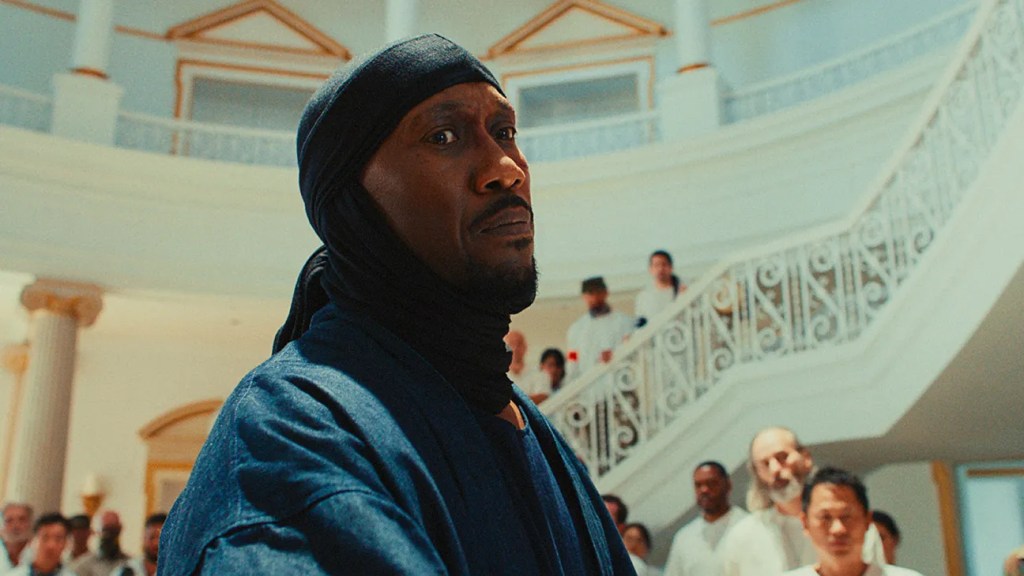
Your Mother Your Mother Your Mother follows Latif (Mahershala Ali), a father and husband who is a man of faith and also a contract killer. We meet Latif as he uses his skills to defeat evil, absolutely demolishing a man in a shabby public washroom. His phone rings; on the other end is his distraught daughter. The worst has happened; he is now a widower.
As Latif faces one of the worst crises in his life, he begins to have an internal battle with his faith. He sees himself as a loyal soldier of Allah, a righteous man with a calling to stand against the world’s darkness and purify it. He is immediately humbled by the sudden death of his wife, who by all accounts was a strong partner and mother, who was greatly loved by her community and family. Her goodness permeates the film as the community rallies around Latif and his three children, the youngest still nursing.
How could Allah strike down such a pious woman? This is the question that lingers in his mind as he reckons with the reality of what he has done and how it affects his children, whom he must care for in a way he perhaps failed to do while pursuing his righteous crusade against wrongdoers.

In the midst of this internal challenge, kingpin Mike Mahmoudi (Laith Nakli) desperately tries to get Latif to do a job that will ensure his nephew Haddy’s (Abubakr Ali) safety from a rising Christian minister, Pastor Kwan (John Cho), who is on a parallel journey to Latif, on his own crusade to cleanse the world of “bad people.” Culture and religious tradition collide as these morally ambiguous characters scramble to get the upper hand in a situation fueled by dogma, faith and selfishness.
The casting throughout is impeccable, but what really gets me going is the honest, sincere depiction of religious fallibility through the eyes of Latif’s children. Fatiha and Qadir and, to an extent, Haddy represent the younger generation of Muslims Americans, inundated with temptation and wayward materials thanks to the internet. However, their journeys are not defined by typical rebellious tropes; rather, a genuinely honest approach to their questions and disillusionment makes Latif’s journey and the film’s overall theme feel more lived-in and substantive.
Fatiha is your typical Muslim teen girl, with her quiet crush on a non-Muslim boy and her secret online activities. She isn’t the ideal child of God; rather, she is a young woman coming into her own. Questioning her beliefs and coming to terms with the new household dynamic that makes her the new matriarch of sorts. Meanwhile, her younger brother’s defiance is far more brash and childlike because he is an actual child. His questions are stunningly straightforward, but Latif nurtures his earnest eagerness to learn more. As a Muslim woman raised in the Western world, I have seen too many times Muslim parents force Islam upon their children, without any open dialogue about the teachings of the Quran, what the hadiths teach, or even trying to make the meaning of “jihad” understandable for someone still growing. There is no room for skepticism or naivety, neither of which is seen as blasphemous or evil in this film. Haddy represents the extreme reaction to limited room to grow and learn. In contrast, Fatiha and Qadir are better adjusted and more open to faithfulness because Latif, and presumably his wife Khadija, created a safe environment for their children to ask simple questions.
The film is very open to the idea that faith is a journey. It isn’t an instant acceptance of Allah and his teachings. It is not black and white. To be a faithful Muslim is to come to a clear-minded and informed decision on your own, not by the hand of a parent who thinks they know best. Latif never claims to know more or that his way is the right way. He represents the reality that faith is largely institution-based. As Tariq navigates such a personal and heartbreaking battle that Latif endures, both mentally and physically, he manages to craft a story that invites audiences to experience a very authentic Muslim experience from numerous perspectives.
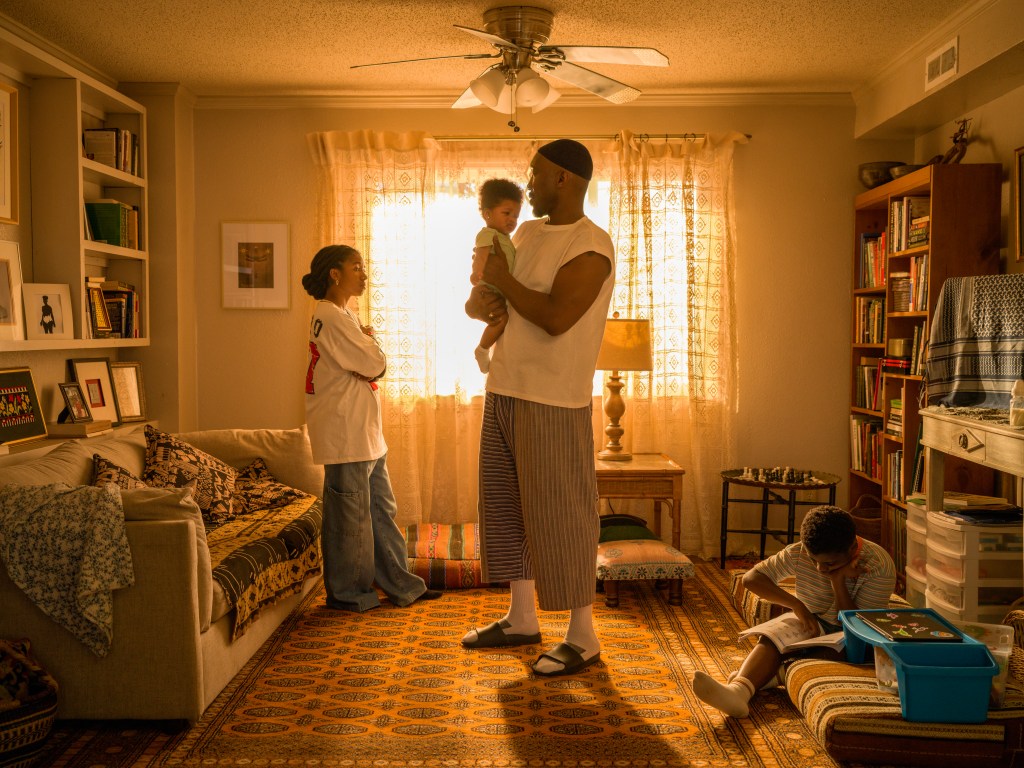
His depiction of Latif, Fatiha, Qadir, Haddy, and Imam Abdul Malik (Giancarlo Esposito) allows for a graceful, nuanced, non-generalized exploration of Islam and Muslims from varying perspectives, all while being a very funny and enthralling thriller. Quite the feat, one that can only be accomplished through freedom of expression and control over the creative process. Despite these characters being from the same community and even the same home, each character is defined by their individualism. Such graceful depictions are rare to find amongst Hollywood features and TV shows, unless made by us. Tariq even takes this nuance further by not outright villainizing John Cho’s Pastor Hwan or any of the non-Muslim characters that appear in Latif’s world. It is easy to throw out a blanket representation of the Christian faith, just as Hollywood does for Islam, but that’s not fair to anyone. Nuance, grace, and the beauty of diversity shine in Tariq’s emotive, thrilling odyssey of a man’s quest to be the father his children need and deserve.
It goes without saying, the performances are amazing. So much so that I wish I could strip Mahershala Ali of the awards he accumulated for the gawd-awful Green Book and shower him with his flowers for his performance as Latif. If only Your Mother Your Mother Your Mother was the follow-up to his cinematic breakthrough Moonlight, as the film would be a poetic continuation of his father-figure journey on screen. Bassam Tariq began writing with Ali in mind for the now-abandoned Blade adaptation (Marvel should be fucking embarrassed for that fumble), but was also developing Your Mother Your Mother Your Mother with Ali in mind. Tariq developed the character of Latif with Ali’s name in place in the writing process, and that shows so clearly in the film.
Firstly, in the industry at present, there are not many well-known Muslim actors with the stature and experience to play a leading man, so from the synopsis alone it just felt so instinctively right that Ali, of all people, should play this role. However, the film unfolds as if by divine intervention. Blade needed to crash and burn for Ali’s Latif to rise from the ashes in absolute glory, because what a joy it is to watch Ali completely envelop himself in a role that is, by both design and fate, meant for him.
Latif is a man of many contradictions, deeply devoted to his faith, a capable father, a darling husband, and a pillar of the community. He is also a killer for hire. He masks his dangerous tendencies with kindness and consideration in his private life. He defies all archetypes of a Muslim man in film, providing audiences with an extraordinary depiction that challenges stereotyping and common misconceptions of one of the largest religious denominations on the planet. As the credits rolled, I found myself feeling unburdened by the representation, as what was laid out before me is as authentic as it can get when depicting a brother of Islam. Tariq and Ali poured into Latif, allowing the character to flourish in all his flaws and virtues, exposing a reality that is often missed by the lack of nuance in Hollywood’s blanket representation of Muslims.
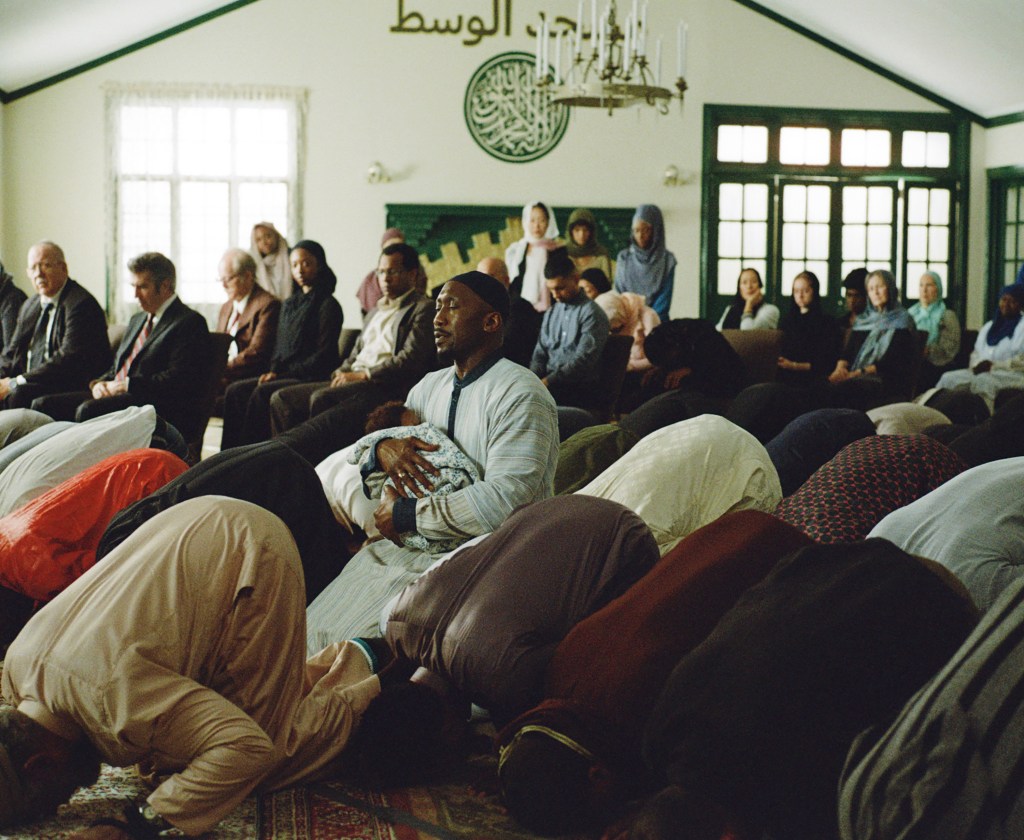
Latif is no ordinary Muslim, but he is familiar. He is committed to the faith and teachings, though we find in him the crossroads many face on their journey with Allah. A faithful practicing Muslim will not look the same from community to community, but no one can claim to be an ideal Muslim. There is a common language and set of behaviours that a community of Muslim reverts from a town in Texas will not ring totally true to a close-knit community found in New York, California, Ontario, or any number of regions in Europe, Africa or Asia. The thing about most Muslim rep in Hollywood is that there is no nuance. There is no accounting for how external factors such as politics, ethnicity, nationhood, and gender affect a community that practices the same religion. Two billion Muslims exist across the planet. Latif is neither wholly unique nor common amongst us, and that is the beauty of Your Mother Your Mother Your Mother.
The film does not attempt to make the journey Latif goes on digestible for non-Muslim audiences, and that is often the burden. We, the ones being represented, are often watching projects that have to explain our existence, making it hard for us to enjoy what is before us. There is often a big show of “representation,” which really is just exposition so the non-represented are not lost.
With Your Mother Your Mother Your Mother, Tariq and his talented collaborators, invite us to an established world, with an established routine, shorthands, jokes, and context that were arent fully in the no. But the film doesnt ever pause to catch us, it doest try to level with the audience explaining Latif’s behaviours or actions. We arent given a bland exposition of what jihad actually means, and the variation that Latif represents. Everything is as natural as it could be, as if a camera an dmic was plopped into Latif’s world without his knowledge and we are just along for the ride. If you know, you know, and if you don’t, that’s okay. Google is as much your friend as the people who surround you who may know more. This film is as close to “for the culture” as a film aout a jihadist grieving his devout wife can be.
The violence in the film is neither needlessly grotesque nor overdone. They are filmed with great care and precision, showcasing Ali’s capabilities as an action star without making him seem utterly superhuman. The movie emphasizes that all involved are human, with basic limitations. Sure, there are a few mean left hooks that would have knocked out an elephant, but for the most part, when they go down, they go down hard and don’t get back up quite as easily. The filming style for these sequences is consistent with the rest of the film, grounded and realistic, with a touch of flair for the dramatic. The John Wick comparison is inaccurate. Honestly, that description is too liberally applied to any film with a star over 40 playing someone who can take a punch or has a “special set of skills.” That comparison usually alludes to an aesthetic and tone that are not often reflected in the film being compared.
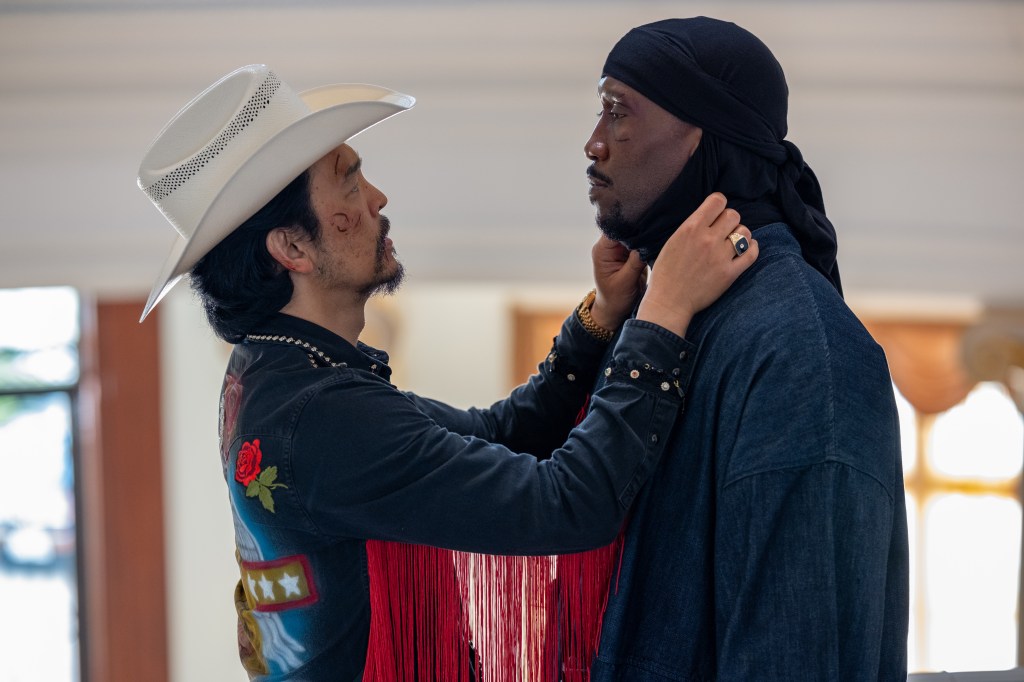
Katelin Arizmendi’s cinematography is largely responsible for the emotional and intuitive atmosphere that permeates the film. As thrilling as the action sequences are, the shining achievement is enveloping the audience in a spiritual odyssey of sorts that tugs at the heartstrings rather than relying solely on a neon-drenched aesthetic to hold their attention.
Your Mother Your Mother Your Mother is a testament to what we can accomplish when unbound by unfair expectations. What was crafted here is both a sensible drama about a grieving father and a thrilling contemporary western featuring a jihadist dealing with an internal conflict that tests his faith. Nuance is at the centre of this creation, a concept Hollywood has lost when depicting Muslim characters. It is easier to have a blanket representation devoid of sincerity and authenticity because, in their eyes, Islam and Muslims of all shapes and sizes do not deserve nuanced representation. However, what Your Mother Your Mother Your Mother so eloquently illustrates is that not all cinematic depictions of Muslims are meant to be “representative” of all, because that would defeat the purpose of Tariq’s work. There is diversity within the community, and this film lives up to his 2014 TED Talk, “The Beauty and Diversity of Muslim Life,” showcasing a life that is familiar to some but unknown to others, despite sharing the same faith and customs.
It is hard to say that this film will usher in a new era of film and television made by and starring Muslim people that avoids cliches and stereotyping. Hollywood gatekeepers enjoy creating a sense of exclusivity by limiting opportunities to a select few who are “palatable” to mass audiences. We see these tactics played out every day in other forms of representation. Despite that, creators like Bassam Tariq will continue to push ahead, collaborating, creating, showcasing, and fighting for equitable opportunities and a chance to show off the imagination and talent that are hiding behind the red tape. Audiences that want nuanced and daring representation need to do their part. Watch the work, engage in the conversation, spread the word, rinse and repeat.







Leave a Reply