
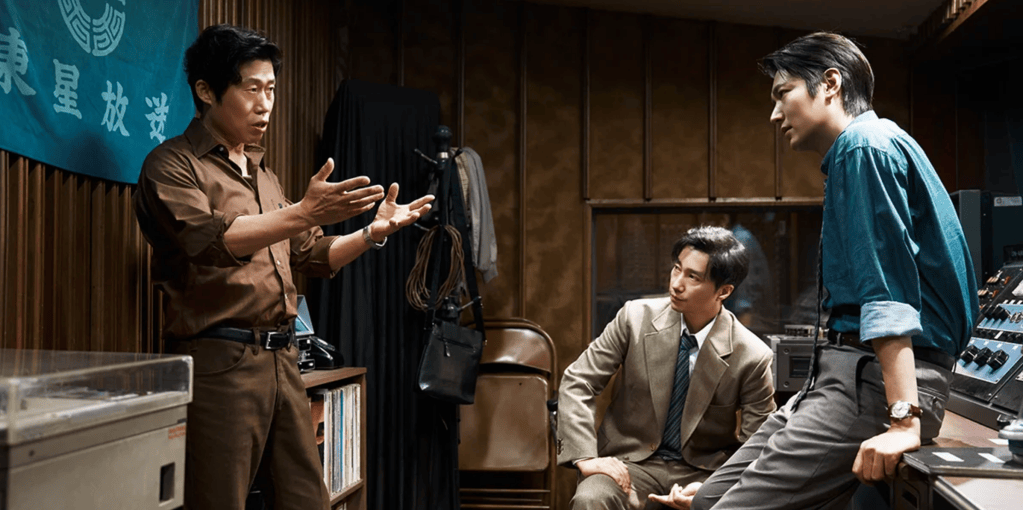
On August 15, 1974, an attempt was made on the life of South Korea’s president, President Park, as he gave his presidential speech at the 29th Liberation Day in Seoul. The situation unfolded like an epic spy novel, with plenty of questions and few answers. Mystery gunshots and unrecovered bullets stall the investigation. Great interference from government agencies, combined with the press and police investigating, and crushed under the heel of power, creates a pressure cooker situation with more losers than winners. The biggest question that needs to be answered is: who is the gunman, and how did he almost succeed?
Here’s the set up. The Assassin(s) stars Park Hae-il, Lee Min-ho and Yoo Hai-jin as they find themselves at the centre of a conspiracy that threatens to upend their lives, and all of South Korea. Lee Min-ho’s Han Young-il is assigned to cover Liberation Day for the Dongsung Daily. As he struts around engaging with the local community, Yoo Hai-jin’s Detective Cheol-goo works as security for the event, ensuring that all participants and guests have the required badge to enter the building. All is well until a sudden amendment to the security protocol changes everything.
A lone gunman, Moon Tae-gwang, who arrived in Seoul a few days prior, makes a mad dash towards the president and fires a revolver. Shots, screams and a mad scramble to protect the president and suppress the shooter make for a very chaotic few minutes. All of which is seen and heard by Park Hae-il’s Chief Jae-hwan as he watches the live taping back at the newspaper’s office. Observers on the ground and at the office quickly realize what has happened: the gunman failed, but a tragedy did occur.
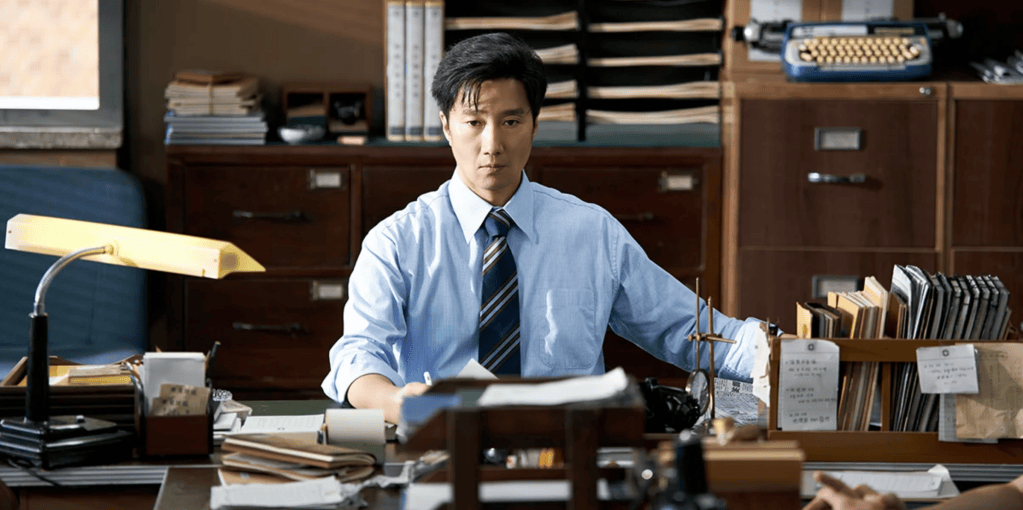
The two-hour drama is an intense, densely layered, thrilling epic, fuelled by a single mission: to pay respect to those who uphold their vows to live with integrity and honesty. Written by Gwon Gi-jun and The Man Standing Next screenwriter Lee Ji-min, the film is as much a factual reenactment of the historical event as it is a sentimental drama. This allows audiences to be fully immersed in a history that can be overwhelming to understand without prior knowledge, while also offering an incredibly thrilling dramatization of a situation that reads like total fiction. The Assassin(s) is ultimately a testament to Hur Jin-ho’s abilities as a filmmaker, as the film is jam-packed with resonant themes and a thorough exploration of the political and social climate of South Korea post-the 1965 Japanese-Korean treaty.
The film operates on two main fronts: one is the restoration of a historical event, with as many details as possible included to provide a clear understanding of the events that occurred that day. This part of the film relies on the production to capture the look and feel of the ’70s through its production design and costuming. Cinematographer Lee Mo-gae aids the endeavour by capturing the mood through the lens, with frenetic camerawork and lighting heightening the intensity and subtle emotional cues. The other front is the propulsive drama which demands ace-level performances, expressive and witty dialogue and engaging pacing. Luckily for us, The Assassin(s) delivers that and so much more.
The production quality is superb, the attention to detail is evident, and the choices clearly indicate that great research and effort went into transporting the audience to this tumultuous period. The writing is sharp while never sacrificing nuance regarding the larger issues and historical facts. Sure, there are fictional flourishes that bulk up the story; that is to be expected, as this is still a highly guarded and sensitive case in Korean history. However, at no point does the film become a dramatization for entertainment’s sake; rather, it uses the story to craft an authentic impression of what it was like to be caught in the crossfire of a political conspiracy.
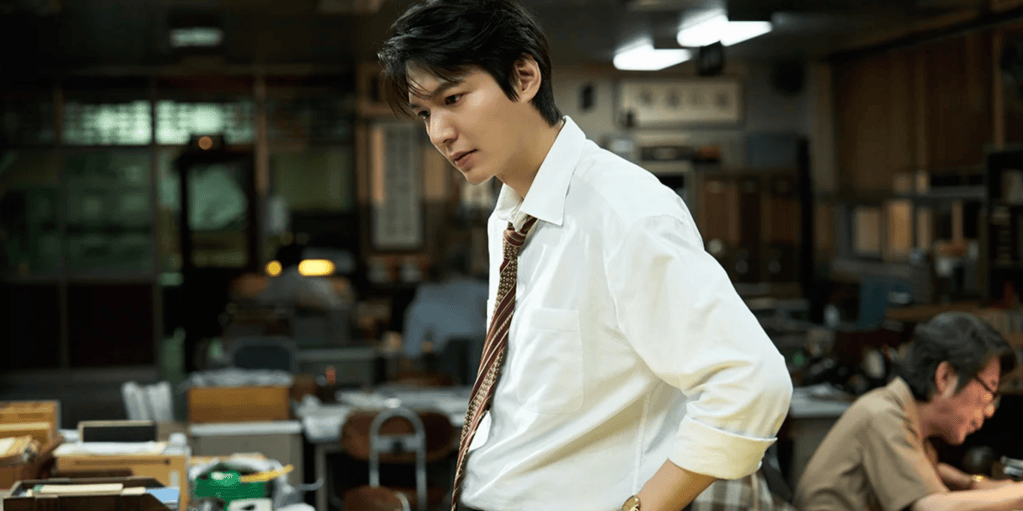
At the heart of this blistering attack on censorship and political corruption are three actors who deliver brilliant performances. Park, Yoo, and Lee are a dynamic trio as their chemistry is undeniable. The film’s strongest moments are when these three interact. Their moments of dialogue are electrifying, as the scenes of them discussing the case, comparing notes and debating what is going on are just as impactful as the gruelling action sequences and moments of violence scattered throughout the film. Their performances are absolutely critical to the film’s success, as each of them embodies a specific quality that emboldens the film’s thematic arc.
Park plays a seasoned reporter who has endured so much due to the crackdown on freedom of the press, though tired and weathered, Chief Jae-hwan is not defeated. Park elegantly portrays a man who does not need to raise his voice, stomp or kick to get his point across- actions he is used to receiving from corrupt officials clamping down on the press. His reserved and measured approach is key to his survival, though his moments of defiance do come at a cost. Jae-hwan ultimately represents resilience in the face of unprovoked and unjust attacks on the press. Park’s performance is understated yet deeply moving and palpable, as he gets the audience to truly feel the indignation that fuels his defiance, even at the risk of his own life. Park fully embraces the position of being a seasoned professional with plenty of lessons to teach the next generation.
That leads us to Lee Min-ho, whose boyish charm and leading-man energy counter Park’s portrayal of the exhausted chief. Young-il is relatively new to journalism, and he approaches his job with skittish excitement and a touch of anxiety that comes from a lack of experience. Despite his blasé affectation and jovial nature, he is as determined and willing to jump into the fray for the truth. Min-ho beautifully captures the rapid growth and maturation Young-il undergoes after witnessing the inciting tragedy. This role reflects the reporters who observe and learn from their predecessors, either gaining the strength to carry the torch or faltering under the increasing pressure of government intervention.
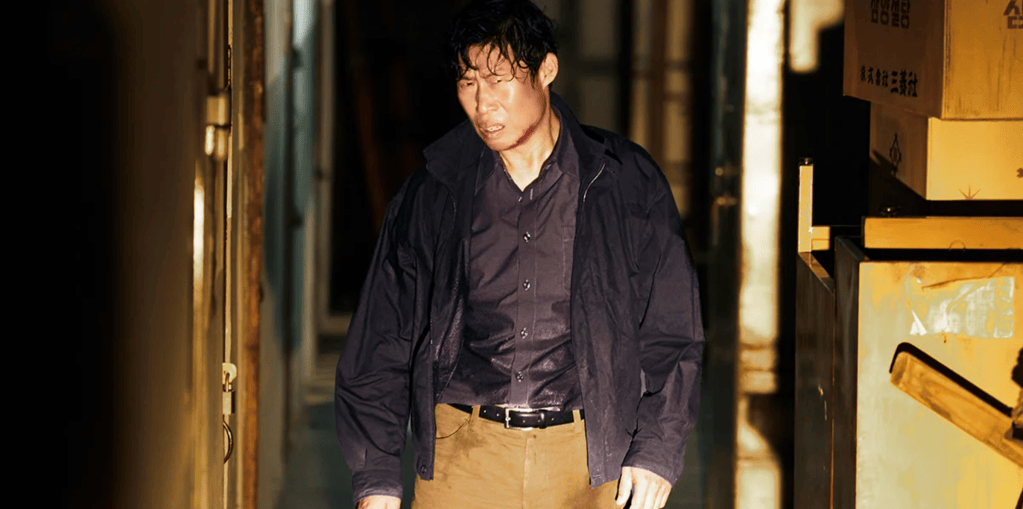
Completing the trifecta of brilliant performances is Yoo Hae-jin, a salt-of-the-earth kind of man who is brutally drawn into the situation. Despite being a sharp detective and mighty capable at intelligence gathering, he is fully at the mercy of KCIA and government officials meddling in the situation. His persistence and good nature are defining characteristics that shine brightly through Yoo’s intuitive performance. Alongside Park and Lee, Yoo adds a roguish energy to the trio, ultimately building a dynamic that engages the audience’s emotional connection to this story.
Without these actors, the film cannot be as enthralling as it is. They do not stand alone in their greatness as the ensemble cast, with recognizable favourites and newcomers, all effectively doing their job to illustrate the central themes of the film, which boil down to: the people deserve the truth, if not for themselves but for the health and progress of society as a whole. This story doesn’t set out to answer any questions; rather, it engages with the primal desire for integrity and truth. Would it be nice to know it all? Sure, but to expect that is shortsighted; our director and screenwriters have a bigger idea in mind, and they execute it with perfect persuasion.
The Assassin(s) has it all: an electric cast, a dynamic screenplay, surprises, thrilling action and truly enrapturing sequences of pure human moments. Whether you are a casual fan of Korean entertainment, a connoisseur of historical dramas, or someone looking for an ambitious political thriller, this film will give you everything you expect and more.





Leave a Reply