
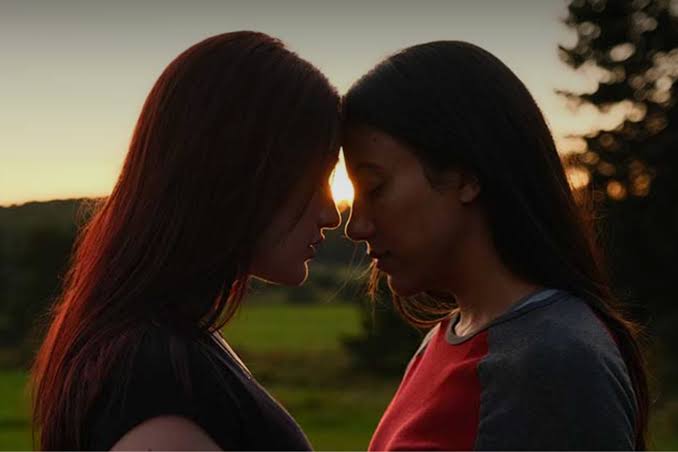
Producer, writer, and director Gail Maurice returns with her second feature film, Blood Lines, an emotionally resonant film about family and love.
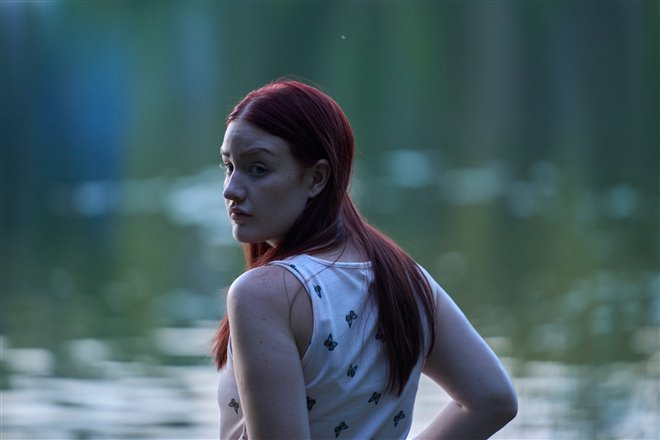
The film follows Beatrice (Dana Solomon), a Métis two-spirit woman who is both a store clerk and storyteller in a Métis close-knit community. As Beatrice navigates a fairly normal life of ups and downs, her world is upended by a sudden reconciliation with her estranged mother, Lenore (played by Maurice), and the appearance of a woman named Chani (Derica Lafrance) seeking her biological family. The old adage, “blood is thicker than water,” is up for discussion as Beatrice is forced to unpack her feelings about Leonore and Leonore’s alcoholism and abandonment of Beatrice; meanwhile, Chani finds her world opening up as she traces her blood relations, which leads her to a vibrant and welcoming community. Two very different experiences when it comes to blood, but one journey to love.
After premiering at TIFF last year, the film is now available to audiences in theatres now. I had the wonderful opportunity to speak with Maurice, Solomon and LaFrance about the creation of Blood Lines.
Read the full interview below:
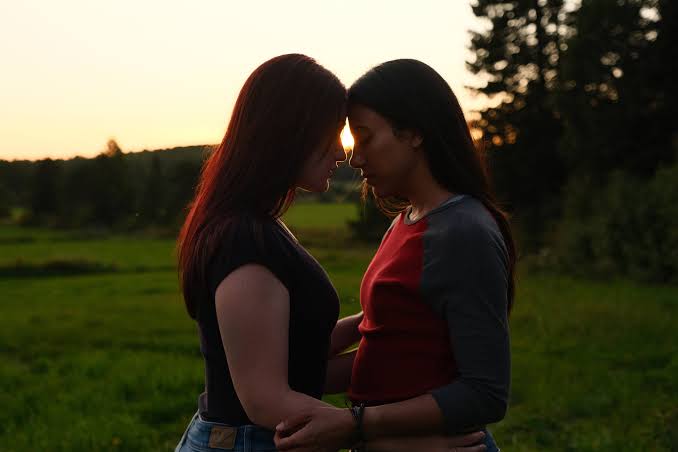
Blood Lines is filled with twists and turns, so I just wanted to start with you, Gail. The film is very thematically layered. There are a lot of complex themes, from forced adoption, alcoholism, family dynamics, womanhood, and community. What was the initial inspiration for the movie?
Gail Maurice: So, I wrote this initially over 20 years ago, and I was shooting Big Bear as an actor. I was in a lesbian bar, and there were a lot of beautiful women there. Then I was lying in my hotel room that night, and I thought, “What if I brought one home?” So that was the inspiration for the initial story of Blood Lines. But over the 20 years, it’s evolved, and it became what it is. There’s still a beautiful love story between two women, but it’s also a love story for my culture, my identity, and my language.
Like you say, though, I bring in themes that are children being forcibly taken from their mothers, which I have personal experience with, and I wanted to tell a story about that so that I could basically tell my mom’s story.
There are a lot of truths in my film, and I tell it in a way that, though they’re heavy subjects, I also like to tell stories with humour. So there’s humour in there…the granny gang – we have people like the granny gang in our lives, and they’re the aunties that beat the shit out of you.
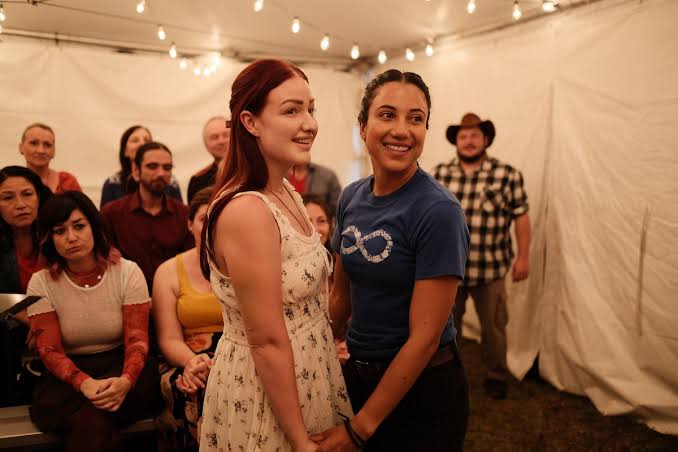
What was it like, kind of delving into a character that is essentially an avatar for Gail and then also creating these character dynamics for yourselves?
Dana Solomon: We had a lot of conversations about the role before we jumped in. Beatrice is a fierce Métis woman who’s passionate about community and culture, and in my personal life, I’m passionate about my culture and community as well. So I feel like Beatrice and I do have a lot of similarities. And as a First Nations person, a lot of the themes in the film – if it hasn’t happened to me directly, I know somebody who’s experienced it. So I was able to draw on a lot of experiences of my family and my community.
Derica Lafrance: I think you said it nicely. There were so many conversations that were had on set. And I think that was really beautiful working with Gail as a director, but she’s also an actor. So these conversations were really important to try to almost read between the lines and dig deeper into the script and what these characters must have been feeling during these scenes, and how to portray that. And Gail was really true to her vision and communicated that excellently. It helped me as an actor, for sure.
A highlight of the film is Métis Day. What was it like recreating those scenes and those moments for yourselves?
Solomon: Honestly, I had the best time that day. I mean, it was a little tiring because I was dancing, doing the jig all day, but it was so nice being immersed, and it just felt so real. You had the granny gang in the audience. You had the fiddle. It was just one of my favourite days on set, for sure.
Lafrance: The signs were fun, for sure. It felt like a real celebration. And I just remember because obviously, you have to cut and reposition the camera, right? So there were breaks between takes, and our AD, Ryan, being on stage, basically doing stand-up comedy, trying to entertain the crowd. And it was fun. It was fun. Everyone was in a very good mood that day.
Maurice: And that was based in Saskatchewan; we have a thing called Back to Batoche. And every year, we celebrate Métis Days, and so it’s huge. I think this year, there were 60,000 guests that came and went. And it’s like a whole weekend of jigging, of contests, of all the contests that you see in the Métis Day scenes. My mom actually won one year. I call her the hatchet-throwing champion of the world.
Gail, how do you explore portraying trauma without making trauma the main topic?
Maurice: I don’t like trauma-driven films where it’s all trauma and it’s just tears throughout the whole thing. That’s not how I live my life. Like I said, my laughter is my warrior’s cry. At funerals, we’re laughing. Even after a person’s passing, we’re sitting there with the body. We’re laughing. So to me, if you live in trauma, you’re not moving forward. You’re not moving ahead. So for me, to tell cinema in that way doesn’t resonate.
So I always have yes, there’s trauma. I’ve experienced trauma. It’s part of being Indigenous in this country. But there’s a way for myself to express that with humour interspersed in there so that it’s my reality. We’ve all experienced all this stuff, and yet at the same time, we’re here. If we lived in that trauma, we wouldn’t be able to grow. So to me, I want to tell stories that are true to myself. Yeah. That’s not to say that other filmmakers can’t tell their own stories if it’s what they need to do, or if they need to tell trauma stories or films that are about trauma and only trauma, then that’s okay. I’m not judging, but for myself.
Lastly, what upcoming projects are you working on?
Maurice: My next feature is going to be set in the near future. Then a supernatural thriller and a comedy series as well.
Exciting things ahead for Maurice, and Dana Solomon who had her short film Nimii play at the 2026 Inside Out 2SLGBTQ+ Film Festival.


Leave a Reply