

“Am I still dreaming?” –Joanna
Balestra follows the once Olympic gold hopeful Joanna Bathory as she makes the comeback of the century in fencing after not competing in four years. She has undergone a bit of a devolution with personality, hiding behind a shell of anxiety, disappointment and low self-esteem. Her husband and coach are constantly drilling her to get her to snap out of it and be better. All seems a touch hopeless until her therapist recommends her to a medical trial for a very Black Mirror-esque piece of technology that allows her to train as she sleeps.
Joanna fears that she can’t improve because there aren’t enough hours in a day and basic human limitations are massive roadblocks, but now she has a way to train a thousand times over without ever breaking a sweat, get her much-needed eight hours of sleep, and maybe finally break through the hardened shell to become the ruthless player she once was.
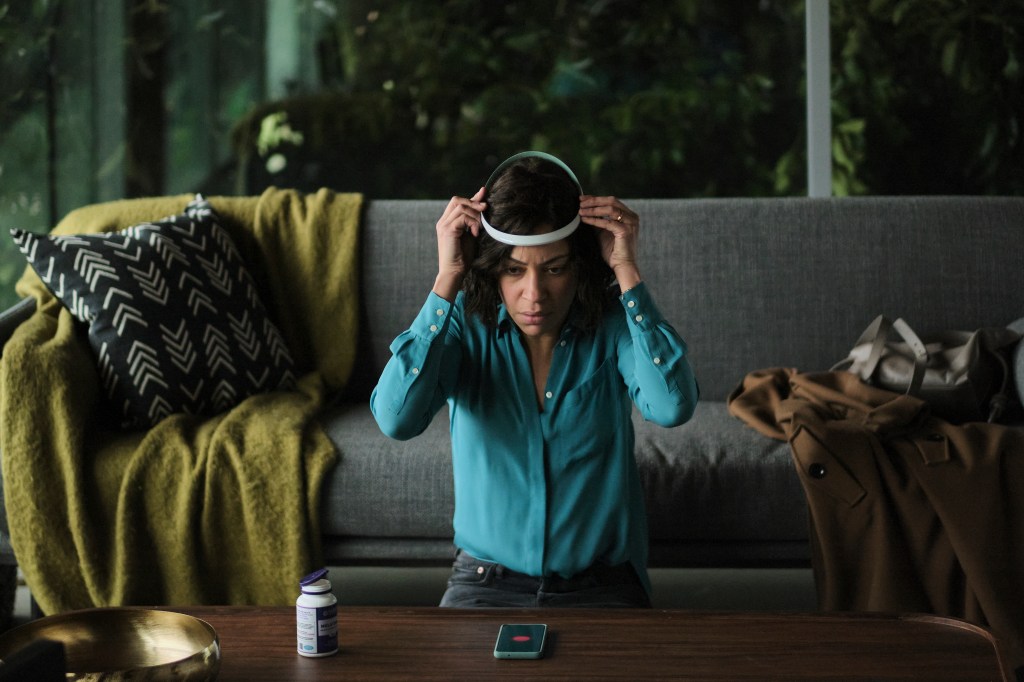
A critical element of a story about obsession and perfectionism, which Balestra can be boiled down to, is the star. We have had several films about the all-consuming and desperate play for greatness, such as Black Swan, Whiplash, The Novice, and many more, all of which hinge on the believability of their star. Cush Jumbo deserves a place on the podium in every respect, as she is as brilliant as Joanna. She explores parts of Joanna’s persona that defy the natural linear path stories like this follow. Instead, we see Joanna in different places in her mental journey, improving, declining, and then shifting to become the person she once was (before the events of this film). Due to the nature of the story, we also get two versions of Joanna concurrently, and once the lines blur, there is a violent collision that has us, the audience, alter how we see her and her pursuit of gold.
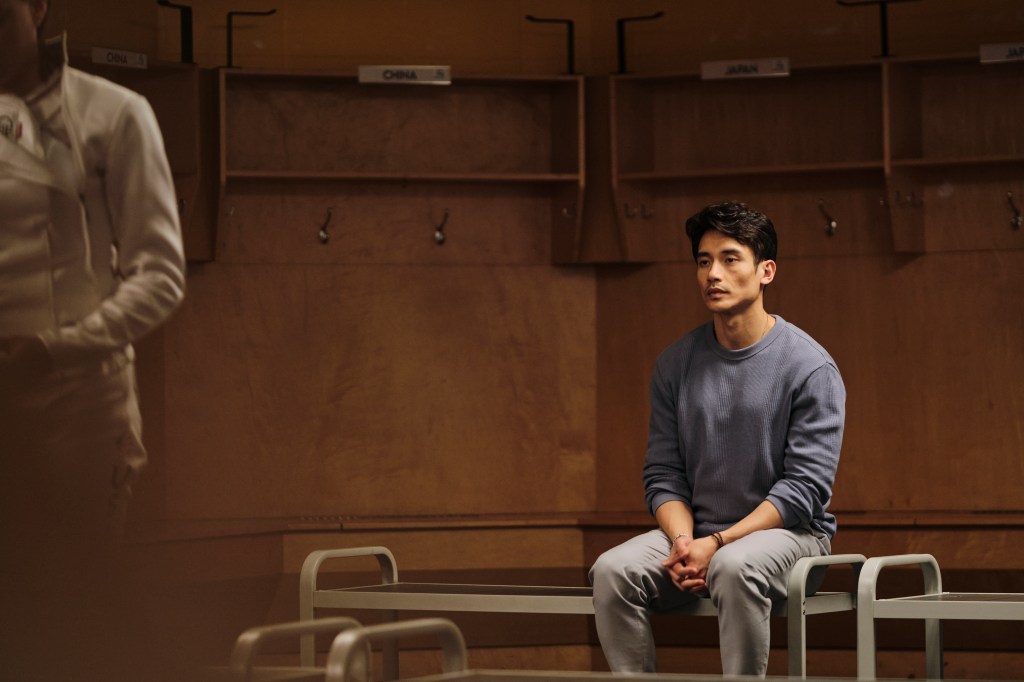
What makes this film so compelling is Joanna’s emotional and mental trajectory. There is a clear warning about technology and abuse of this particular technology that allows Joanna to engage with her subconscious on a level that is not safe or healthy. But I have to admit; I was a touch bamboozled as I had the slightest hint of the “San Junipero” episode of Black Mirror, where the technology allows our leads to explore their desires, wants and needs. Ultimately, the story is about love beyond the physical world, and despite Balestra being a completely different take, there are shadings of “San Junipero.” With Manny Jacinto, as Elliot, being the person of desire for Joanna, the romantic energy of the story is hard not be pulled in by. It is a red herring but one that Nicole Dorsey crafts beautifully until it takes a sharp turn.
Dorsey must have been thrilled to have struck gold with these two actors. Their chemistry is so intense and palpable that it makes the reality of this psychological drama feel like a gut punch. Jacinto’s character is a calming force of nature, luring both the audience and Joanna into a false sense of security despite the warning signs that are glaringly obvious. However, like Joanna, we can’t help but be drawn to what Elliot promises and delivers. It’s a cruel lesson that Joanna learns, one that ultimately forms the underbelly of this psychological drama. We witness how athletes often fight for success at the cost of their own happiness, and Joanna is no exception as we see her deny herself in the real world with her overbearing husband, while indulging in the dream world with Elliot.
Joanna learns, in a rather cruel way, that sacrifice is not the end all be an all too true success, and with the timing of this movie lining up perfectly with the Paris Olympics, this narrative thread hits harder as we see athlete after athlete speaks to the things they indulge into keep them grounded and happy from knitting, to reading, to perfecting one’s Rubik’s cube skills to thinking about the wonderful meals that await you. Joanna epitomises the darker side of competitive athletes, exposing the many ways that denying balance can affect one’s mental state, and the consequences can be grave.
The film is a surprise, well crafted and evocative; Dorsey captures with great precision the exciting and demanding nature of fencing, as well as the elegance of the sport. Admittedly, I was concerned that the sports wouldn’t be photographed well, but Dorsey overcomes that hurdle with ease with both the dream scenarios and reality. The one gripe I have with the film is its length. Granted, films these days typically clock in at 2hrs 30min, but a more decisive approach was needed for a story like this, especially as the buildup is exciting and intentional.
As the film finds its way to theatres, we have the Paris Olympics taking place, with a heavy hand of emotional and uplifting moments and several dark moments sprinkled throughout as the world comes together to compete at the highest level. To say that Balestra fits perfectly into the current landscape is an understatement. Dramatized sports films have always been a hit for folks. Still, with the thrill of the Olympics happening now, Balestra feels like the right choice, especially when Jumbo and Jacinto are drawing us in with their intense chemistry and dynamic performances.




 Muses of Media
Leave a comment