
After its premiere at the Thessaloniki International Film Festival in November, Maya & Samar is now playing in theatres across Canada.
The film follows two women from different worlds. Maya is a rising journalist at a hip indie website, who covers sex and music with free-flowing thought and liberal practice. Samar is a queer Afghan who landed in Greece following a harrowing escape from the Taliban. She lives without papers in Athens, dancing in a club for cash. After a fateful meeting on the outskirts of Athens, their worlds collide in a brief yet torrid affair that exposes their conflicting cultures. With Samar, Maya crafts her latest headline; with Maya, Samar crafts an unexpected twist, exposing the raw truth behind privilege.
Directed by Anita Doron with a script by Tamara Faith Berger, the movie stars Nicolette Pearse as Maya and Amanda Babaei Vieira as Samar.
Ahead of the film’s release, I had the amazing opportunity to chat with Pearse and Vieira about working on Maya & Samar, getting into character, building their bond, what they enjoyed about their characters, and much more.
Watch the full interview with Amanda Babaei Vieira and Nicolette Pearse below:
With a story as complex as the one told in Maya & Samar, there is no wonder the both actresses were keen to dive into the script. The pair told me about what drew them to the film.
Pearse said, “I mean, for me, there was something about how voracious Maya was – just like her intense curiosity and the consumption with which she approaches life. And I think it felt like she was this bolder iteration of myself. And I was kind of in awe of the journey she took throughout the script and just the rollercoaster of it. It felt like an incredible challenge.”
Vieira followed with, “Yeah, for me, I think what I really loved about Samar, was how remarkably unafraid she is, and the way an Afghan woman is portrayed was different from what I’ve seen in media before. And so, yeah, that was what drew me in.”
Both characters in the film are very layered and complex. As such, I wanted to know what it was like for the duo to approach their characters and prepare, both before filming and once they were on set.
Pearse said, “I mean, for me, it was kind of breaking down the key differences between Maya and myself, and sort of understanding the motivation for her actions, and really mapping her emotional journey, because she does go through a lot of ups and downs. And so, it was like justifying each action and then making sure that the emotional arc had clarity for me.”
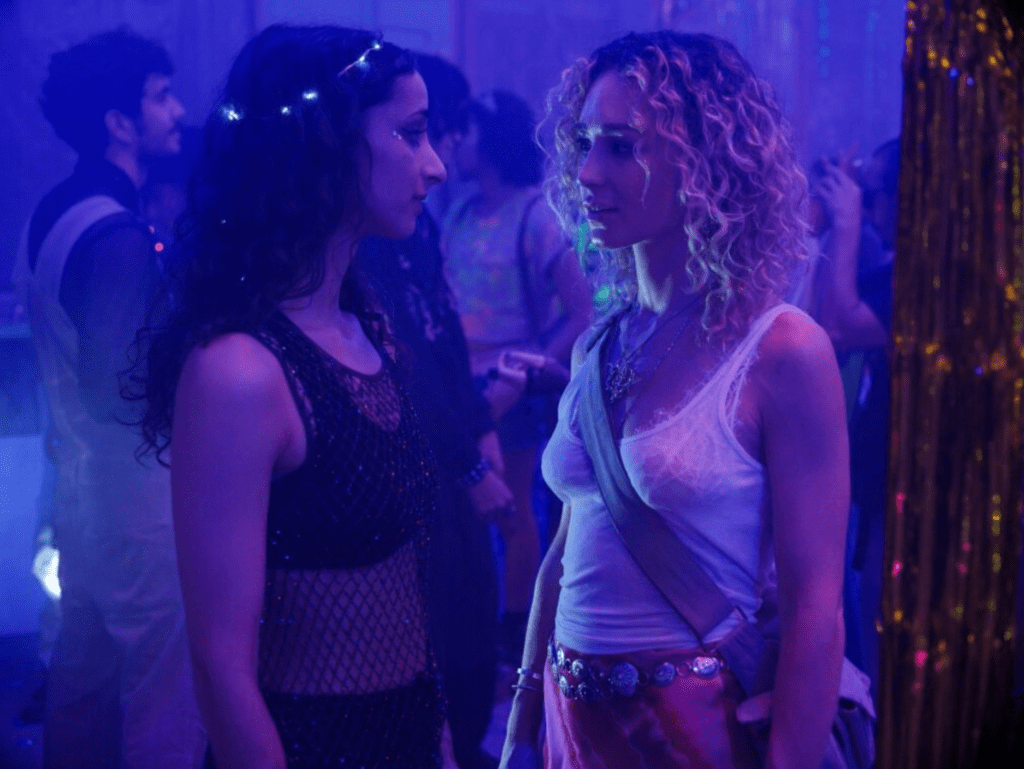
Vieira shared, “For me, it started with many documentaries and research that I did, and learning the accent. And that was very interesting, because I listened to a lot of Afghan human rights activists, to get familiar with the sound of their accent, because I could do an Iranian accent, which is similar, but Dari, which is like the Afghan accent, has many varieties, because there’s so many ethnicities in the country, and so that was really insightful. And also, who I loved hearing from was these courageous, ambitious, intelligent women, and sentences, like, ‘You can cut all the flowers, but you can never stop the spring from coming’ is just something amazing to learn in an accent that you’re trying to emulate. And then, of course, I also had an amazing coach that helped me refine the details of it.”
Both Pearse and Vieira found both of their characters to have a sense of curiosity that they enjoyed, in addition to other similarites between the chatacters that manifested in different ways.
Pearse said, “Maya’s curiosity, I think. And I’m going back to it because it’s what drew me to acting, I think. It was a desire to live more lives, almost – like, to really dive deep into other people’s experience of the world, because it is so limiting to only go through your life with your influences and your condition. And I think that’s what draws Maya to journalism. And even though I think her ego is intertwined in a way that can be disastrous, it is still motivated by that intense curiosity. And I love that quality in her.”
Vieira said, “And I think this is something that is in Samar as well. She’s equally curious and equally courageous, and they are very different people, but very similar as well. And I think that is just great to embody and to really go into that. And also, I do think that Samar is fueled by love and love for her family and for her mother and her sister. Everything she does is to protect them, and this desire and the defiance that she has are just things that are strong motors, and that drew me in and that I liked about her.”
Pearse added, “It’s almost like they do have very similar qualities, these two women, but it iterates so differently in their lives because of their background, because of their condition.”
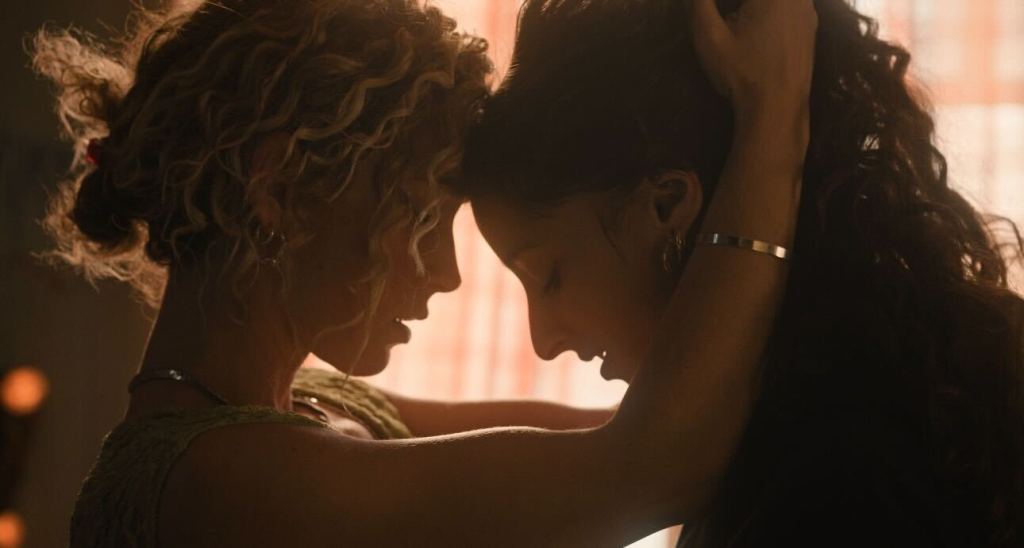
Some of the film’s central themes include privilege, forced displacement, and identity. Pearse and Vieira shared with me how working on Maya & Samar has shaped the way they engage with these topics in the real-life., and if it changed their perspectives at all.
Pearse shared, “Oh, yeah, definitely. I mean, I also got to meet and chat with women whose life experience was so different than my own, and that was eye opening, and also a reminder of the shared humanity in all of it. That this desire, the want to have individual sovereignty, to want to have self expression and create the life that you desire, that that is ubiquitous. It’s something that connects us. And all the other, you know, the culture, the language, these other attributes that we have, they don’t make us as different as what we already share in common. And always looking for those commonalities, looking for that connection.”
“Also, I think for me, a key theme is queerness as a disinterest in a straight path, maybe? And I do think that like, speaking with these Afghan activists that we met in Athens, and also before, there is something that is very strong that I also feel from my life experience and the women that I have around me. That wherever there is oppression, there’s always joy and resistance, and to lean into that. And even when times get darker, to have hope and resistance and anger to keep you going. And too, that’s also what I like about her. That she’s shown in a joyful environment, because we see – or there’s a certain image that people are comfortable with, maybe – and that is one of a victim. And if you’re taking your faith in your own hands, and you are empowered, and you go after what you want, that is an important image to show and an important perspective to broaden, I think.”



 Muses of Media
Leave a comment