
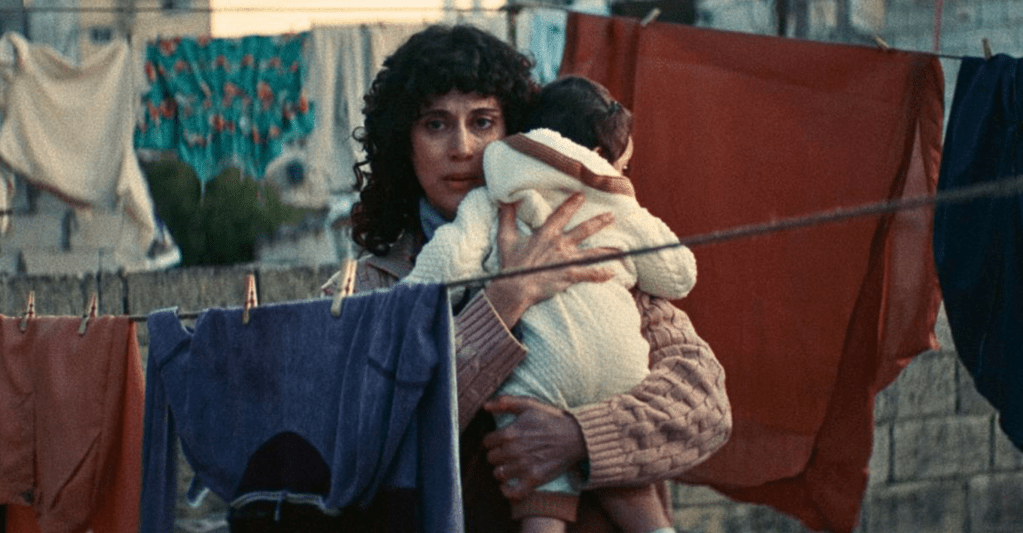
Writer-director Cherien Dabis crafted an exceptional film with All That’s Left of You. The multi-generational story spans decades, beginning with the 1948 Nakba and following a family and the continued violence and displacement that has caused intergenerational trauma.
In addition to writing and directing the film, Dabis also acts in it, portraying Hanan. As a mother to children growing up surrounded by many horrors and wife to Salim (Saleh Bakri), who keeps his trauma mostly buried, Hanan is a witness to how multiple generations of people have continued to suffer at the hands of their oppressors.
With the film having released in various markets, I had the wonderful opportunity to speak with Dabis about the creation of All That’s Left of You, casting the Bakri family for the film, the importance of still featuring joy amidst constant pain, and much more.
Read the full interview with Cherien Dabis below:
Do you remember the first moment that sparked the creation of your writing journey of All That’s Left of You?
Cherien Dabis: Yeah, I knew I had a vague idea for the film for a long time. I had a vague idea of, like, ‘Oh, I really want to tell a Nakba story. And I think it’s multi-generational.’ I wanted to do a family epic where we really understand the ongoing, devastating impacts of the Nakba on a family over time. But it wasn’t until I got the idea for the opening of the film that I was like, ‘Okay, now I have a film.’ Because I had a way into it, and it was the opening that kind of gave me the entire structure of the film. And essentially, it was just basically the protest. It was the idea of, you know, opening the film with two teenagers running around, being teenagers, having fun. They could be anywhere in the world, and then suddenly get swept into a protest that’s just happening, that’s just forming and experiencing a moment of violence that then allows us to unpack who they are, why they’re there, and how their families ended up in the refugee camp to begin with. You know, why is this?
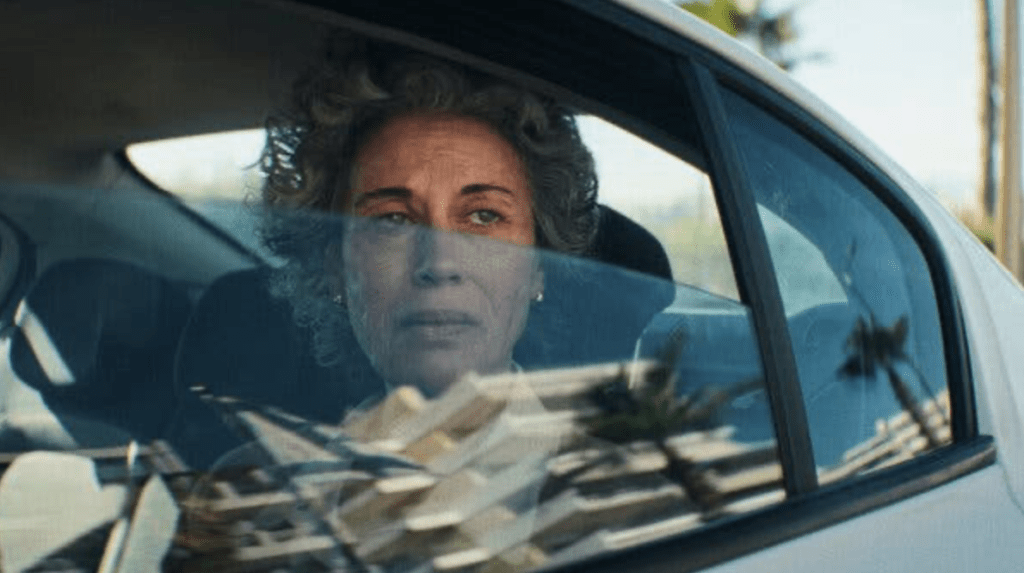
And you know, we come to learn that one of these teenagers is one of the kind of heroes that we’re following in this film. So it was really the idea of opening it with this iconic image of a teenager at a protest, which, you know, I feel like we’ve been watching Palestinian youth protest for decades without really understanding who they are and why they’re there, and why they’re willing to put themselves in harm’s way, and how they ended up in the refugee camps to begin with, and why the army’s invading the camp, and all these things. And so for me, it was really that moment where I thought, ‘Oh, that’s my way in.’ And then I kept thinking – I kept seeing in my mind, going from this moment of violence to the face of an old woman. You know, before we know what happens to this teenager, we cut to the face of this old woman who starts telling us the story, and basically says, ‘To tell you the story of my son, I have to tell you the story of his grandfather,’ taking us back in time so that we really understand the trajectory of the family that led to this moment of violence.
As you just said, you know, they were teenagers. They could have been anywhere. So, while the story, obviously, is about the Nakba and Palestinian resistance, was it always in your mind to kind of try to create a semi-through line where other people would also be able to see this journey and also see themselves within it?
Dabis: I mean, absolutely. You know, I feel like every filmmaker aims to, I think, tell a really specific story that’s also universal, right? Because we’re looking to really explore the human condition in our stories. And for me, this film was always about what it takes to survive all of these decades of political turmoil that have been imposed on us, and the film has always, for me, been a real kind of deep exploration of intergenerational trauma. And for me, the film is almost like a spiritual exploration of my own intergenerational trauma. And I think that is something that is sadly so universal – that so many families understand what it is to survive political turmoil and what it is to inherit intergenerational trauma.
So I think that, you know, it’s almost like I didn’t even realize how universal it was until I made the film, and I was like, ‘Oh, wow.’ So many people have come to me and have been like, ‘This could have been my family after World War Two or during World War Two, or this could have been my mother in Cambodia, she has a similar story, or my family’s Cuban, and we totally related to this and that in the film.’ And I didn’t even think – I don’t even think I knew, when I was going about making this film, how universal it would be. But of course, that’s always the hope is that you tell a story that’s specific enough and so rooted in humanity that everyone can relate to it.
I agree. Because, even when I was watching it, having a parent from Jamaica and one who is Irish, I really related to the parts where it’s mentioned that the British occupation played a role. Watching that really struck me. And even in some of those moments, there’s kind of a subtlety. Obviously, it’s mentioned, but the film itself doesn’t actively show much of that. So when you were making the movie, there was a lot of stillness and silence. So how did you kind of pick what was shown and what was implied, but left a little bit unsaid?
Dabis: I think I really let the family guide me. You know, the family at the center of this film was by far my focus, because the movie is about how these political and historical events impact people. And so, it was really about letting the characters drive a lot of that, letting the characters decide what is important to show and what isn’t important to show. And the relationships between characters really dictated that as well, you know, because so much of this film was an exploration of how violence infiltrates the domestic spaces and family relationships. And so, I really relied on the family and the characters to kind of determine all of that. Determine what the most important time periods are, you know? What do I need to show, and what would go unsaid? What would be unspoken here?
You know, a character like Salim, he wouldn’t want to talk about the trauma of what happened to him in front of his son, and so he dictated the silences in those moments. So much of it, for me, was just really about knowing and understanding my characters, having a deep understanding of who they are, and therefore, letting them kind of guide me in what would happen.
You directed the film, you wrote the film, and you’re in the film. So what was it like for you to take part, both in front of and behind the camera, for All That’s Left of You?
Dabis: You know, it was really beautiful. I mean, it’s always challenging. It’s incredibly challenging, you know? I think especially with this film, because it was deeply emotional. I’m playing a very emotional character. And so, there’s always the challenge of when you’re directing, you’re in control of it all, and when you’re acting, you’ve got to let go. And that’s one of the biggest challenges, just really letting go and then kind of jumping back into the role, like, ‘Okay, now I’m back,’ and I’m looking at everything, and I’m giving feedback on everything, and I have to have a certain level of objectivity, and then you’re jumping back in front of the camera, and you’re like, ‘Okay, no more objectivity.’
I’m just going to get totally subjective. I’m going to zoom in on this one character’s perspective and forget everything else I know. So there’s always the challenge of that, and the way I see it is it’s a massive shift in perspective. You’re just shifting from a long lens to a wide lens and a long lens to a wide lens. And, I think, it’s just a skill that you develop, and you learn like it is. It is something that you know, I think maybe not everyone can learn it. Maybe not everyone can do that with their mind, but I do think many people can learn it. And so, it was something that I trained in for a while. I trained in it, actually, before my second feature film, because I also acted in my second feature film.
Of course, it helps that I’m not in every scene, and it also helps that acting is, I think, a very natural extension of directing. It’s why so many actors, I think, become directors, you know? They’re very organic parts of the same process, and so, from that point of view, it was a natural extension of what I was already doing. And in a way, playing the character was almost a deepening of the exploration that I began with the film, you know? An exploration of my own kind of intergenerational trauma and whether I could make meaning of it, and whether I can offer it up in any beneficial way.
And for me, it was almost as if the role that I was playing as a filmmaker and the role that I was playing as an actor in this film were kind of the same, right? As a filmmaker, I’m the storyteller, and as the actor within the film, I’m the storyteller. And as the filmmaker, I’m attempting to know whether it’s possible to heal past trauma while we’re still undergoing present-day trauma. And the character in the film is kind of going through the same thing, trying to make meaning of her suffering, trying to understand if there’s something positive that she can do, anything. You know, is there any meaning that she can make of this suffering? And yeah, I found it to be kind of a very natural extension of what I was already doing. And so I think thinking about it that way helped.
All of the performances were really phenomenal! So, I just wanted to ask you a little bit about the casting process. When you were doing the casting for the film, you know, the actors are actually related in real life. Was that something that you kind of thought about, or did it just kind of happen that way?
Dabis: It was definitely something I thought about. I mean, this is the kind of project that, when I started writing it, I was intimidated by my own ambition. Because I knew early on that I was going to be covering so many decades and that I would have to create a family over time and different ages of characters. You know, characters who are six years old, and then 30, and then 40, and then in their 70s. And I was like, ‘This is gonna be tough.’ I really want people to suspend disbelief and feel like they’re watching an actual family. And so, from the very beginning, my mind couldn’t help but go to the Bakri family, because they’re the only acting family dynasty in Palestine.
And you know, Mohammad Bakri has been around for more than five decades. I mean, his career developed alongside Palestinian cinema. He’s one of our greats. You know, sadly, he passed away in late December. It was absolutely devastating for so many, so many of us, and I just feel so grateful to have gotten to work with him. He had six kids, and five of his six kids are actors, so he gave me a wealth of choices to cast from within one family. And it was absolutely beautiful.
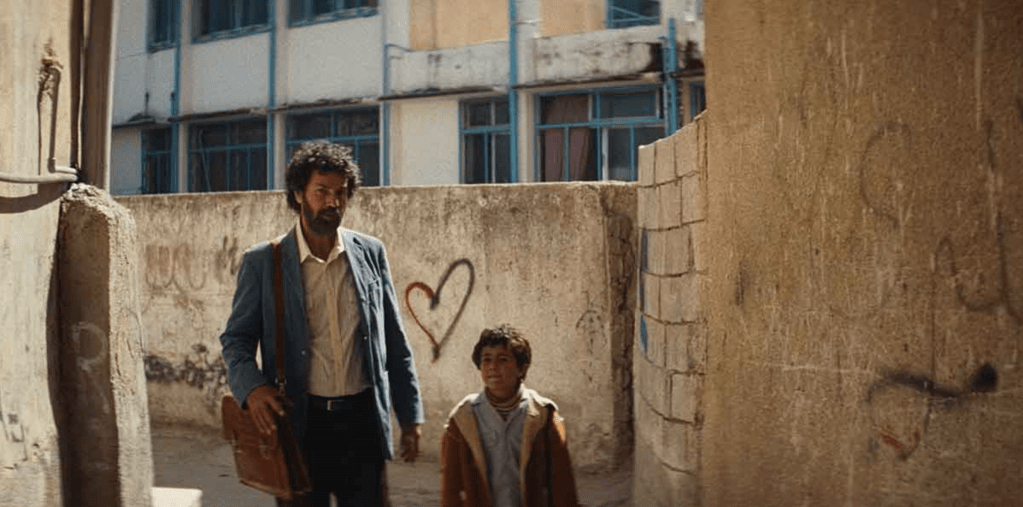
He plays older Sharif, of course, and his oldest son, Saleh, plays his son in the 1970s part of the film. And then one of his younger sons, Adam, plays a younger version of him [Sharif] in 1948, and his nephew plays teenage Noor. So it’s actually four generations of one family. And what was so beautiful about that – well, a few things – but one was that not only do they look alike, but they sound alike. They have similar mannerisms, you know? So these things we take for granted really become a deepening of our ability to suspend disbelief. Because we’re seeing people who are actual family, and they’re bringing so much that it’s almost like the subtleties are all there, that it all helps towards really believing this family within this film. And they brought so much, you know? Especially Mohammad and Saleh, who have so many scenes together in the 1970s. They brought so much of their own relationship dynamic, nuance and depth to that relationship that it was just so beautiful to see, and it certainly made my job easier as a director.
In terms of the different trauma and memories, things that are inherited, when you were going through the process of making the film, whether being in front of or behind the camera, was there anything that helped with your own journey of intergenerational trauma?
Dabis: I mean, it’s a very interesting question, because we went into pre-production on this film in May of 2023 in Palestine. And, you know, after five months of prep, we were two weeks away from shooting when the events of October 2023 really stopped us in our tracks and forced us to evacuate Palestine, and essentially totally pivot and start over elsewhere. And we ended up making the movie mostly outside Palestine, shooting mostly in Jordan, Cyprus, and Greece, with some remote shooting in Palestine. But it was tremendously challenging, and we found ourselves making a movie about what was happening as it was happening on a much larger, more devastating scale, and being live-streamed for everyone to watch.
And so I really, I found myself very much in the position of the family at the centre of the film. I mean, it was just like, how do you attempt to heal trauma while you’re still in the state of trauma? You know, there’s no post-traumatic stress. It’s present traumatic stress. And it was kind of remarkable, too. It was like life imitating art or art imitating life. It was just, you know, like life and art merging – really surreal, very emotionally intense. And there was a lot of soul searching. A lot of really, like, what is the meaning of this? What do we do with this? And then a lot of grief, compassion, love, and anger came up. And I think I certainly just put all of that right back into the film, you know? In a way, the movie became a container for so many of us who worked on it. It was just like we poured ourselves into it. And in that way, to be able to create at a time of such destruction helped us to feel less helpless and less powerless. So, at the end of the day, it was just really like, ‘Can we find any meaning in this?’ And it was like, well, the movie is the meaning that we are looking for right now.
And it was, again, kind of parallel to what the characters were going through. Like the decision they make in the film is their way of trying to find some meaning within their suffering, and their way of processing through their pain. So I do think that they’re, I mean, interestingly enough, I feel like I’m still in the midst of all of it. I do think there was some healing, but I think that I’m just at the beginning of even seeing that. I think probably months from now, I’ll start to see just what exactly happened and how I’m coming out of all of this. I’m still so much in the middle of it that it’s hard to see, but I definitely think that there have been some very interesting things that have happened and that I process through a lot. And probably there has been a lot of healing there.
The film offers many truths. And watching it, you go through so many emotions – you’re angry, you’re sad, but the glimpses of joy and hopefulness throughout the movie really resonated and stuck with me. So, when you were crafting the story, how intentional were you in keeping these moments of happiness and joy? Because I feel those kinds of moments are, in themselves, resistance as well.
Dabis: Yeah, I mean, I would say that it was very intentional. You know, for me, I really wanted to create what my experience of being Palestinian is, which is one of family and love and joy and generosity and tenderness and, you know, relationships that are impacted by everything that’s happening, and identities that are formed by everything happening back home. And you know, this is my experience of what it is to be Palestinian. It’s one of great heartache, but it’s also one of tremendous love. Love, not only for each other, but love of the land – deep respect for the land, the earth and humanity, you know? Really upholding one’s humanity because these systems of oppression are built to strip us of that, and one of the ways that they do that is by filling us with rage and hatred, you know? And if we allow ourselves to really remain with those emotions, then we’ve kind of allowed them to win. We’re really allowing these systems to kind of slowly kill us, like we’re doing their job for them, essentially.
And so, I think I really wanted to infuse the movie with my experience of being Palestinian and also I knew I don’t like going to watch movies that are too hard to watch. You know, for me, life is already bombarding us with so many devastating images every single day that for me, in my films, I want all of the gamut of human emotions. I want to run the gamut. I want to see the spectrum of human emotion in a film. And I think especially, you know, as a Palestinian, I’m so aware that most of what the world sees is our pain and suffering. And I think it’s so important that the world sees all of it, everything: our joy, our love. Like you said, that is resistance. You know, the fact that we have hope despite everything that’s happening is resistance. That is part of how we resist and how we keep going, and how we keep enduring, and struggling, you know? So I think it’s really beautiful to show all of that. And I’m happy that you felt that in the film.
You know, the title, All That’s Left of You, kind of shows both loss but also endurance. So if I were to ask you what ‘all that’s left’ means to you now, after you’ve completed this film and others have seen it, what does ‘all that’s left’ mean to you?
Dabis: You know, I think, my intention in the movie was to show at the end of the film what’s left of us is love, you know? And that’s very much what we see at the end of this film. It’s an older couple that has survived so much, and they’ve survived through their love. Their love is what has allowed them to get through all of that. And at the end of the day, that is what allows us to survive. And I think that’s what I wanted to leave the audience with – this sense of love is how we keep going. And so that, for me, is like, what’s left of us.
And of course, the title, you know, has multiple meanings. You know, what’s left of us – all that’s left of us all, that’s left of you, could be referring to the family, and you know, what’s kind of lost in the film, but also what remains. You know that the title gives the sense of both a presence and an absence, so you feel both what’s there and what’s not there. It could be what’s left of Palestine, it could be what’s left of Jaffa. It could be what’s left of you and me after everything that we’ve been through. And so I really liked that the title worked on so many multiple levels of meaning.
 Muses of Media
Leave a comment