
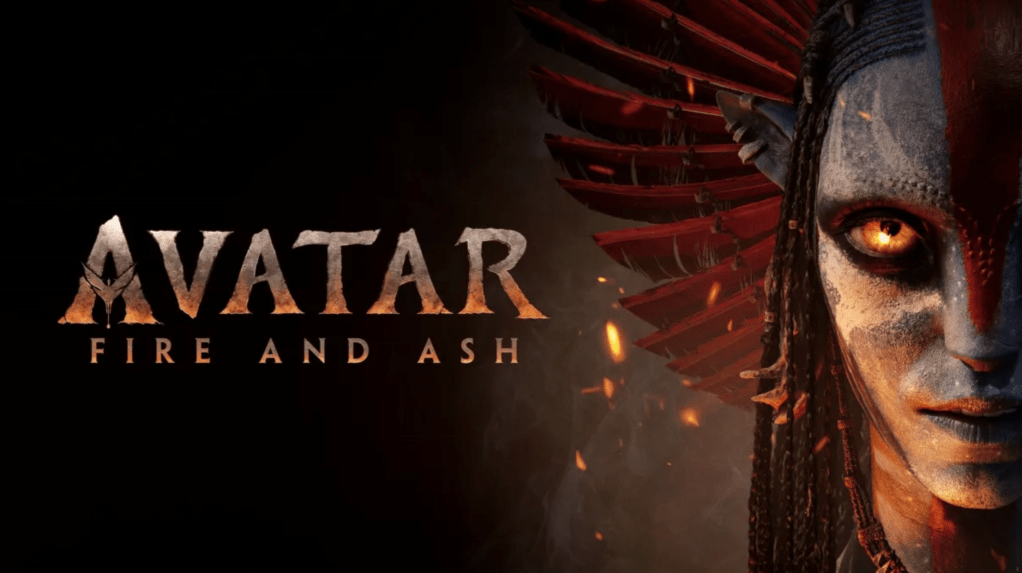
“Your Goddess has no dominion here.” –Varang
The latest film in James Cameron’s Avatar franchise is upon us. Directly following the events of Avatar: The Way of Water, Avatar: Fire and Ash continues to lead viewers through the life of Jake Sully (Sam Worthington) and Neytiri (Zoe Saldaña) and their family as they navigate their grief. For those who need a refresher, during the events of The Way of Water, Neytiri and Jake’s eldest son, Neteyam (Jamie Flatters), was fatally shot as he helped rescue his brother Lo’ak (Britain Dalton), Tsireya (Bailey Bass) and Spider (Jack Champion).
Fire and Ash finds the Sullys at their lowest points. Each family member is dealing with overwhelming sadness in their own way, but often find themselves at odds with each other because of it. This is all happening with the continued land theft and violence against the various Na’vi clans, the flora and fauna of Pandora, at the hands of the RDA (Resources Development Administration). Of course, Quaritch (Stephen Lang), who unfortunately survived the events of The Way of Water (no thanks to Spider), is still hellbent on continuing to ruin the lives of Jake, Neytiri, and their family.
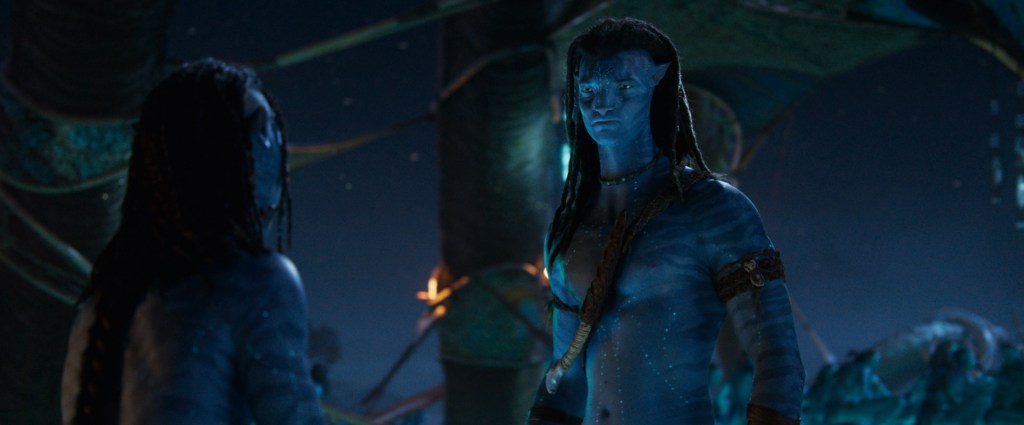
When an emergency forces the Sullys to leave the Metkayina clan, they arrange passage with the nomadic wind traders (a.k.a. the Tlalim clan). However, their journey is upended when the Mangkwan clan, a.k.a the Ash People, attack them, led by the imposing Varang (Oona Chaplin).
Where Avatar: Fire and Ash shines is in its observance of grief and the different ways it manifests. There is no right or wrong way to experience suffering and sadness, and it can bring out the worst in those experiencing it. For me, this was the best part of Fire and Ash. Whether it was the infighting between the Sullys or the changes in Neytiri, the emotional beats throughout the movie were where the film shone brightest. While many don’t like to wallow in despair, it was a very real and intense topic that was extensively explored during the movie’s over three-hour runtime, and the film was all the better for it. Truly, it would have been nice to linger on some of the more emotionally pressing scenes for a bit longer, but I also understand that those moments could be challenging to watch for many. That said, watching the characters find resilience in these dark moments is the heart of the film.
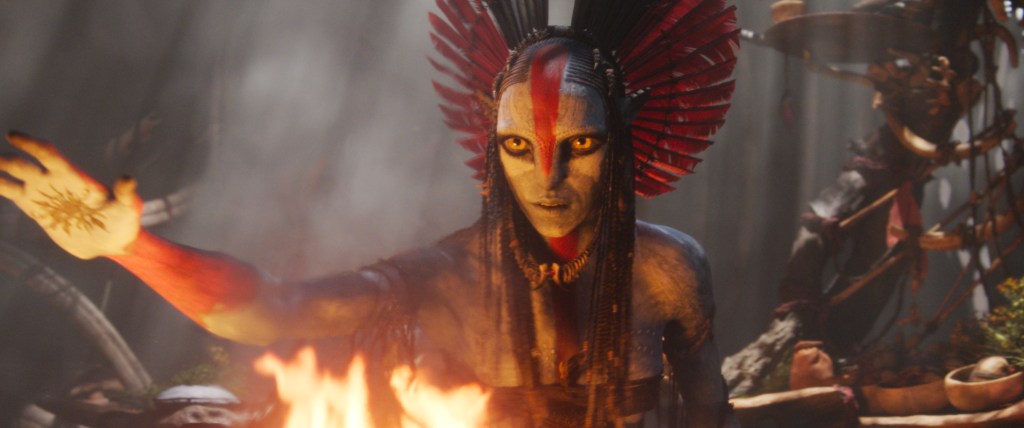
Of course, you cannot talk about the Avatar films without talking about the incredible visuals that serve as a storytelling tool. Fire and Ash is just as phenomenal to look at as the past films. I was lucky enough to screen the movie in IMAX 3D, and, just like its predecessors, Avatar: Fire and Ash looks absolutely stunning. From the waves in the water, to all the beings that make up Pandora, to the fire dancing along Varang’s fingers, every element of the film came to life with ease on the big screen. Viewers will feel fully immersed during their Fire and Ash journey. Ultimately, this is what seeing movies on the big screen is all about, and how the visual effects elevate the narrative experience.
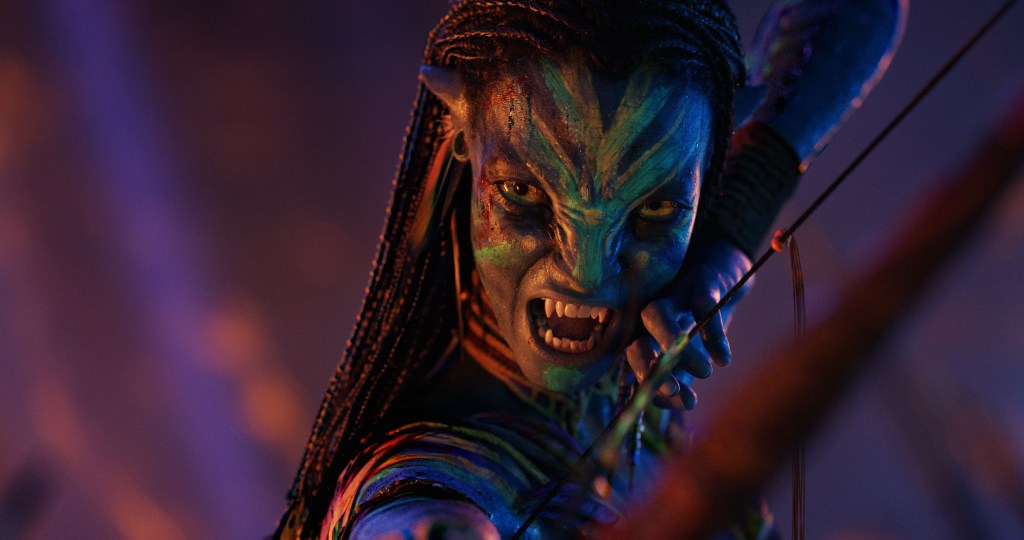
While the visuals of Avatar: Fire and Ash are stunning, the performances propel the film to another level. Zoe Saldaña has been a scene-stealer as Neytiri from the start of this franchise, and this remains true in Fire and Ash. Whether an anguished cry or a soft spoken moment with her husband, audiences will see the many facets of Neytiri in this film. As we watch the grieving mother go through her darkest time, Saldaña is pitch-perfect throughout. Every facial expression and line delivery from Saldaña entirely captures the emotion of the moment, and makes you think that this is the kind of performance that Saldaña should have won her Academy Award for.
While Oona Chaplin’s Varang makes a strong impression as the leader of the Ash People, I wish we had more time to explore her character and culture. Despite being a villain, Varang is sure to be a fan favourite. You know, sometimes it’s okay to support women’s wrongs (not that I agree with Varang, but sometimes you can’t help but love a great villain). That said, I do wish I were able to see more of her on her own, as it doesn’t take long for Chaplin’s Varang to ally herself with Stephen Lang’s Quaritch in the movie. While there is an explanation for why the Ash People are the way they are and feel abandoned by Eywa, we never really get to see all of their customs, as we’ve seen in past films with the Omaticaya and Metkayina clans. More time with Varang and the Ash People, away from the grimy hands of Quaritch, would have been appreciated, as it unfortunately sidelined the new villainess.
Speaking of Quaritch, he’s a villain you love to hate. Lang plays it perfectly (as per usual) and has excellent chemistry with Chaplin’s Varang throughout the film. Lang also has great chemistry with Sam Worthington’s Jake, and the two trading barbs and battling with one another is always a highlight in these movies.
While there is a lot to like about Avatar: Fire and Ash, the main issue was that it was clear this and The Way of Water were one movie split into two parts. Of course, this makes more money for the studio, but at the end of the day, it hinders some of the story. There were specific story beats, particularly in the final act, that felt like copy-and-paste from The Way of Water, just with different characters. I don’t think it would have seemed that way, had the movies been a singular film. At times, it was this repetition that took me out of the film, but then an epic battle sequence or an emotionally poignant scene would pull me back in.
That said, despite some of the feelings of repetitiveness, Avatar: Fire and Ash is a solid addition to the franchise. It is much darker than its counterparts, with even more thrilling action and battle sequences to entertain every moviegoer. As a whole, while it could be argued that this may not be the best of the three films thus far, visually, it is breathtakingly beautiful, and the growth of certain characters was both emotional and enjoyable to watch unfold on that massive IMAX screen. Really and truly, this is what kept me most entranced while watching, along with the performances.


 Muses of Media
Leave a comment