

Guillermo del Toro is no stranger to crafting tales that suppress the light to favour exploring the dark. His films eloquently navigate the parts of humanity and our world that are often denied by pain and ugliness to expose the arresting charm and intrigue of what lurks in the shadows. His passion for creature design and tales that take us to frightening places is indicative of his hopeful resolve to unveil the beauty within the dark.
As many of his admirers know, del Toro has spoken highly of his passion for Mary Shelley’s Frankenstein, a text that was a massive influence on him personally and in his craft. After many years in gestation, his vision is coming to life, with an adaptation that is perhaps the most faithful to the spirit of Shelley’s writing and true to del Toro’s nature. Frankenstein, which will open in limited theatres on October 17, is a contemplative, emotionally-driven magnum opus that encapsulates all of what made Shelley’s novel the influential text that it is, while maintaining del Toro’s life mission in his works, unveiling the true monster.
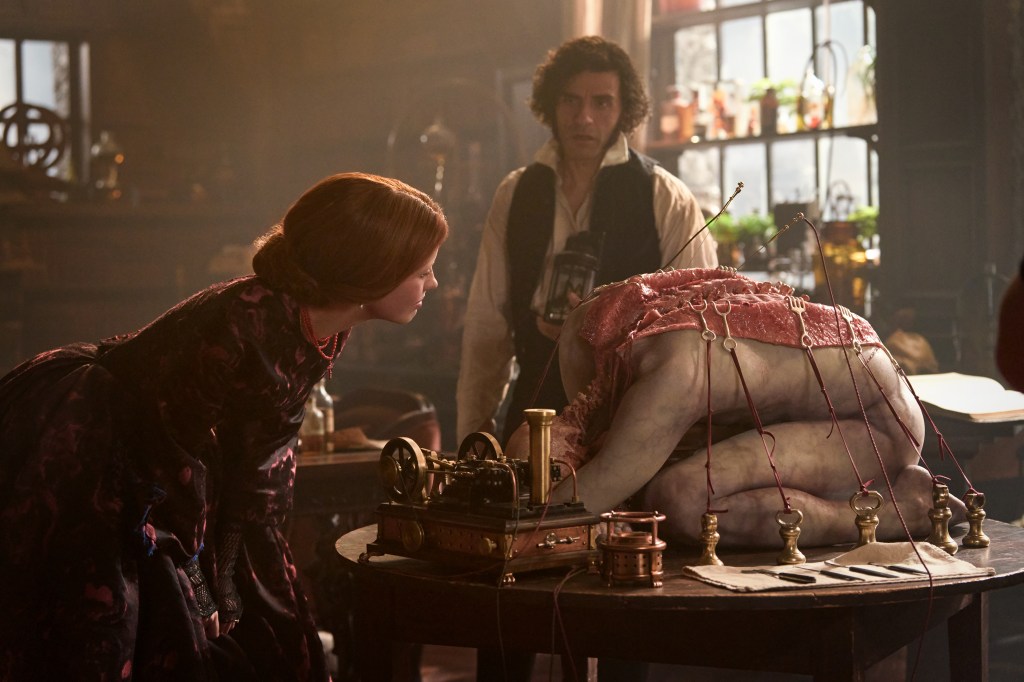
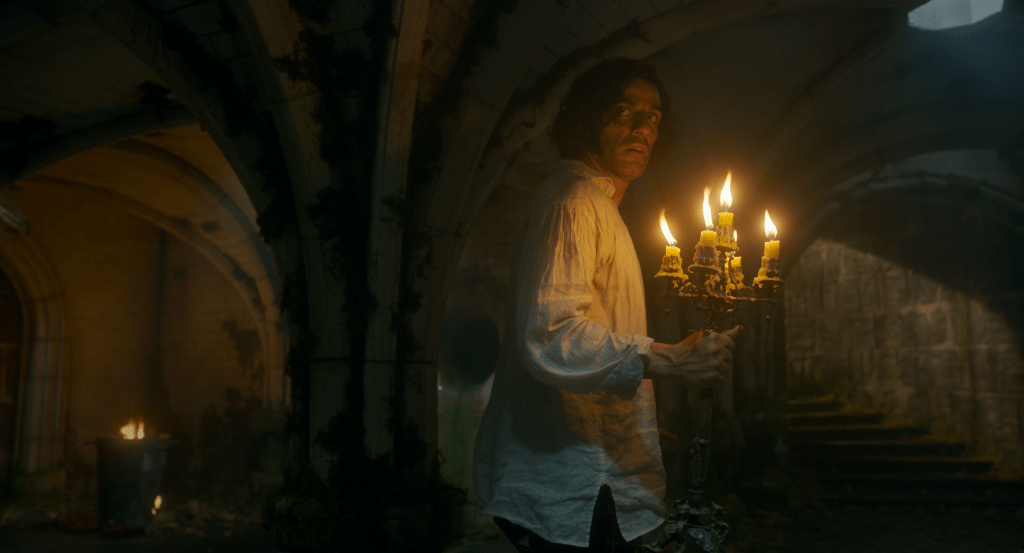
The casting is as impactful as can be. With Oscar Isaac as the titular Frankenstein and Jacob Elordi as the Creature as the face and main features of the film, interest is understandably through the roof. Mia Goth, who is appropriately named, is the frosting of what is, for the most part, a two-person show. Isaac does a good job at playing the egotistical, antisocial genius recluse who has formed a desperate obsession to cure death and also make something of himself. His Victor Frankenstein is reprehensible, and it is true to the spirit of both Shelley and del Toro’s intentions for their respective stories. The Creature is a grotesque being, created in utter defiance of God and common human decency, yet he is not the monster. Monsters have beating hearts, warm flesh, eat and drink and love like the rest of us. What makes them monsters is when they cross the line of disregarding the humanity of others. Isaac, in all his showboating and theatrics, captures this effectively; however, the role and his performance are dimmed in contrast to Elordi and Goth.
Goth’s Elizabeth Lavenza is once again reimagined; she has no familial ties to Victor, nor is she his fiancée this time around. Despite what Victor hopes, she is not utterly devoted to him or enamoured; instead, she is positioned narratively as Victor’s moral opposition, his thematic foil. She is young and beautiful, with an effervescent quality that is as enrapturing as her lavish gowns. In the novel, Elizabeth is fridged for the sake of Victor’s character growth and also his consequence and much of that remains so, but del Toro and Goth opt to define Elizabeth not by her fate but by her humanity. Goth exquisitely captures the purity of Elizabeth’s heart, creating a sharp contrast to Victor’s crude nature. Their banter and Goth go toe to toe with Isaac. However, I’d argue Goth has a stronger command of her screentime as she truly embodies the complexity of the matter at hand, but also captures with absolute clarity Elizabeth’s resolve and morality. Her performance is understated, as she allows her characters’ words and costumes to do the heavy lifting for the theatrics. Isaac, on the other hand, is rather forceful in his delivery, with so much already indicating Victor’s corrupt nature, he could reel it back a bit. He isn’t bad, just a bit much when paired with Goth and Elordi.
Now, to the big gun of the film. Never in a million years would I have believed that the tall Aussie who plays the troubled Nate Jacobs on Zendaya’s Euphoria would put out one of, if not the best, portrayals of Frankenstein’s monster onscreen. Listen, do I dream of a reality where Doug Jones played the role as it was initially intended back when the film was at Universal in 2009? Yes! However, the delays and patience were well worth it because Elordi is transformative. The Creature design is critical to the performance, because an unskilled actor would let the prosthetics and makeup do much of the work. Elordi has excellent control over his elongated limbs that are made to look pieced together by a grotesque artist. Elordi’s physicality and dynamic voice work are outstanding.
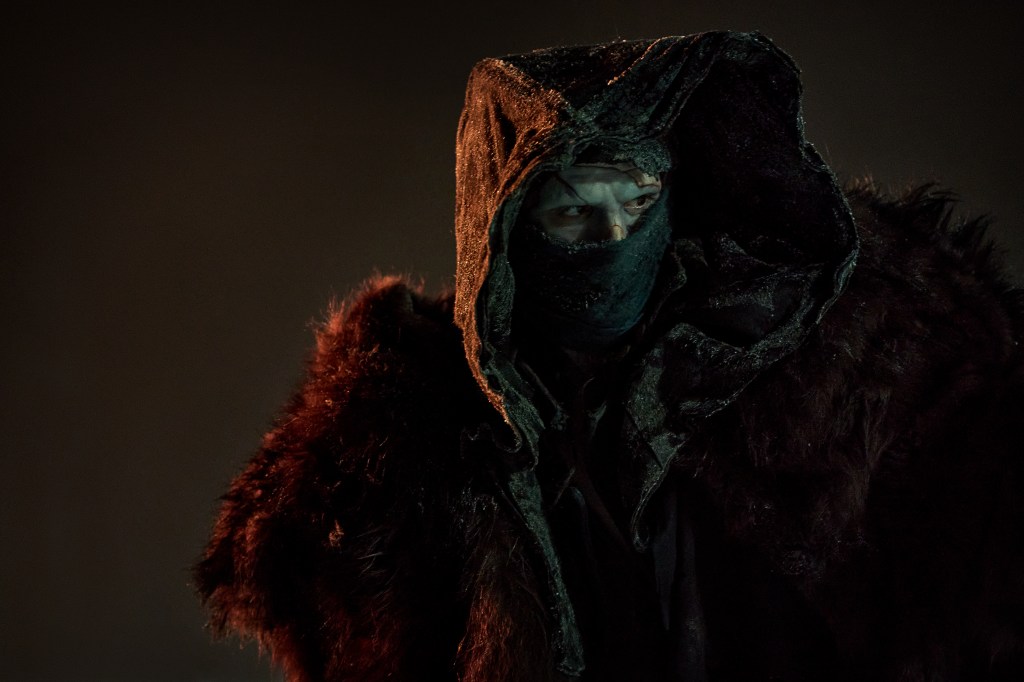
Elordi and Goth don’t share a ton of screentime, but their chemistry is palpable, and the two couldn’t make it work without del Toro’s screenplay. The Creature and Elizabeth’s dynamic is as critical as the dynamic between Victor and his creation. Despite two of the three performances being perfectly tuned, the trio are dynamite together primarily because of the clarity of del Toro’s writing. The qualities of each character complement and contrast each other in poetic ways. Del Toro’s writing is lyrical, echoing that of the novels at the height of gothic romanticism. Hope and tragedy, love and pain blend through the words these characters speak to each other and are reflected in their actions.
The framing of the movie is designed to give the Creature agency, his voice. It is also composed in a way that unfurls the misconceptions of Shelley’s work, aligning the audience with Shelley’s true intentions and meaning, which have been warped and reimagined over the 200 years since its publication. To get the most out of this framing, the film takes its time telling Victor and the Creature’s story. The film’s length can be perceived as an issue; it is a long one, and it doesn’t hold back in exploring the heart of the story, which is the Creature, who is not the easiest being to position as a protagonist. Sensing that del Toro fleshes out the world with the characterizations of his characters, giving both Victor his time and Elizabeth her moments to shine before tragedy strikes.
What really makes the film worth its runtime, though, is the visuals, which reflect the themes beautifully. The production design is breathtaking, the locations are evocative, the costuming is delectable, and the attention to detail from set to set really sets the mood for every scene. Expanding upon his similar venture into gothic romanticism with Crimson Peak, the visual language of Frankenstein is highly elevated, requiring multiple viewings to catch all the details that speak to the beauty and grotesque nature of Victor’s work, which is the source of Frankenstein’s drama. Enough has been said about how visually stunning the film is, the attention to detail and the dramatic flair keep you enraptured for the entire two hours and 30 minutes.
Now I turn to the score! The relationship between Alexandre Desplat since The Shape of Water has proven to be one of the most crucial relationships del Toro has formed. The director is a loyal man, cultivating a community of like-minded creatives and behind-the-scenes talent that work seamlessly to make his vision a reality. Amongst them, Desplat perfectly matches the energy of the dark, seductive whimsy of del Toro’s storytelling through the music. The track “Fire” is a compelling and moving piece of music that is the bow that neatly ties the film together. As del Toro and his longtime cinematographer Dan Laustsen create the haunting gothic visual aesthetic of the film, Desplat is putting his all into elevating the sense of dread, hope, and epicness in what is ultimately a tale about the unyielding power of the human heart.
Frankenstein is an elegant, compassionate adaptation of a beloved text with unmatched influence. Del Toro doesn’t simply outdo himself with the presentation; truly, the film is a spectacle for the eyes. Del Toro invites the audience to join him on perhaps the most intimate of journeys. Realizing your dream is always a fulfilling experience, but to invite so many to experience it with you is a daunting task. In my eyes, there is not a single critical error or misstep; the film is exactly as it should be, perfectly aligned with del Toro’s vision, the ethos of his work to this point and effectively acts as the culmination of nearly three decades of hard work and cultivation.
Frankly, Netflix doesn’t deserve to hold space for the visionary’s work, yet it is the place where the most people can experience not only Frankenstein but also Pinocchio. However, I do implore those eager to have the whole immersive experience to seek it out in theatres and then pick up a physical copy if the film is lucky to have one.



 Muses of Media
Leave a comment