

An ambitious prosecutor, a wily professional snitch and an honourable detective clash in a chaotic, gritty, and entertaining mess in the action-thriller Yadang: The Snitch.
The film follows Lee Kang-soo, a young man wrongly accused and imprisoned for being a drug user. Whilst behind bars, Koo Gwan-hee, an ambitious narcotics prosecutor, notices his potential and enlists him to entrap drug users and dealers behind bars for intel. Once successful, it transitions to a grand scheme to get Koo Gwan-hee into a higher position as a prosecutor. Their relationship flourishes as Lee becomes more confident in his new role, and Koo sees the results of decades of grinding. Their collaboration forms a strong brotherly bond, but ambitions don’t allow one to see others as friends, only pawns in a never-ending game. Thus, the relationship enters a new phase, with betrayal added to the mix.
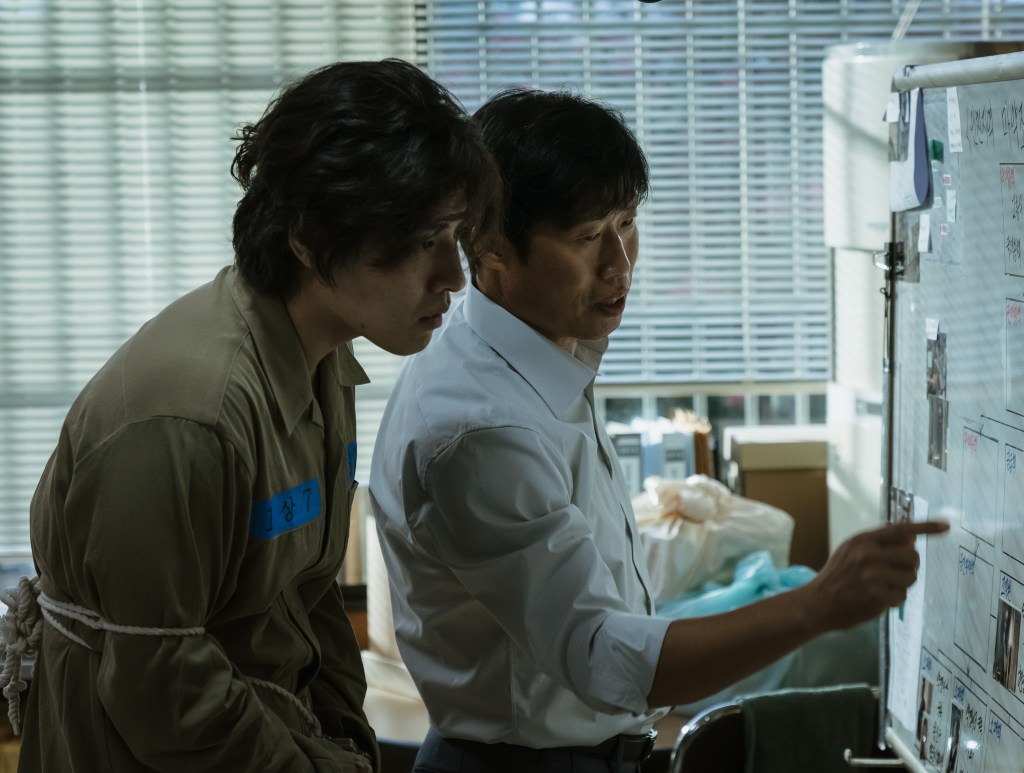
From the get-go, Yadang: The Snitch is all gas, no breaks. We jump into the story some time after Lee became a snitch. He’s a pro, strutting in and out of police stations and crime scenes with complete immunity as he works on behalf of the prosecutor’s office. Lee is incredibly charismatic and energetic, portraying someone who could easily be perceived as an annoyance by anyone else. Instead, Lee is endearingly annoying, giving off the energy of a much-loved yet irritating younger brother. That is until the film takes a turn, and Lee is altered.
The film follows a three-act structure, illustrating the beginning, the betrayal, and the vengeance. While the film does a lot to create clear characters with distinct motivations and personalities, it is ultimately stunted by its formatting. Yadang: The Snitch would have benefited from being a long-form story in a series format, giving the central characters more space to evolve (or devolve) as we get an abridged version of typical archetypes in the crime thriller genre. Here, the archetypes lead the character work, and while the actors do justice to their parts, their characters are rather hollow—particularly Chae Won-bin’s Uhm Soo-jin, a disgraced actress caught in the crossfire of a drug bust.

Aside from the lacklustre character work, the film adequately addresses the reality of prosecutorial corruption, police ineptitude, and on a lesser scale, the disproportional punishment for drug use versus drug dealing. Each character relates to a particular theme. Koo represents the growing distrust and disdain for prosecutors who move to benefit from their position rather than protect and serve the public. Politics plays a big part in the film, with Ryu Kyung-soo’s Cho Hoon as a central figure in the story, showcasing the volatile nature of those with power and the drastically different treatment people get based on their socio-economic status. Lee and Uhm represent the working class, people who suffer under unjust systems that serves punishment without an ounce of humanity or intervention to those in need.
Drug offences are incredibly controversial in Korea, from minor cases such as smoking or weed to harder drug use, so the subplot of an actress being caught up in this drug bust accurately depicts how much damage can be inflicted on someone who may need treatment rather than ostracization. Lee is simply someone who was in the wrong place at the wrong time, but the immediacy of his imprisonment understates how dismissive law enforcement is to victims. The film doesn’t do much to flesh out the story of an innocent man getting imprisoned, and beyond that, his views on drug use are distilled to a line where he states he is staunchly against it. On the other hand, the story of Uhm, the actress, is severely undercooked, even though it serves as the emotional core of the narrative. Her positioning in the story has her engaging with nearly every crucial character, but her place in the story is never properly defined or explored.
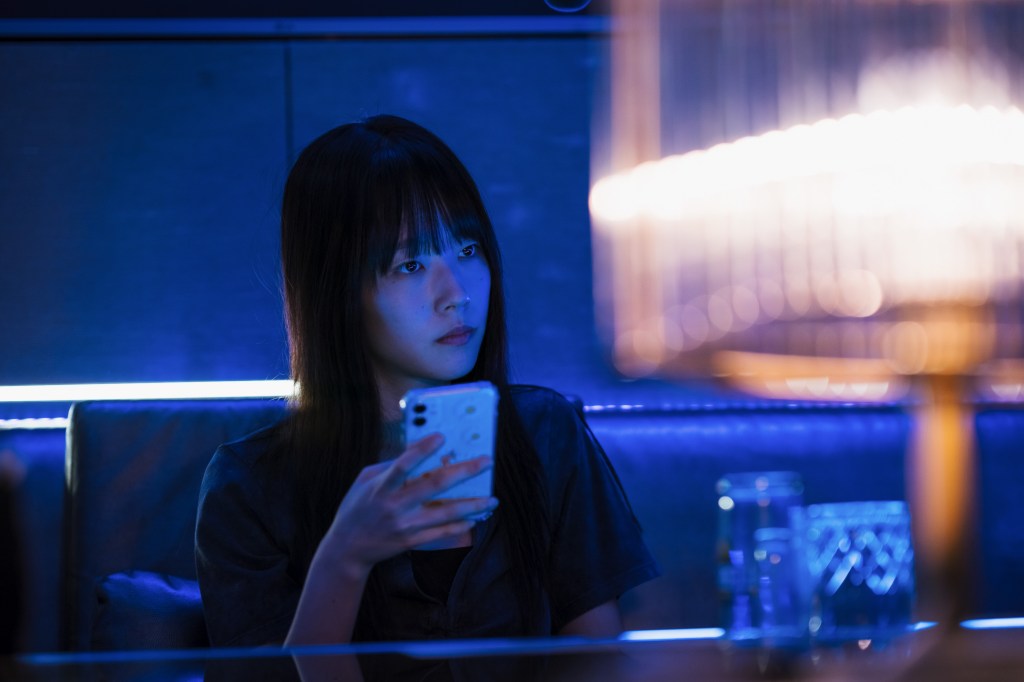
She has the most to lose and the most sympathetic narrative, yet the film emphasizes the bro-off between Lee and Koo with a glorified cameo from Park Hae-joon’s Oh Sang-jae. Oh is your typical righteous detective who stands as the honourable representation of the anti-drug movement. He is impassioned about his job yet compassionate, though his sentiments stand as an anomaly against this corrupt backdrop.
Yadang: The Snitch is a thrilling time; while lacking depth, it is abundant with energy and engaging performances. Kang Ha-neul is a stand-out as our lead snitch. He is dynamic, charismatic and thoroughly entertaining, worthy of an entire series of films or a TV show spin-off. His talents shine the most when paired with his extremely capable co-stars Yoo Hae-jin and Park Hae-joon, but it is a shame that Kang and Chae Won-bin did not share more scenes. Aside from the stellar casting, the film maintains its kinetic and chaotic energy from beginning to end, never ceasing to be an intense ride. From the camera work to the editing, Yadang: The Snitch is perfectly designed to maximize the impact of its characters’ choices and the dark turns of the narrative.




 Muses of Media
Leave a comment