

After premiering at the 2024 Toronto International Film Festival (TIFF), Ann Marie Fleming’s film, Can I Get A Witness releases in theatres today.
In a not so distant future, death is everyone’s job. With travel and technology banned, 50-year-olds submit to dying as a way to control the world’s population and prevent further damage to the earth. These sacrifices are documented by teenage artists as they happen.
Fleming’s genre-bending film combines live-action and animation expertly and stars Keira Jang, Sandra Oh, and Joel Oulette. I had the pleasure of discussing the film and its themes with Fleming and Jang, including their processes working on the film, what they learned about the subjects of life and death while filming and more.

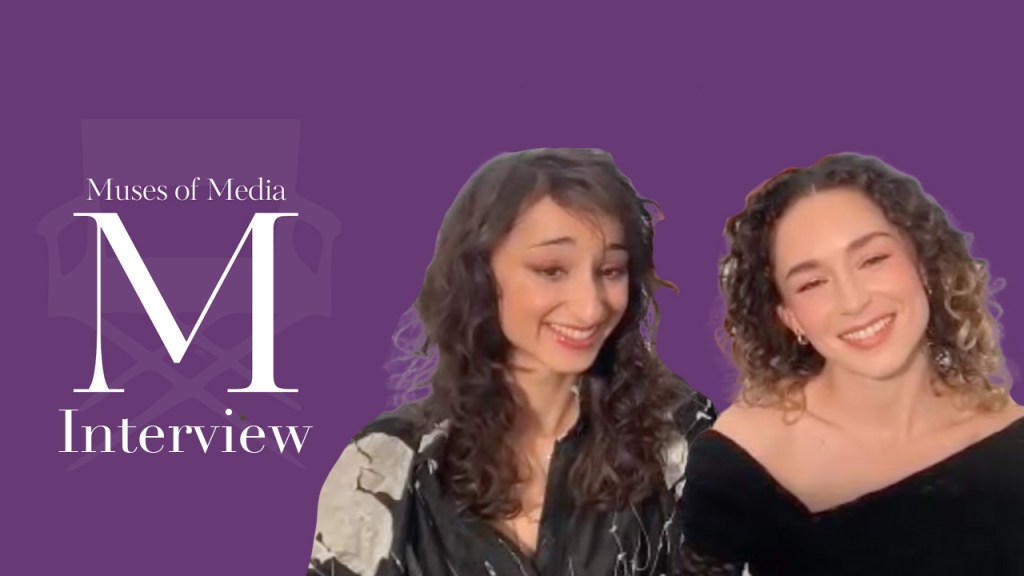
Check out the complete interview with Ann Marie Fleming and Keira Jang below:
Keira, this is your first feature length film, so I was just wondering if you could tell me a little bit about the process of working on it?
Keira Jang: I mean, it was such a dream. I feel like I’ve been spoiled now, because it was such an incredible process. But it was one of those things where I had auditioned for it and just thought to myself, ‘Okay, if I’m not part of this, I just hope it at least gets made,’ because I thought it was just so – it needed to be seen, and then a year later, I’d finally been solidified for the role. So that was just incredible. And then you go onto set, and it was the first one, my first feature film, but also my first time ever being a lead.
So, just having those two kind of go hand in hand was daunting, but I think I really lucked out, like I said, working with Ann Marie, who was just such a dream to work with, inside and out, was so willing to collaborate and create such a safe, safe space in order to be vulnerable as an actor, but also as a person. It was just such a dream. And then working with Sandra Oh, who was just willing to collaborate and creating such a safe space. And working with Joel [Oulette], who same thing was showing up to set, working hard every single day, it was like I said, I’ve been spoiled. I never want to do anything less than that now.
That’s amazing! And Ann Marie, what was it like for you during the casting process? I know you’ve worked with Sandra before. So was she always in your mind for the character? And in terms of finding your other leads, how did that go?

Ann Marie Fleming: Yes, I always had Sandra in mind, and I was so honored and happy that she had the time, she had the space and she had the desire to help us tell the story. Because, as you know, with Canadian independent films, having a name is super, super important to us getting funding and having a name that happens to be, I think, one of our greatest acting talents. I mean, I love, love working with Sandra. And when she commits to something, she just gives you everything; like, it’s such a great collaboration. And she does the same with her fellow actors, right? So it really is a collaborative, democratic process.
And in terms of trying to find Kiah, our lead, that was super tough. I did an open call all across Canada, and we were searching, searching, searching. I saw Keira right off the bat, and knew that she was Kiah. But it took a it took a long time to convince everybody else, but she, she just was Kiah and I found Joel on Trickster. Someone pointed him out to me. You know, he was a much younger fellow when I saw him on Trickster, than the young man who showed up on set. Joel was such a different character, I just felt this life thing in him that I thought would be perfect for Daniel.
And then, you know, casting. It was so much fun. It was so much fun to be able to put them all together, because it really is like a painting, you know?
And speaking of the artwork, I really enjoyed the animation throughout the film, and I know you’ve worked in animated films before, so was this something that was always in mind when you were creating the story or mind, or was it something that unfolded later on in the journey?
Fleming: No, it was always part of the storytelling. Of course, in the future, we had to wind back technology. There’s no photography, so teenage artists draw end of life ceremonies, and because it’s such a world where you have to repress your emotions, I wanted Kiah’s drawings to come to life, to show what she was feeling underneath it all. But when we shot it, it was such an emotional shoot. It was so emotional that we only need some touches of animation there, just to remind you that this is a fable and all. So there are many different levels of storytelling that are being presented to you.
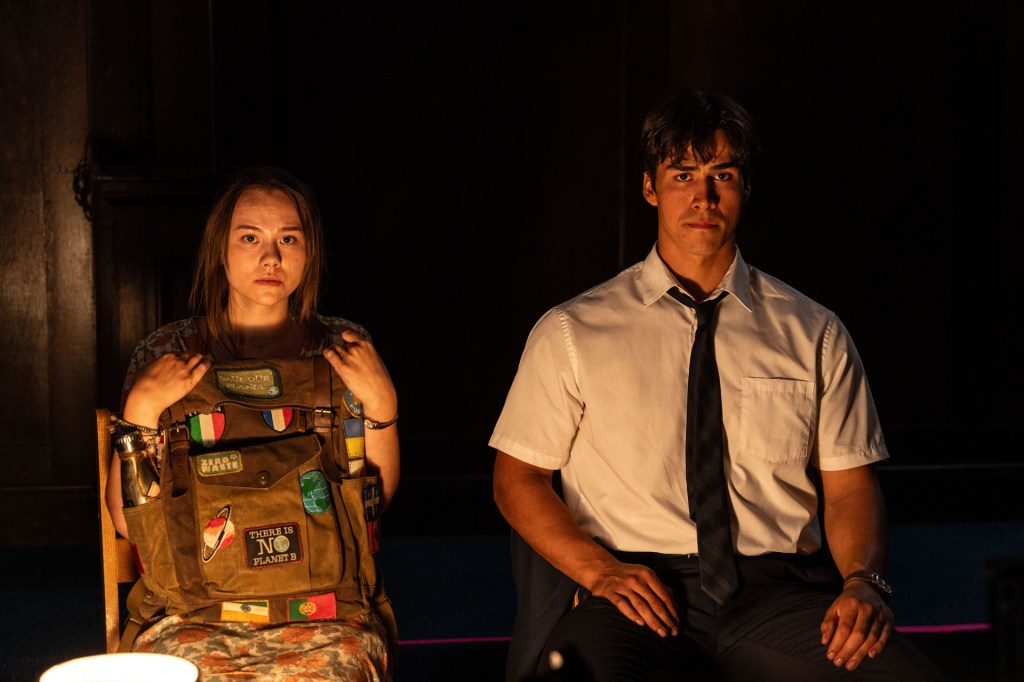
The emotion was something that touched me a lot, especially when you know there’s the first death scene that Kiah witnesses. So for Keira, what was that like for you filming that scene? And for Ann Marie, what was that like for you to direct it?
Jang: Yeah, it was definitely emotional. Had to drink a lot of water to replace all the tears that were coming out. But, um, no, it was, it was so beautiful and every actor and every crew member, every single person that had a hand in this film was so devoted to telling the story that it was easy, you know? It was so safe. Everyone had the same goal in mind. So stepping on to set for that day, especially was, the first day that Kiah is witnessing. And it was just tears all around and, you know, it was hard emotionally, but, so, so rewarding in the end.
Fleming: Yeah, you know, I don’t know if you’ve been on a film set? The director doesn’t stand there by the camera and watch the scene. I’m in a small, black, airless hut and I’m looking at what I’m looking with the DP. I’m looking at the frame that we’re going to have in the film. So, immediately I’m transported there. And for those moments when it’s just happening, I’m just the audience, and I don’t know what’s going to happen either. I’m just watching and what is it like every second that it’s unfolding? I don’t know. I don’t know what the actors choices are going to be. I know nothing. I don’t know what these words are going to feel like in this landscape. And here’s the wind, oh my god, the wind is going to be a character now, you know? So I’m just holding my breath, and it’s such an amazing…it’s so much fun when it is not sucking, it is so much fun. It just feels like such a privilege. And where did this all come from? Like, I love actors.
My final question for you both is, obviously, life and death is part of our everyday world. Was there anything when creating this movie, because you know, it can very heavy at times, Was there anything different, or any perspectives that changed specifically around life and death that you thought about or experienced while creating this movie?
Jang: Yeah, I think for me, it was a lot about finding the silver linings. And before going into this, I was very much in like climate anxiety, climate grief already, and just the feeling of this impending doom, but I feel like being able to take a step back, and especially the way that this film was made, where there are so many beautiful shots of this gorgeous landscape and being so much more appreciative of this beautiful world that we’re in, and seeing the hope in that. So, you know, the feeling of coming to terms with the inevitable future, but also appreciating where we are now.
Fleming: Yeah, we really tried to make this a sustainable shoot, too, and so we were very cognizant of that. But I have to say, like in the last few years, there’s so much death and dying in my personal world and in the world generally, you know? And I’ll just say the film – when I watch the film, I feel okay. I feel okay about it all. You know that there’s there’s beauty and there’s dignity and there’s acceptance. And for sure, I want to go outside!
 Muses of Media
Leave a comment