

The Piano Lesson is the latest film adaptation of August Wilson’s work from producer Denzel Washington.
The story is set in 1936 and follows the Charles family and a haunted heirloom. Boy Willie Charles (John David Washington) packs up a truck of watermelons and heads to his sister Berniece’s house to convince her to let him sell a piano that is so much more than just a musical instrument. As per the warning from Uncle Doaker Charles, played by Samuel L. Jackson, who originated the Broadway role, Berniece (Danielle Deadwyler) will not sell that piano, and what comes from this confrontation is more than either sibling expected. The ghosts of their respective pasts come out to play as the siblings go head to head over the antique.

Despite being a ghost story, the film is a cathartic, heartbreaking, and uplifting experience. The “ghost” here is both literal and figurative, as our characters are haunted by the sins of the father, their history with enslavement, and familial trauma. As Boy Willie Charles bulldozes his way into his sister’s house, he drags in with him years and years of unspoken pain and horror. His energetic passion for potentially owning land, his cheerful disposition and his bright smile are genuine but mask a darkness that lurks within. Meanwhile, Berniece carries her burden on her sleeve, though her quiet demeanour, sharp mind, and reserved nature would dissuade others from seeing that. The film is energetic, funny, and heartwarming at times, but what solidly sells the picture is how it illustrates the cascading effect of pain and how it manifests differently in people.
Every character in this production battles inner demons, yet their respective temperament reveals it in varying ways. Samuel L. Jackson (the original Boy Willie Charles) offers his considerable gifts and decades-long achievements to the role of Doaker Charles, the grown voice of reason and anchor of the story. Doaker represents the classic older patriarch figure who has seen and done things that hurt him, but he sits back and relishes in the fact that the reality of the generations after him won’t have to suffer the way he has. His calming presence and assurance of Berniece and Boy Willie add to the layer of hopefulness and familial bond at the centre of this complex narrative.
Michael Potts’s Wining Boy Charles almost counteracts Jackson’s performance in a way that fleshes out the idea that pain and hurt manifest differently. Here, Doaker has turned his into a form of guidance and care for the younger generation, while Wining attempts to bury it within, allowing his to fester and disrupt his life as seen through his gambling and drinking. Both male figures offer a lesson to the youngins in their own way, but one is on the path of healing while the other is self-destructive. As you dive into this small yet mighty cast, the themes branch out further. Each performance embodies suffering and healing to create the film’s overall atmosphere.
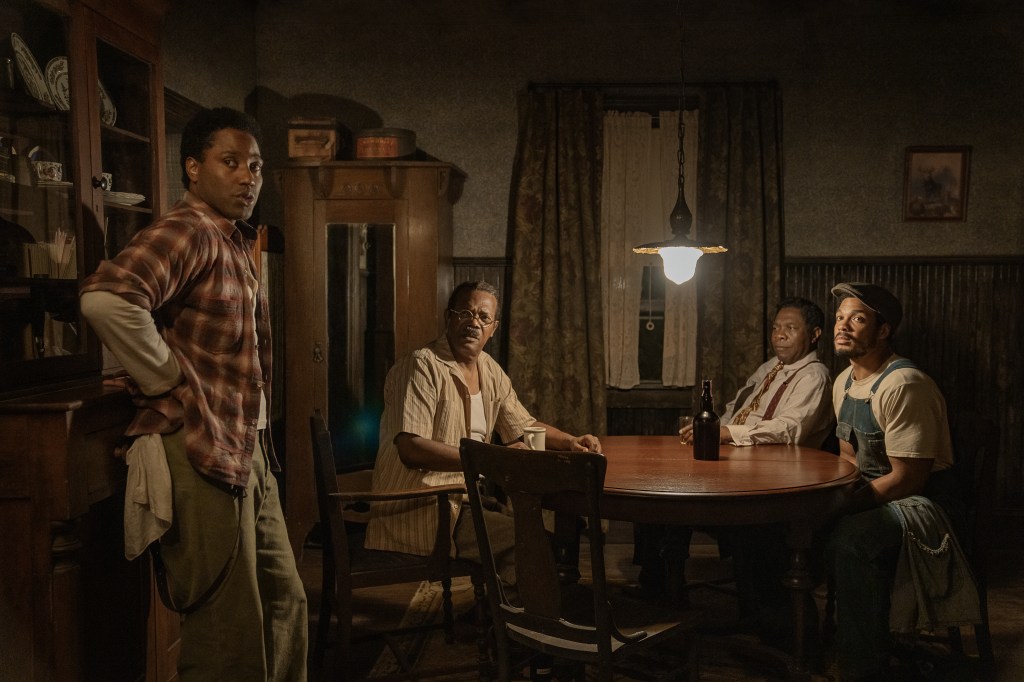
In addition to Jackson and Potts, Ray Fisher is a crucial supporting figure as Lymon, the comedic relief to an extent, yet heartfelt portrayal of a kind soul. He acts and moves in a way that people might consider foolish, but he, too, is carrying hurt from recent experiences. Fisher’s softness and genuine contentment are a light source throughout the film. Still, even he can convey how trauma sticks to the bones—his performance counter-balances that of John David Washington and Danielle Deadwyler. However, before I get there, I would be remiss to miss highlighting Corey Hawkins’s Avery Brown. Similar to Lymon, he provides comedic relief as an unwanted character too comfortable in Berniece’s house. Still, the final act truly pays off with his stellar comedic timing and charismatic presence. Finally, Stephan James, a Canadian treasure used briefly, leaves an impact. Part of me would have preferred him as Boy Willie Charles, but that’s an entirely different reality from what we get.
John David Washington is not Denzel Washington; he is done a great disservice with the constant comparison. He is a great actor in his own right and tends to offer loud and energetic performances. He is distinctly youthful; I liken his performance to a golden retriever on speed-type energy. It’s hard to fully contend with his performance because he is on an entirely different plane than the ensemble, except for Fisher, who is more keyed into Washington’s performance due to their characters’ closeness. Washington feels further estranged from this cast when he is paired with Deadwyler, who humbly steals the whole production from under his feet.

Washington is giving bombastic, whereas Deadwyler is giving gravitas. This production calls for such a drastic difference between the characters because they are enduring their familial trauma differently, as they also had different life experiences stirred by gender roles. However, these two don’t mesh, and Washington feels like he is acting in a different version of this adaptation with a different ensemble. Does that make him the problem? Not necessarily; I’d say that Brother Malcolm Washington and Father Denzel, the director and producer, may have lost some perspective regarding brother and son John David.
The Piano Lesson gives Danielle Deadwyler the space and time to rise as one of the greatest leading actresses of her generation, and she is given the platform to shine genuinely. Her conviction is palpable, and her command of the screen needs to be studied. Her most defining feature is her eyes, as she displays a wide range of emotions through her steely, fierce gaze. After watching the Toronto International Film Festival (TIFF) premiere of The Piano Lesson, I can confidently say that this adaptation would not be as spectacular and critical if it were not for Deadwyler’s assured, confident, and passionate performance. Despite Washington being a touch close to being the weakest link in a pretty iron-clad cast, Deadwyler nearly obliterates his shortcomings by being so exceptional on screen. No matter how moving and essential the narrative is, the film is a must-watch because of Deadwyler.
Malcolm Washington’s directing skills are impressive for a feature debut. His command of the small space is strong, but the key to this adaptation’s success is the choices made to capture the emotion. Washington expertly captures the tension between the characters and the intense waves of emotion that transition from joyful and hopeful to heartbreaking and dramatic and then back again. His process is intimate and personal, but what shines through the most is his youthful excitement over telling such a powerful story. Compared to his father’s directing effort with his adaptation of Wilson’s Fences, Malcolm’s approach surges with vitality and liveliness, whereas his father’s approach is very stately and straightforward.
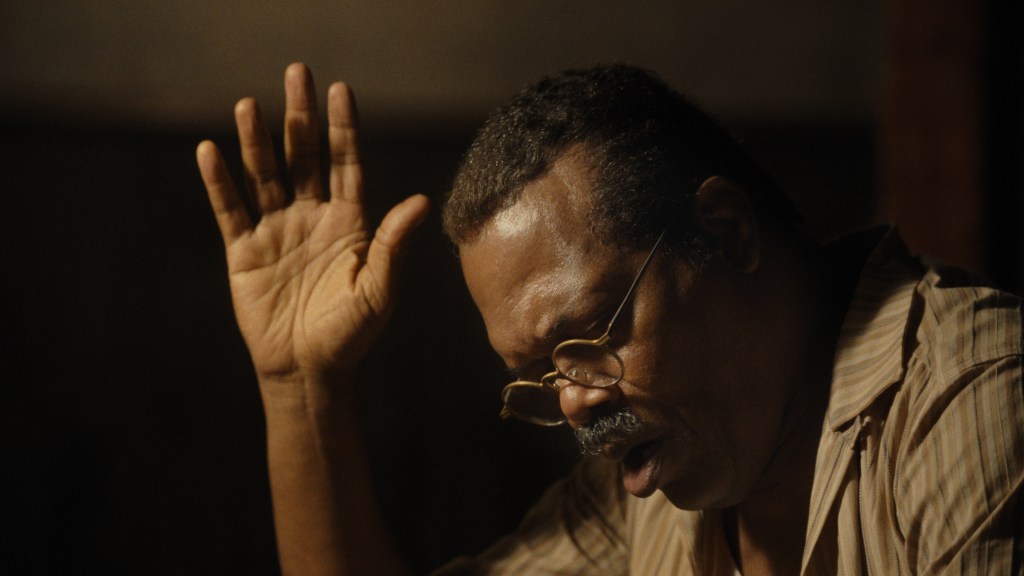
For lack of a better word, The Piano Lesson is unconventional. It brings together so much character drama and plot threads that could easily build into a television event in an efficiently made, compact picture. There is also a seamlessly integrated blend of genres, which creates an intense, vibrant ambiance.
The Piano Lesson is a family affair, granting us insight into how the Washingtons are a family to be reckoned with. From top to bottom, Washington offers their talents and insight to give The Piano Lesson textured and visceral layers. This experience is close to the untouchable experience of a live theatre performance. From the production design to the performances to Malcolm Washington’s intimate and dynamic directing style, The Piano Lesson is as much a means of honouring Denzel Washington’s legacy as it is August Wilson’s.
This November, folks will be clamouring to exclaim that Washington is excellent (as usual) with his performance in Gladiator II. However, the true testament to his greatness is how he has fostered and nurtured his children’s gifts, who embody his many years of legend. Not to overshadow the wordsmith himself, Wilson, but Washington has been instrumental in gaining traction for Wilson’s work on the cinematic level, and this emotionally charged collaboration is only just getting started.




 Muses of Media
Leave a comment