

“It is incredible how much my neutrality outraged everyone.” –Geralt of Rivia
The Witcher is back. After a rousing second season of dangerous magic, terrible beasts, and powerful women making moves, season 3 promises to set the stage for the explosive conclusion of the battle for Cirrila of Cintra.
We open the season with the makeshift family of Geralt of Rivia (Henry Cavill), Yennefer of Vengerberg (Anya Chalotra), and Cirrila of Cintra (Freya Allan) fleeing what seems like the entire Continent. Kings, elves, mages, and monsters hunt down Ciri for one reason or another. Power, wealth, land, and destiny motivate these forces to chase her down, no matter the cost. The newly-minted family must overcome some inner turmoil if they are to survive together. Geralt must forgive Yen’s betrayal and trust her to teach and protect Ciri.
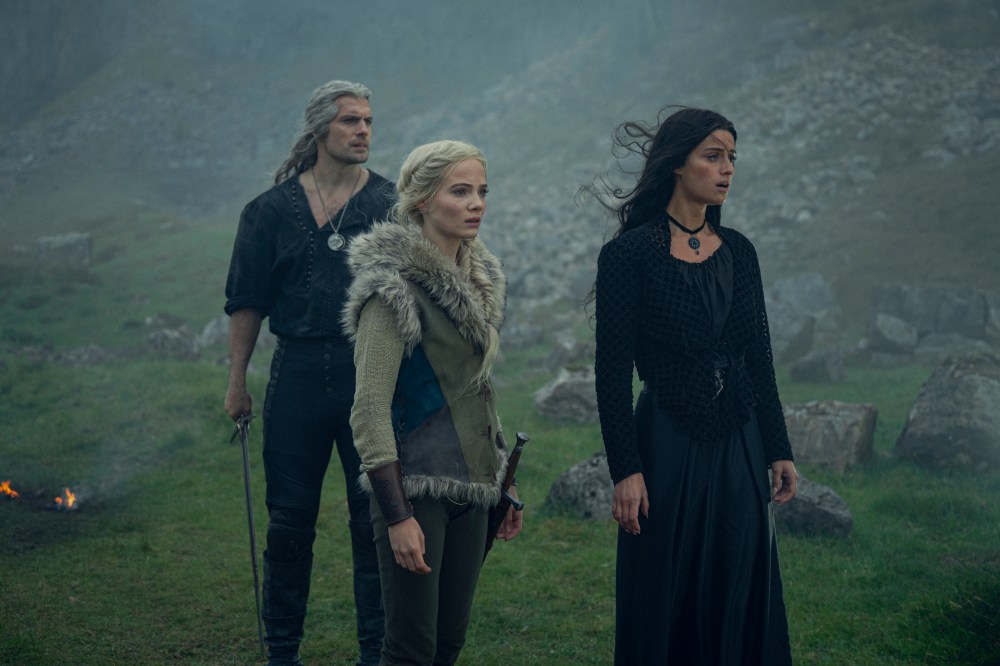
Meanwhile, a humbled Yen is turning over a new leaf as she becomes accustomed to being a motherly figure to the fledging witcher. Ciri, on the other hand, needs to work out how she fits into the ever-changing world around her at a time when she is a saviour to some and an enemy to others. As the trio attempt to forge their own path, protecting Ciri from political ploys, dark magic, and treachery of all kinds, they find that one place that could have been a sanctuary is a battlefield where everything changes.
Firstly, let’s talk about the massive elephant in the room. This is Henry Cavill’s last outing as Geralt, as season 3 will serve as his exit, despite the series not being over. For some inexplicable reason, the third season will be released as two volumes. Having seen all the episodes of the eight-episode season, this is a messy exit for Cavill. Whatever the behind-the-scenes reasoning, season 3 should have been crafted as the end of this story. Instead, the creatives of the show and Netflix suits expect the audience to accept that Liam Hemsworth is Geralt starting in season 4. The third season does nothing to set the audience up for this somewhat jarring decision, although it is being promised that all will work out with the cast and creative team getting ahead of it already.
The backbone of the first two seasons is Cavill’s steely yet dynamic performance as the self-professed, emotionally detached witcher. We’ve gone on a journey where Geralt has been reckoning with his feelings, especially the ones so innately tied to Yennefer and Ciri. This season brings about the culmination of his experiences, his emotional growth, and his determination to protect the ones he cares for, which includes Jaskier (Joey Batey). At this juncture of his journey, his feelings on neutrality needed to change, as it was a position that allowed him to move through the world as a witcher unbothered. Neutrality is framed as the final barrier between Geralt and his decision to face the greatest threat to the Continent head-on because his love for his Child Surprise demands he makes a choice.

The new season ends with a declaration that the Geralt of Rivia, who valued neutrality above all, has been moved by his love for Ciri and is ready to take a stand alongside Yennefer, who has grown into more than just a maternal figure, but as a leader in her own right. No more is Geralt a victim of circumstances, played as a pawn for fate or destiny. He is taking his life and the lives of those he loves into his own hands and forging a path marked by choices he can stand behind. How the series ends with Geralt is a far cry from the perfect send-off for Cavill; instead, Geralt’s characterization has merely reached its peak, and the man who got us here through his devotion, passion, blood, sweat, and possibly many tears, is not the one to bring us to a natural conclusion. In many ways, the third season makes more of a case to keep Cavill than to let him go because he carried Geralt up to this peak. No offence to the Hemsworth; I am sure he is gifted and worthy of the role, but he cannot become Geralt at this stage without it feeling like an absolute waste of time and energy on Cavill’s part.
With that being said, season 3 is another excellent outing by creator Lauren Schmidt Hissrich and the assembled writers and directors. From episode to episode, the series has some incredible character moments, with some exceptional writing for Geralt, Yen and Ciri. The series is at its best when the trio is on parallel and/or opposite journeys. This season Ciri is brimming with confidence and settling into her new family. Vulnerability is not sacrificed for developing this “strong female character” because their vulnerability makes them interesting and dynamic characters, as with the other leads.
Yen is in a new position, humbled after her disastrous attempts to regain her magic. She has lost favour with most of the people who mattered to her, which gives her a renewed sense of direction as she dedicates her life to Ciri and Geralt. Love and family have now replaced greed and power for Yen. I’ve already touched on Geralt, so I’ll reiterate that the character work is phenomenal. It is most notable when our characters make mistakes, fail to see the dangers in time, or are caught off guard. They are fallible, yet they are all stepping into a stage in their lives where they are evolving into their best selves. It’s all so moving and gratifying as a fan of the series. As always, one of the stars of the show is the chemistry between Cavill and Chalotra.
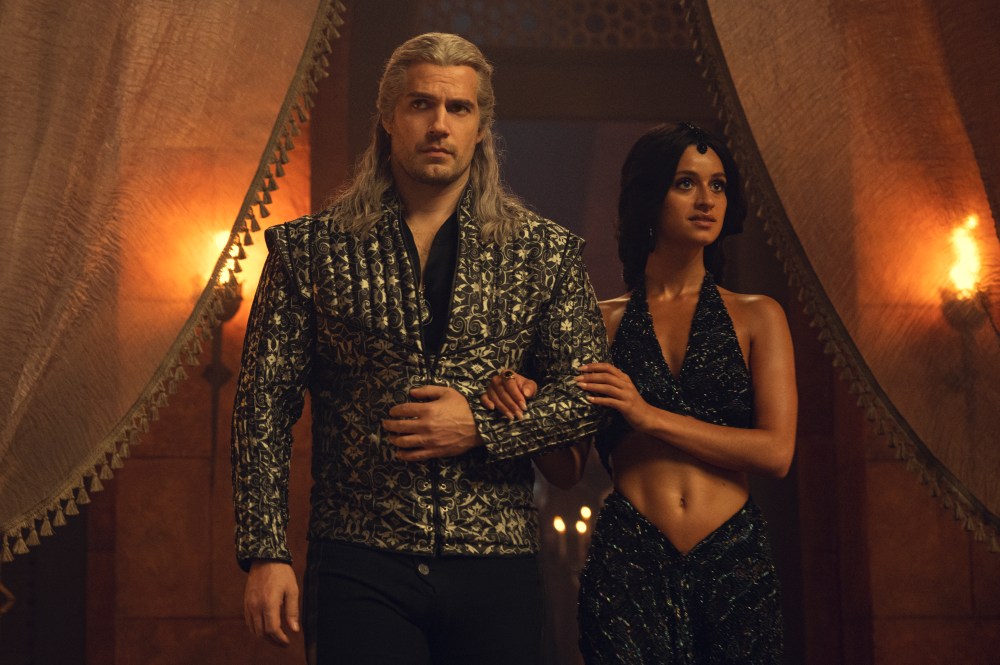
Chalotra and Allan are remarkable once again. Allan does a great job finding ways to exhibit how Ciri has matured through her witcher training and how she has a long way to go. Yen is far more level-headed, reserved, considerate, and calm than in prior seasons. Chalotra still nails those lines that show off Yen’s razor-sharp wit and smarts. Sly expressions reveal that Yen is not entirely far removed from the cunning survivalist she once was. This season is a bit of a treat with these two as they finally spend a lot of screen time together, allowing new dimensions to shine as they become essential to each other. Yen and Ciri’s bond is critical to the character’s development and the trajectory of Ciri’s story, and the two actresses have the chemistry and talent to carry the weight.
The ensemble is nailing it left and right, with some new faces shaking things up in a fun way and some familiar ones presented in an entirely new light. A level of comfort and familiarity felt throughout the cast makes for a great watch; no one feels out of place, and no matter the length of screen time, they all make an impact. Francesca (Mecia Simson) and Fringall (Mimî M Khayisa) were standouts in season 2. Here they continue to impress despite limited screen time and the show’s pacing not allowing their stories to play out fully. The mages get a bit of shine this season, with Sabrina being a laugh and Tiassia (MyAnna Buring) making her most significant emotional impact on the story yet. Phillipa is the newest addition who gets her moment to shine this season. Cassie Clare is tremendous as the sharp-taloned mage with an affinity for shape-shifting. She makes herself at home in the show effortlessly, leaving a mark with every delicious line delivery and fierce look. An additional episode or two would have done wonders with exposing the audiences to some of these key side players, especially Triss (Anna Shaffer), as she is dealt a poor hand regarding screen time. The eight-episode run is a huge impediment for the show as it limits some of the more exciting characters to exposition sound bites at critical points in the plot when they could have more of an impact with deliberate character development and involvement with the core narrative.
With the worldbuilding through the characters, there is also a noticeable leap in quality in the hair and makeup department and costuming. From the most relevant characters to the blink-and-you-miss ’em extras, the individuality and narrative cohesiveness are astounding. And, of course, the new season continues the trend of having some genuinely exceptional hairstyling for the Black characters. Fantasy is not a kind genre to non-white actors, but The Witcher is an exception. However, this brings up one glaring misstep in the hair department: Jaskier’s hair situation. Yikes on a bike, it’s terrible. I am convinced someone hates Batey because the man looks like a fool.
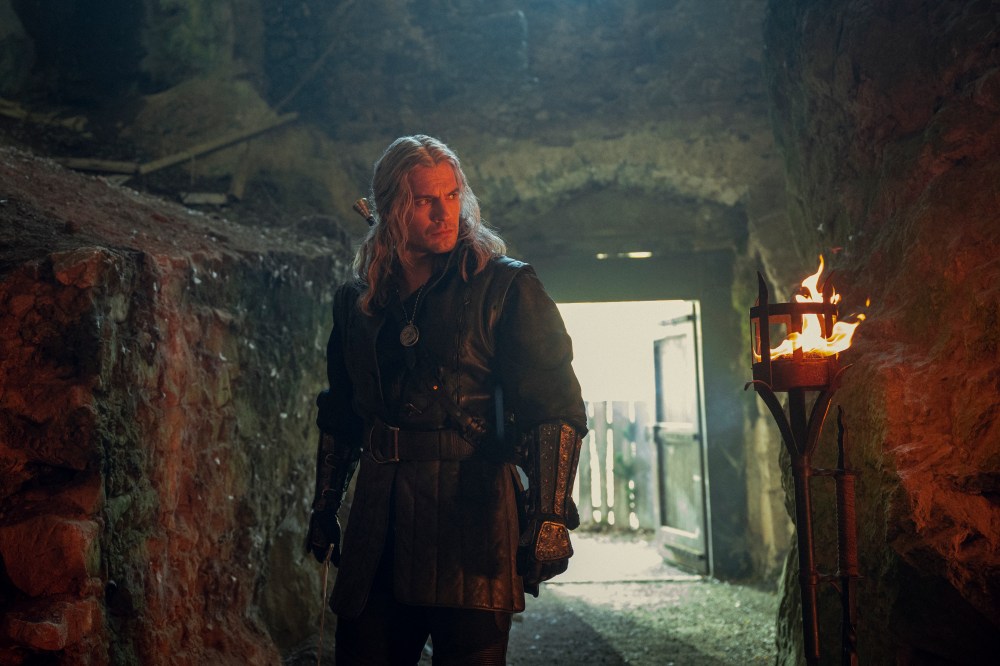
Overall, the show carries on being a feast for the eyes and ears. The locations are great, though the distance between places and the passage of time is still utterly lost to me. The Witcher could take a page from the Lord of the Rings playbook and show us the journey from one location to another, but I digress. The score by Marcin Przybyłowicz always hits all the right notes, carrying us from one engaging sequence to the next. The invisible hand gently nudging our emotions in the right direction.
The production design is just as incredible as ever. The third season proves that the production team has hit their stride in creating a distinct tone and style for the show. The stunt and camera work gradually up the ante in the action scenes. Episode five is an excellent example of the culmination of the hard work and craft of creating a visual language and style specifically tailored to The Witcher. The fifth episode is the best episode of the season as it diverts from the usual plotting, crafts an experience that untangles a central mystery, and exposes us to the many relevant players taking charge of the story this season. The pinnacle episode also shows off the intricate production and costume design. The only hiccup from a technical standpoint is the CGI; there are moments where the rendering of the monsters shatters the illusion the series puts you under. But it’s okay when you consider how far and few the monster sightings are.
The third season of The Witcher is a whirlwind of intense magic, ample action, excellent character development, and the continuation of an epic tale. It’s a rewarding journey that invites the audience to enjoy an experience that feels well-managed and expertly crafted. Sure, there could be improvements made to the CGI, and there is more to be gained with just two more episodes. Regardless, The Witcher is as close to perfection as a fantasy series can get these days, with so many of this size and scale hardly ever making it past a first or second season. For the foreseeable future, it appears Netflix is willing to invest and see this series to its natural end.

 Muses of Media
Leave a comment